The belief that ongoing trade friction has simply derailed recent diplomatic efforts between Brussels and Beijing misunderstands the true nature of the current crisis. The breakdown in communication is not a temporary setback caused by a disagreement over import taxes on battery electric vehicles. It is the result of a permanent, structural collapse of the fundamental theory that has guided European economic policy toward Asia for the last thirty years.
For decades, European leadership operated on the assumption that economic interdependence creates political stability. They believed that integrating supply chains would turn systemic rivals into predictable partners. For an alternative view, consider: this related article.
That assumption has been shattered.
Brussels now views its massive trade imbalance with China—highlighted by a goods deficit that reached over 359 billion euros—as a direct threat to its political independence and industrial survival. The ongoing talks ahead of the upcoming European Council summit are failing because European officials have realized that traditional trade negotiations are completely inadequate for addressing China's state-directed economic model. The current dispute is not about minor adjustments to tariff percentages. It is a fundamental conflict over which region will control the manufacturing capacity, intellectual property, and employment opportunities of the next century. Similar analysis regarding this has been shared by Associated Press.
The Limits of Traditional Tariffs
In late 2024, the European Commission implemented definitive duties on Chinese electric vehicles, including taxes reaching up to 35.3 percent on specific manufacturers like SAIC, alongside varying rates for Geely and BYD. The goal was to level the playing field and protect European car manufacturers from subsidized competition.
The strategy failed.
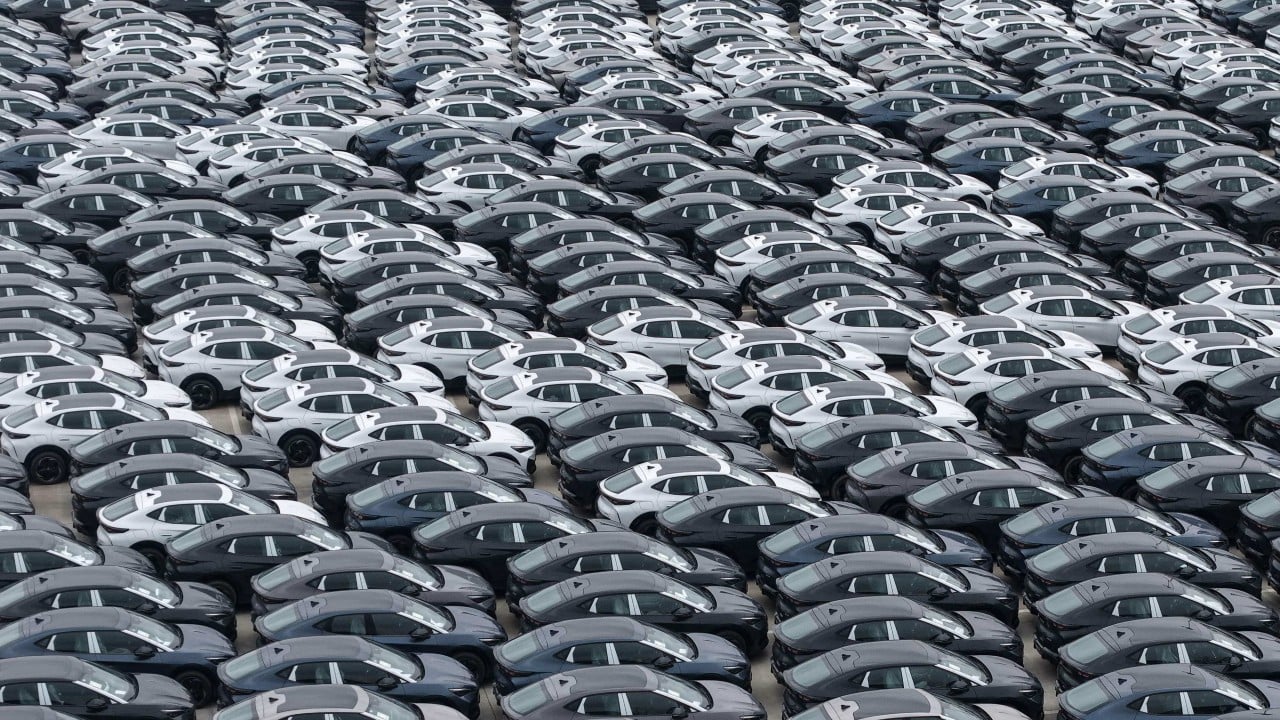
Data from the past year shows that Chinese automotive exports to Europe actually rose by 26 percent between 2024 and 2025, reaching nearly 1.2 million vehicles. More alarming for Brussels was a 155 percent surge in Chinese hybrid vehicle imports, a category that conveniently bypassed the strict financial penalties aimed exclusively at fully electric cars.
Chinese manufacturers did not panic when the tariffs were introduced. They simply absorbed the cost, utilized their massive manufacturing advantages, and altered their product mix to exploit gaps in the European legal text. The underlying cost advantage of building an electric vehicle battery in China remains roughly 33 percent lower than producing the same unit in Europe. When a state-backed industry possesses that level of structural dominance, a standard import duty becomes a minor financial speedbump rather than an effective barrier.
This reality has forced a deep ideological shift within the European Commission. Policymakers are realizing that defensive trade measures implemented after the damage has occurred cannot save domestic industries. By the time a formal anti-subsidy investigation is launched, conducted, and resolved, the targeted domestic sector has frequently already suffered irreparable harm.
The Hidden Fight Over Strategic Input Control
While public attention remains focused on finished consumer goods like cars and solar panels, the real diplomatic warfare is happening further down the supply chain. European industrial leaders are currently facing severe supply vulnerabilities that have nothing to do with standard market competition.
The situation worsened dramatically when Beijing restricted exports of critical rare earth elements, materials required for everything from wind turbine magnets to military guidance systems. China currently controls roughly 90 percent of global rare earth refining and 60 percent of mining.
Simultaneously, the industrial landscape was shaken by targeted export controls applied to components linked to Nexperia, a semiconductor company whose chips are essential for European automotive assembly lines. This move directly targeted the most vulnerable part of the European economy. A modern European vehicle cannot leave the factory line without these basic microcontrollers. By restricting the flow of these foundation-level components, Beijing demonstrated that it can quietly penalize European manufacturing without ever having to announce a formal trade war.
European trade officials now recognize that they are not dealing with an open market economy operating under World Trade Organization principles. They are dealing with a highly coordinated, state-managed system that uses commercial dominance as a tool for geopolitical leverage. This realization has turned what used to be routine commercial negotiations into tense national security briefings.
The Shift Toward Domestic Enforcement
Because traditional trade barriers have failed to stop the influx of state-subsidized goods, Brussels is shifting its strategy away from international border tariffs and toward aggressive domestic regulations. The era of European market neutrality is ending.
The primary example of this new direction is the Industrial Accelerator Act, a significant policy shift designed to fundamentally alter how public money is spent within the bloc. Under the incoming rules, any manufacturer wishing to access lucrative European public procurement markets or corporate subsidy programs must meet incredibly strict regional criteria.
- Final Assembly: The vehicle or machine must be fully assembled inside the European Union.
- Local Content Requirements: At least 70 percent of the total value of the product must originate within Europe.
- Component Sourcing: Key strategic components, specifically batteries and microprocessors, must have a minimum of 50 percent European sourcing.
These requirements will initially target the subsidized corporate fleet vehicle market, which accounts for roughly half of all new car sales across the continent. By changing the rules of domestic consumption rather than attempting to block imports at the port, Brussels is attempting to force Chinese firms into an ultimatum: either transfer their technology and production facilities to European soil or lose access to the market entirely.
Furthermore, new investment screening rules are being drafted to place strict requirements on foreign capital. Foreign entities seeking to build factories within the bloc will face mandates requiring them to spend at least 1 percent of their global revenues on European-based research and development. They will also be forced to source 30 percent of their components from local European suppliers and accept strict joint-venture ownership caps limited to 49 percent.
This is a deliberate, calculated mirroring of the exact economic strategies that Beijing used against Western companies for decades.
Internal Divisions and the German Dilemma
The European Union's attempt to present a united front against Chinese industrial expansion is constantly undermined by deep internal political divisions. The bloc does not speak with one voice on trade defense, because individual member states face wildly different levels of economic exposure.
France has become the main political force pushing for a highly protective, interventionist trade policy. French officials have gone so far as to propose a sweeping, across-the-board 30 percent tariff on all Chinese imports to counteract what they calculate to be a 20 percent undervaluation of the renminbi. Because French domestic industries are heavily exposed to direct competition from cheap imports and have less reliance on Chinese consumers, Paris has little to lose from a confrontation.
Germany, however, views the situation with deep anxiety. The German industrial model was built entirely on two pillars: cheap imported energy and an insatiable Chinese market for high-end German machinery and premium automobiles. Companies like Volkswagen, BMW, and Mercedes-Benz still generate a massive portion of their global revenues from Chinese consumers.
If Berlin supports aggressive European protectionism, it risks devastating retaliation against its automotive plants and industrial exporters. This split creates a predictable pattern that Beijing capitalizes on during trade negotiations. By offering targeted market access or threatening specific national industries, Chinese negotiators can easily exploit the cracks in European unity, delaying decisive action from Brussels.
The Illusion of Coexistence
The core issue preventing any meaningful breakthrough in EU-China trade talks is that both sides are pursuing fundamentally incompatible economic goals. There is no middle ground available that can satisfy the domestic political requirements of both regions.
China's current economic policy is focused heavily on upgrading its manufacturing sector to escape middle-income limitations and maintain domestic employment. Faced with a cooling domestic real estate market and slowing internal consumer demand, Beijing has deliberately funneled state capital into advanced manufacturing sectors, creating immense global overcapacity. The resulting surplus of goods must go somewhere, and the European market is the largest, richest, and most accessible target available.
Europe, on the other hand, cannot simply accept this export surge without watching its own industrial core disappear. The loss of solar panel manufacturing to Chinese competition over a decade ago is viewed in Brussels as a historic mistake that cannot be allowed to repeat in the automotive, chemical, or wind energy sectors. European leadership understands that if it cedes these green transition technologies to external production, it will lose not just millions of skilled jobs, but also its strategic autonomy.
As a result, the meetings taking place in Brussels are no longer true trade negotiations in the traditional sense. They are exercises in damage control and strategic posturing.
European policymakers are already planning their next moves, which look less like traditional trade deals and more like economic defense doctrines. Serious consideration is now being given to the creation of a European version of Section 301 of the US Trade Act. This mechanism would allow Brussels to bypass lengthy international arbitration and impose immediate, unilateral trade sanctions whenever a domestic industry is deemed to be facing an existential threat from foreign state intervention.
The era of open, unrestricted trade between Europe and China is over, and no amount of diplomatic dialogue in Brussels will bring it back. European policy is moving permanently toward a model of self-reliance, domestic subsidies, and aggressive market insulation. Companies and investors operating across these borders must stop waiting for a diplomatic breakthrough that restores the old status quo. Success will no longer belong to those who navigate global markets efficiently, but to those who can best adapt to a permanently fragmented, heavily protected industrial landscape.