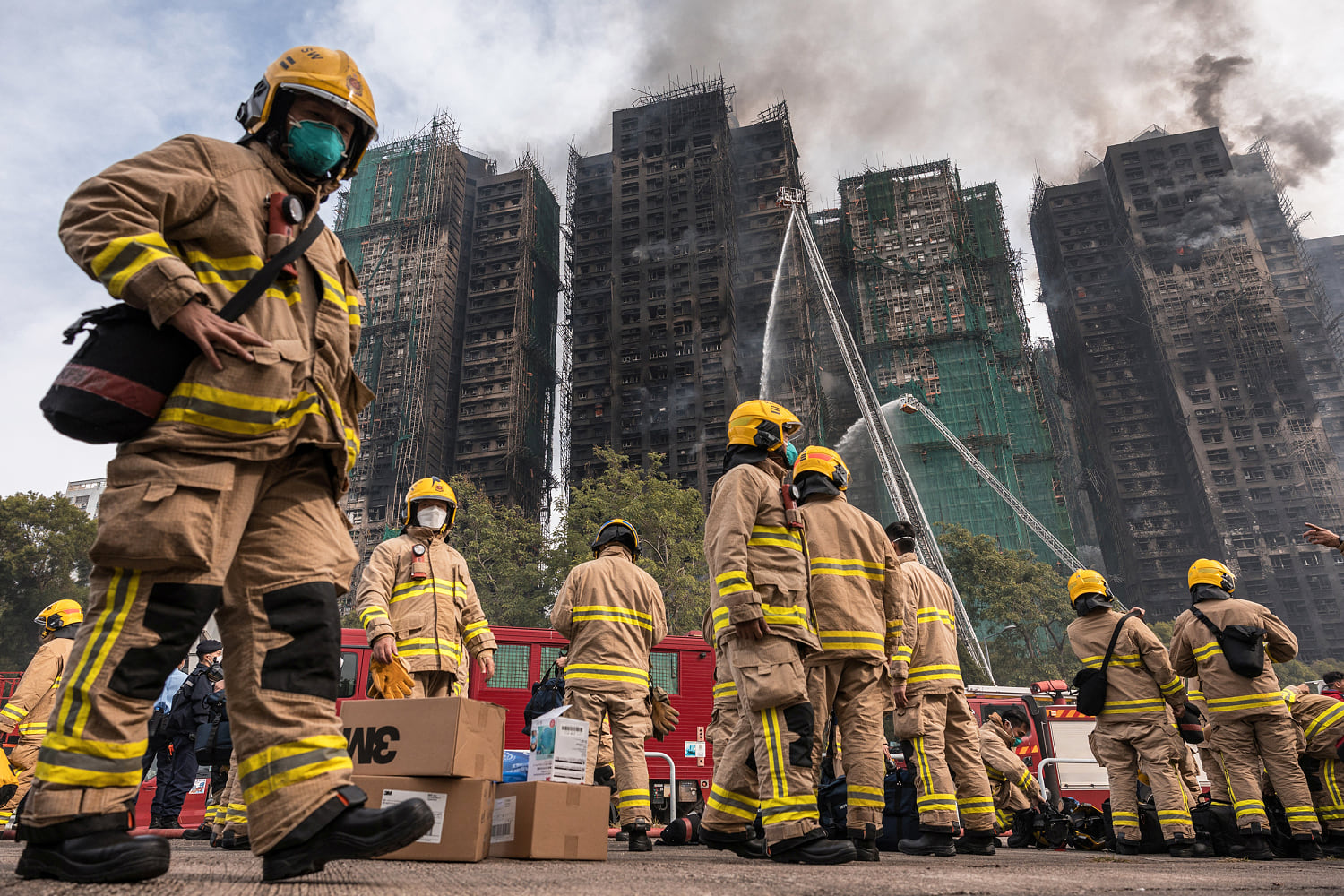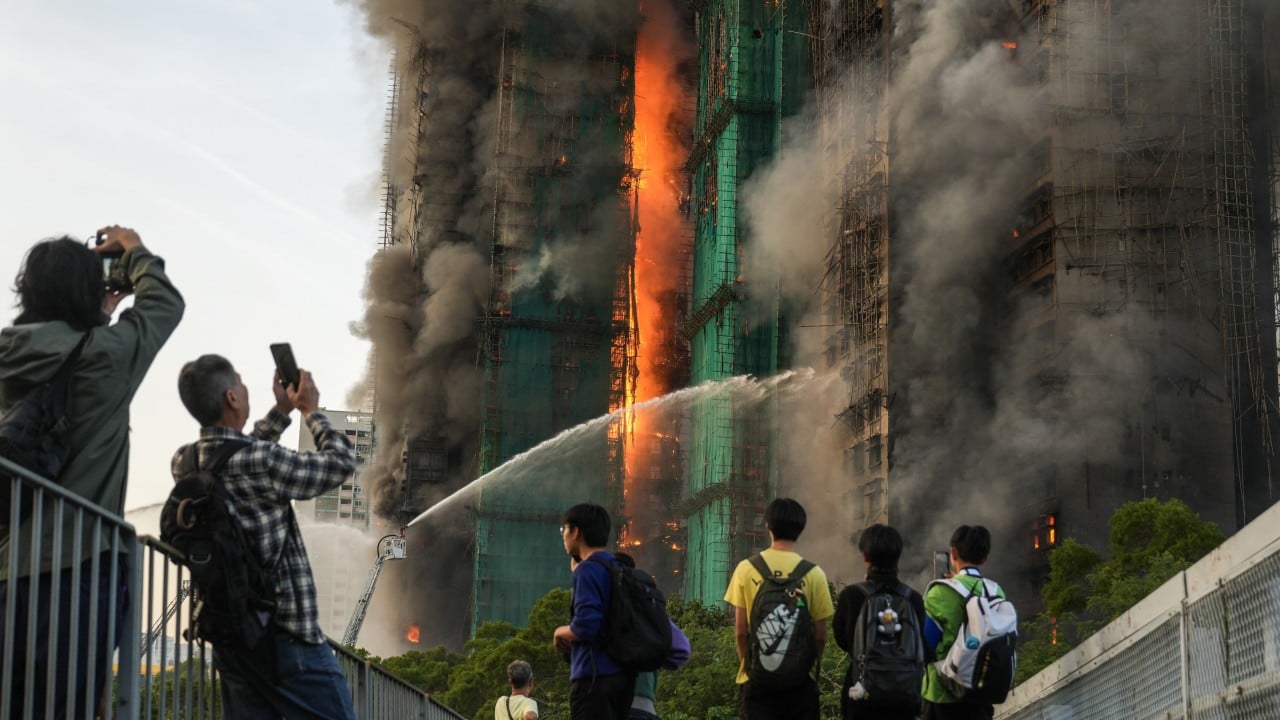
A discarded cigarette butt, piles of unmanaged combustibles, and an ambiguous verdict of "human fault" have been officially cited as the root causes of a deadly Hong Kong fire, according to recent investigative findings. While the report closes the book on the immediate mechanics of ignition, treating a stray ember as the sole villain obscures a much older, systemic failure in urban density, building maintenance, and regulatory enforcement across one of the world’s most vertical cities.
Fire investigators love a clean point of origin. It gives grieving families a tangible object to blame and allows municipal authorities to file the paperwork under a neat, comprehensible category. A lit cigarette lands on flammable material. Oxygen feeds the spark. Smoke fills a stairwell. People die.
The physics are undeniable. Yet after decades of covering urban disasters and industrial safety failures, you learn to look past the match and examine the tinderbox. A single cigarette does not kill people in a modern, compliant structure. It kills people when an entire ecosystem of passive fire protection has been quietly eroded over years of neglect.
The Anatomy of an Inevitable Spark
To understand how a routine lapse in personal judgment escalates into a mass-casualty event, you have to look at the timeline of compartment fires. A modern room filled with synthetic polymers—polyurethane foam in cushions, polyester curtains, plastics in cheap electronics—burns vastly faster and hotter than a room furnished forty years ago.
When a smoldering cigarette makes contact with cellulosic debris or synthetic packaging, it does not immediately erupt into flames. It enters an incipient smoldering phase that can last anywhere from twenty minutes to several hours. During this window, the fire is generating carbon monoxide and invisible particulates, slowly heating the surrounding fuel load until the materials reach their auto-ignition temperature.
Once open flame appears, the clock runs out with terrifying speed. In an unventilated or poorly compartmentalized space, a fire can reach flashover—the point where every combustible surface in the room ignites simultaneously—in under four minutes.
Blaming "human fault" for the initial drop of the cigarette misses the critical engineering failure. Human error is a statistical certainty in any population of millions. People drop things. People fall asleep while smoking. People ignore warning signs. Fire safety codes exist specifically to absorb human stupidity without demanding a blood price in return. When a building fails to contain a predictable human mistake, the building itself is the primary defect.
Why Hong Kong's Vertical Architecture Multiplies Risk
Hong Kong presents a unique set of thermodynamic and structural challenges that exist almost nowhere else on Earth. Extreme land scarcity has forced millions of residents and businesses into tightly packed, aging mid-rise and high-rise structures, many built before modern sprinkler mandates were retroactive or strictly enforced.
In older composite buildings—structures that mix commercial storefronts on the lower levels with subdivided residential flats above—the fuel load is rarely confined to inside the apartments. Corridors, lightwells, and rear staircases routinely double as overflow storage. Cardboard boxes, discarded furniture, construction debris, and flammable cleaning supplies accumulate in the exact pathways designed to serve as sterile escape routes.
The Chimney Effect in Subdivided Flats
When a fire ignites in a corridor choked with combustibles, the building's geometry turns against its occupants. Narrow stairwells and unsealed utility shafts act as vertical chimneys. Hot gases rise rapidly, creating a pressure differential that draws fresh oxygen in from the lower levels and pumps toxic, superheated smoke upward into residential floors.
The proliferation of subdivided units—often referred to as "coffin homes" or partitioned flats—compounds this lethality. To maximize rental yields, landlords frequently erect internal partitions using cheap, non-fire-rated timber or composite boards. These modifications routinely block secondary egress windows, sever cross-ventilation, and puncture the fire-rated concrete walls meant to compartmentalize a blaze to a single unit.
If a resident opens their door to a hallway filled with thick, black smoke from burning rubbish, they are trapped. If the internal walls of their subdivided flat lack a two-hour fire-resistance rating, the fire does not even need the doorway to reach them.
The Convenience of Blaming "Human Fault"
Official inquiries into fatal fires frequently lean on behavioral explanations because structural explanations are politically and economically expensive.
If an investigation concludes that a tragedy was caused by a careless smoker, the policy prescription is cheap. The government launches a public awareness campaign. Fire officials print new posters reminding citizens to extinguish their cigarettes. Fines for littering or smoking in restricted zones are marginally increased. The status quo remains entirely intact.
Consider the alternative. If an inquiry concludes that the deaths were caused by systemic failures in building management, decades of deferred maintenance, and an inability to clear common corridors of commercial clutter, the burden shifts immediately to property owners and municipal regulators.
The Regulatory Blind Spot
In Hong Kong, thousands of older buildings lack an Owners' Corporation—a legal body responsible for maintaining common areas and coordinating fire safety upgrades. Known locally as "three-nil" buildings because they have no owners' corporations, no residents' organizations, and no property management companies, these structures exist in a regulatory vacuum.
Government departments can issue Fire Safety Directions ordering owners to install sprinkler systems, upgrade fire doors, or clear blocked staircases. Yet when a building has dozens of fragmented, absentee landlords—many of whom have subdivided their units illegally—compliance rates plummet. Enforcement becomes a slow-motion game of bureaucratic whack-a-mole. Inspectors issue warnings, deadlines pass, minor fines are levied, and the cardboard boxes remain stacked in the stairwell.
A hypothetical scenario illustrates this breakdown clearly. Imagine a twelve-story building constructed in 1968. The ground floor houses a logistics depot, the second floor holds a warehouse for textiles, and floors three through twelve contain eighty subdivided residential flats. A delivery worker flicks a cigarette into a pile of plastic wrap stacked beside the ground-floor freight elevator. Within six minutes, burning polyethylene sends dense hydrogen cyanide and carbon monoxide up the elevator shaft. The fire doors on the fourth and fifth floors have been propped open with bricks for ventilation. No alarms sound because the central panel was disconnected two years ago during an unpermitted renovation. The official report cites a lit cigarette and human fault. Every single structural failure that turned a minor trash fire into a mass fatality goes unpunished.
Smoke Inhalation Is the Real Killer
Public perception of fire danger centers on flames, heat, and structural collapse. In reality, flames rarely kill occupants in residential and commercial building fires. Toxic smoke inhalation accounts for the vast majority of fire fatalities, often occurring floors away from the actual blaze.
Modern synthetic materials release a lethal cocktail of gases when burned under oxygen-limited conditions—the exact conditions found in a closed stairwell or a cluttered corridor.
- Carbon Monoxide (CO): Binds to hemoglobin over two hundred times more effectively than oxygen, starving the brain and heart within minutes and causing rapid disorientation.
- Hydrogen Cyanide (HCN): Released by burning polyurethane, nylon, and melamine resins. It prevents cells from utilizing oxygen even when it is present in the bloodstream, leading to rapid incapacitation and cardiac arrest.
- Irritant Gases: Hydrogen chloride and acrolein sear the upper respiratory tract, causing immediate swelling, blinding pain, and panic that prevents victims from locating exits they use every day.
When investigators point to "combustibles" in a stairwell, they are talking about the fuel that generates this toxic atmosphere. A bare concrete stairwell with self-closing, fire-rated doors cannot sustain a fire, no matter how many lit cigarettes are dropped on the floor. The smoke never reaches lethal concentrations because there is nothing to burn.
What Fire Safety Experts Actually Look For
When independent forensic fire engineers examine a fatal blaze, they rarely spend much time debating the behavior of the person who dropped the match. They look at passive fire protection systems—the silent, unglamorous architectural features that are supposed to work without human intervention.
First, they examine compartmentation. Were the walls, floors, and ceilings intact, or had plumbers, electricians, and internet installers punched dozens of unsealed holes through concrete barriers to run cables and pipes? Unsealed penetrations allow fire and smoke to bypass rated walls effortlessly.
Second, they inspect egress integrity. Were the fire doors intact, fitted with functioning intumescent strips that expand when heated to seal gaps, and equipped with working automatic closers? In high-density buildings, residents routinely wedge fire doors open to improve airflow or ease the passage of hand trucks. A wedged fire door is functionally identical to having no door at all.
Third, they evaluate housekeeping and fuel control. Who was responsible for inspecting the common areas, and why were flammable materials permitted to accumulate in egress routes?
There is no perfect solution to fire risk in hyper-dense cities. Retrofitting mid-century concrete structures with modern pressurized stairwells and full-coverage sprinkler systems costs millions of dollars per building—costs that frequently exceed the financial capacity of elderly or low-income flat owners. Forcing immediate, uncompromising compliance without massive state subsidies would simply displace thousands of vulnerable residents onto the streets.
Yet pretending that a stray cigarette is the primary culprit does a profound disservice to the dead. Until building management is held strictly liable for every piece of combustible clutter left in a common hallway, and until fire-door tampering is treated with the same severity as disabling a smoke detector in an aircraft, the next tragedy is already waiting on a stairwell floor.