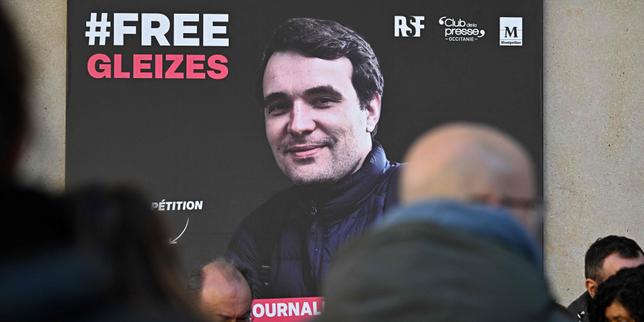
French Justice Minister Gérald Darmanin will land in Algiers on Monday, May 18, under the guise of resetting bilateral judicial cooperation, but his true mission centers on a high-stakes, behind-the-scenes trade for a imprisoned French journalist. Ostensibly, the trip aims to synchronize anti-terror, narcotics, and financial fraud investigations between Paris and Algiers. The urgent catalyst for this sudden diplomatic thaw is Christophe Gleizes, a French sports and investigative reporter sentenced to seven years in an Algerian prison for "apology of terrorism." By packing his delegation with the most powerful prosecutors in France, Darmanin is signals that Paris is ready to negotiate on Algiers' terms—specifically regarding trans-national assets and political dissidents—in order to bring Gleizes home.
This official visit follows two years of deep, bitter diplomatic paralysis. The freeze thawed slightly in recent weeks after quiet intelligence-sharing trips by Interior Minister Laurent Nuñez and Arms Minister Alice Rufo. Yet, using the Ministry of Justice as the spearhead for diplomatic normalization is a highly calculated, transactional move.
The Heavyweights in the Overhead Bin
Darmanin is not traveling light. Accompanying the Keeper of the Seals is an unprecedented contingent of top-tier French magistrates, including Vanessa Perrée, the head of the National Anti-Organized Crime Bureau (PNACO), and Pascal Prache, the National Financial Prosecutor (PNF). Laureline Peyrefitte, the powerful director of criminal affairs and pardons, is also on the passenger list.
This is not a courtesy delegation. It is a working group holding the keys to assets that Algiers has coveted for over a decade.
For years, Algerian authorities have demanded French assistance in tracing and seizing "ill-gotten gains"—luxury real estate, bank accounts, and corporate holdings stashed in France by corrupt officials from the former Bouteflika regime. French judicial authorities have historically dragged their feet on these cross-border financial investigations, citing procedural independence and bureaucratic delays. By putting the PNF and PNACO chiefs in the same room as Algerian Justice Minister Lotfi Boudjemaa, Paris is dangling a major carrot.
The calculus is clear. France wants its citizen back, and in return, it is finally showing a willingness to crack down on the financial networks of old Algerian money currently sheltering in Parisian apartments.
The Hostage and the Legal Chessboard
The focal point of the human transaction is Christophe Gleizes. A contributor to high-profile French magazines like So Foot and Society, Gleizes was arrested in May 2024 while reporting on local political dynamics in the Kabylie region, a perennial hotspot for anti-regime sentiment and cultural friction.
Algerian courts took a predictably hard line. They hit the journalist with a sweeping anti-terror sentence, a move that press freedom organizations condemned as a thin pretext to punish independent reporting on sensitive domestic matters.
Gleizes Case Timeline:
│
├── May 2024: Arrested in Kabylie during a reporting trip.
├── Dec 2025: Sentenced on appeal to 7 years for "apology of terrorism."
├── March 2026: Strategically withdraws his cassation appeal.
└── May 2026: Receives first French consular visit; Darmanin trip announced.
The turning point occurred in March, when Gleizes abruptly withdrew his cassation appeal. That move was a legal necessity engineered by diplomats. In the Algerian judicial system, a prisoner cannot receive a presidential pardon from Abdelmadjid Tebboune while legal appeals are still active. By killing the appeal, Gleizes’ legal team signaled that the domestic judicial route was closed, shifting the battle entirely to the diplomatic arena.
The strategy bore its first fruit on May 11, when French diplomat Bruno Clerc was granted the first consular access to Gleizes after nearly a year of complete isolation.
Realpolitik Over Rights
This judicial reset exposes a stark reality of French foreign policy in North Africa. Geopolitical necessity frequently overrides human rights rhetoric. France needs Algeria for gas supplies, regional security stabilization in the Sahel, and migration management. Algiers knows this, and it has mastered the art of using judicial leverage to force concessions from Paris.
The presence of anti-terror and organized crime prosecutors indicates that the negotiations will extend beyond financial assets. Algiers has long complained that France serves as a safe haven for members of the Movement for the Self-Determination of Kabylie (MAK), an organization that Algeria classifies as a terrorist group, but which operates openly under political asylum in Europe.
While French law prevents the direct extradition of political refugees, Darmanin’s judicial team can offer increased surveillance, tighter financial scrutiny on diaspora fundraising, and faster execution of international letters rogatory.
The exchange rate for a French journalist’s freedom appears to be a French crackdown on Algerian dissidents.
The Fragile Architecture of the Deal
This pragmatic pivot is not without risks for the French government. If Darmanin returns from Algiers without a firm timeline for Gleizes’ release, the domestic blowback will be severe. The administration will face accusations of coddling an authoritarian regime while returning empty-handed.
Furthermore, any sudden acceleration of French judicial inquiries into Algerian dissidents or their assets will face intense scrutiny from French independent judges, who jealously guard their autonomy from executive overreach. Darmanin can promise cooperation in Algiers, but back in Paris, he cannot simply order independent magistrates to arrest people or freeze assets on demand.
The coming days will reveal whether this judicial theater yields tangible results. If President Tebboune issues a pardon for Gleizes in the weeks following the Monday summit, the mission will be deemed a success in Paris, regardless of the quiet concessions made to achieve it. If the cell door remains shut, it will prove that Algiers took the meetings, extracted the prestige of a high-level French visit, and left Paris holding an empty judicial folder.
The French delegation lands on Monday morning with plenty of legal briefs, but their true currency is political capital, and the price of entry is already exceptionally high.