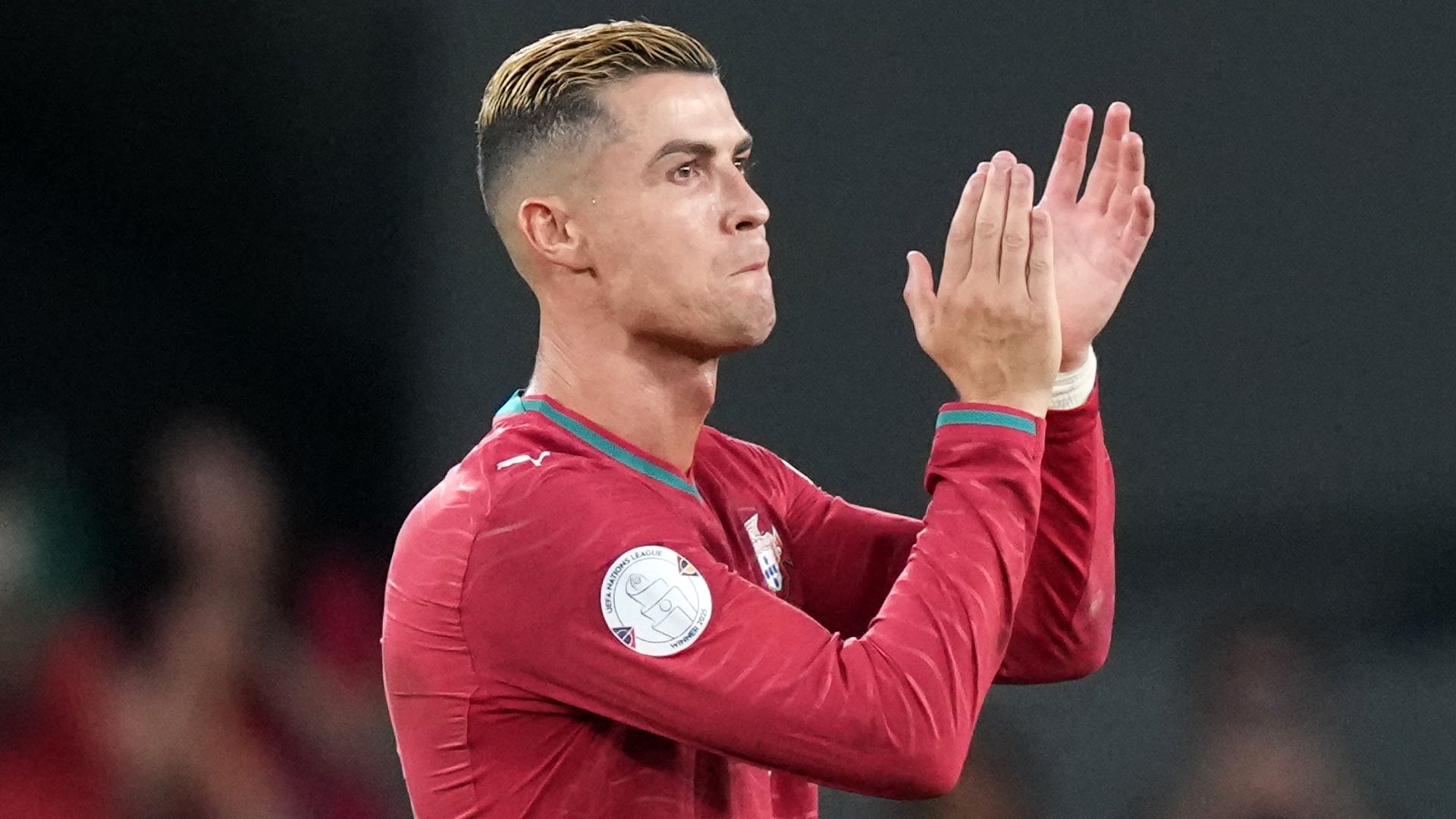
Cristiano Ronaldo has officially retired from international football, closing the book on an unprecedented career with the Portuguese national team that spanned over two decades, more than 200 caps, and well over 130 international goals. While the headlines focus on the end of an era and the raw statistical dominance of a five-time Ballon d'Or winner, the actual story sits beneath the surface of press releases and highlight reels. His departure forces a massive tactical, commercial, and psychological restructuring inside the Portuguese Football Federation while exposing the harsh economic realities of modern international soccer.
The Tactical Liberation of Portugal
For the past four years, managing Portugal meant solving one specific, recurring math problem. How do you integrate a legendary, goal-obsessed penalty-box striker into a modern pressing system without sacrificing the defensive structure of the entire squad?
It was an impossible equation. Modern elite international football—the kind played by Spain, France, and Argentina—relies on relentless, coordinated front-foot pressing from the very first whistle. Every forward must trigger the press, cut off passing lanes, and sprint backward when possession is lost. In his late thirties and early forties, Ronaldo simply could not execute that physical workload over ninety minutes against top-tier opposition.
Coaches like Fernando Santos and Roberto Martínez found themselves trapped between tactical pragmatism and institutional gravity. Dropping Ronaldo meant inviting a media firestorm, fracturing the dressing room, and risking the wrath of fans who viewed the captain as untouchable. Starting him meant playing with ten outfielders out of possession and funneling every attack through a single focal point, often slowing down transitions that younger, explosive attackers like Rafael Leão, Pedro Neto, and Gonçalo Ramos thrive upon.
Now, the tactical handcuffs are off.
Without Ronaldo occupying the central channel, Portugal immediately transforms from a predictable, cross-heavy side into a fluid, interchangeable attacking unit. Midfielders like Bruno Fernandes and Vitinha no longer have to look up and instinctively force the ball toward the number seven shirt. Instead, they can play vertical passes into space, allowing runners from deep to exploit gaps left by retreating defenders.
Consider the structural shift in how Portugal builds out from the back:
- Fluidity over hierarchy: Attackers can rotate positions across the front three without worrying about vacating the space Ronaldo preferred to occupy.
- High-turnover efficiency: A younger front line can sustain a high block for 75 minutes, winning the ball closer to the opponent's goal rather than defending in a mid-block to protect a veteran striker's legs.
- Set-piece diversification: For twenty years, almost every direct free kick within thirty-five yards belonged to one man, despite a declining conversion rate in major tournaments. Specialized dead-ball takers now get their turn.
The Commercial Void Inside the Federation
If the tactical picture brightens immediately, the financial ledger inside the Federação Portuguesa de Futebol (FPF) looks far bleaker. You cannot overstate what Ronaldo meant to the balance sheet of Portuguese soccer.
Before 2003, Portugal was a respected footballing nation with a history of producing brilliant technicians like Eusébio and Luís Figo, yet it lacked sustained global commercial appeal. Ronaldo turned the national team into a Tier-One global entertainment brand. When Portugal booked friendly matches in neutral venues across North America, the Middle East, or Asia, the appearance fees commanded by the FPF were largely dictated by a single clause in the contract: Ronaldo had to play at least 45 minutes.
Broadcasters paid premiums for Portuguese qualifiers. Kit manufacturers poured tens of millions into sponsorship renewals because the red-and-green jersey with the number seven on the back was a guaranteed bestseller from Tokyo to New York.
That commercial shield is gone.
Over the next two years, the FPF will experience what industry analysts call the post-superstar valuation correction. Sponsorship tiers will be renegotiated without the leverage of the most followed human being on social media. Ticket demand for non-tournament international fixtures will inevitably soften. The federation spent two decades building an infrastructure funded by the gravitational pull of one athlete; now, executives in Lisbon have to figure out how to market a collective ensemble to casual global fans who tuned in for a single icon.
The Myth of the Graceful Exit
Sports media loves a fairy tale. Reporters routinely write about athletes "going out on top" or "riding off into the sunset" with a trophy held high.
In reality, that almost never happens for generational superstars. Icons do not retire when they are still at their peak; they retire when the friction between their internal ambition and their external reality becomes unbearable. Look at the historical precedent across elite sports. Michael Jordan lingered with the Washington Wizards. Peyton Manning won a final Super Bowl while physically unable to throw a spiral more than twenty yards. Even Lionel Messi had to drastically alter his defensive responsibilities in the twilight of his international run to make the system work around him.
Ronaldo’s departure from international football follows this exact, gritty pattern. His pride, work ethic, and pathological refusal to accept decline fueled his rise from Madeira to the pinnacle of world sport. Those same traits made walking away extraordinarily difficult. For an athlete whose entire identity is built on proving doubters wrong and breaking records, stepping aside voluntarily feels like surrendering to time.
Yet the margins at the international level are razor-thin. Unlike club football, where a 38-game domestic league season allows a veteran striker to feast on weaker bottom-half teams and pad statistical totals, international tournaments are ruthless, single-elimination gauntlets. One sluggish performance in the Round of 16 ends four years of preparation. The physical recovery time required between matches played every four days in a major summer tournament punishes older bodies mercilessly.
Dressing Room Gravity and the Succession Crisis
Every locker room has an invisible hierarchy, and for twenty years, Portugal's hierarchy had a ceiling. You could become a Champions League winner at Manchester City, Real Madrid, or Paris Saint-Germain, yet the moment you walked through the doors of the Cidade do Futebol training complex outside Lisbon, you were a supporting actor.
This dynamic creates a subtle psychological dependency. When matches turn ugly—when a team goes a goal down in the 70th minute of a qualifier in Belgrade or Dublin—players instinctively look toward the alpha figure to bail them out. It absolves younger stars of ultimate accountability. If Portugal lost, the headlines were about Ronaldo. If they won, the headlines were about Ronaldo.
Now, the safety net has vanished.
Players like Bruno Fernandes, Bernardo Silva, and Rúben Dias are no longer the next generation; they are the established veterans who will bear the full weight of public expectation. In Portugal, where football is less a pastime and more a national obsession, scrutiny from the sports dailies like A Bola and Record is relentless. Without Ronaldo absorbing 80 percent of the oxygen in every press conference and post-match autopsy, every missed penalty, tactical misstep, and defensive lapse will fall squarely on the shoulders of the current core.
Let us be clear about the risk here. Sometimes, removing a dominant leader unleashes suppressed leadership potential across the squad. Other times, it creates a power vacuum where talented individuals struggle to assert authority when chaos hits on the pitch. Portugal possesses one of the deepest talent pools in European football, rivaled only by France and England in sheer technical quality per capita. Talent, however, does not automatically translate into tournament resilience.
What the Record Books Miss
Analysts will spend the next decade debating Ronaldo’s place in the pantheon of international football. The raw numbers are absurd and will likely stand for generations. Surpassing Ali Daei’s long-standing men's international goal record was once considered mathematically improbable; Ronaldo shattered it and kept pushing the ceiling higher.
Still, evaluating his international career purely through goal tallies misses the real transformation he engineered. Before Ronaldo debuted in August 2003, Portugal had qualified for just three World Cups in its entire history (1966, 1986, and 2002) and had never won a major international trophy. Qualification for major tournaments was treated as an achievement in itself, often celebrated with relief rather than expectation.
Since his arrival, Portugal has not missed a single World Cup or European Championship. They lifted Euro 2016 in Paris—even with Ronaldo watching the extra-time winner from the touchline in tears after a knee injury—and captured the inaugural UEFA Nations League in 2019.
He shifted the baseline mentality of an entire footballing nation from hopeful underdogs to entitled contenders. Young kids growing up in academies in Sporting, Benfica, and Porto today do not dream of merely making the national squad; they expect to win international silverware. That cultural rewiring is far harder to achieve than scoring a hat-trick in a World Cup group stage match, and it remains his most durable legacy.
The Global Blueprint for Aging Icons
Football executives, sports scientists, and athlete brand managers are studying the final chapter of Ronaldo’s international career as a case study in longevity—and its limits.
Through hyperbaric chambers, cryotherapy, strict sleep hygiene, and obsessive nutritional discipline, Ronaldo extended his biological prime by nearly a decade beyond the traditional retirement age for outfield players. In the early 2000s, a winger turning 32 was considered ready for a slower league; Ronaldo was still winning Champions Leagues and carrying national teams well into his late thirties.
His trajectory proved that physiological decline can be delayed significantly through capital and discipline. At the same time, his final years with Portugal demonstrated that biological preservation cannot outrun tactical evolution. You can keep the muscles firing and the body fat percentage in the single digits, yet you cannot stop the sport itself from becoming faster, more collective, and less forgiving of static specialists.
National teams around the world facing similar dilemmas with their own aging legends—whether it is Belgium navigating the twilight of Kevin De Bruyne or Croatia managing the post-Luka Modrić transition—are watching closely. Holding onto a legend for one tournament too many can stall the development of the next cycle by four full years. Cutting ties too early risks alienating a fanbase and discarding irreplaceable big-game experience.
Portugal waited until the absolute final whistle of the Ronaldo era before turning the page, leaving a generation of elite players ready to step into the light—and out of excuses.