The Cable News Theater is Lying to You
Every time a former commander-in-chief steps up to a podium and throws a jab at the current political circus, the media apparatus mobilizes standard playbooks.
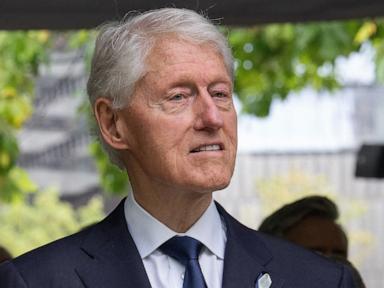
"Bill Clinton takes veiled public shot at Trump's actions: 'Hard to make up.'"
That was the headline. That was the consensus. A elder statesman standing up for decorum, winking at an audience, reminding the world of a time when politics supposedly possessed dignity and restraint.
It is pure, unadulterated theater.
The narrative assumes two things: first, that political discourse used to be a sacred temple of principled debate; second, that the weaponization of outrage is a recent bug introduced by modern populism, rather than a deliberate feature perfected over the last thirty years.
I sat in editorial rooms and policy desks through three decades of these news cycles. I watched the architects of 1990s political triangulation build the very machinery they now pretend to abhor. When political commentators gasp at "unprecedented" rhetoric, they are either suffering from collective amnesia or selling subscriptions to people who want their moral outrage validated.
The truth is far uncomfortable: the modern political environment wasn't destroyed by line-crossers. It was built by masters of political positioning who realized early on that substance is expensive, but spectacle pays immediate dividends.
Triangulation: The Blueprint for Modern Outrage
To understand why public jabs are meaningless, you have to look at how political communication actually operates under the hood.
In 1996, the dominant political strategy became "triangulation." The concept, popularized by strategist Dick Morris during the Clinton administration, was simple: position the leader above and between the left and right wings of traditional debate. Instead of standing on ideological conviction, you co-opt the opponent's best talking points, neutralize their platform, and leave them with nothing to stand on except performance.
       [ Modern Political Strategy ]
                    ▲
                   / \
                  /   \
   [ Left Wing ] <-----> [ Right Wing ]
                    │
            (Triangulation)
What did this actually achieve? It stripped policy of real ideological contrast and replaced it with personality warfare.
When policy differences shrink to micro-adjustments in tax credits and trade agreements, how do you mobilize voters? You don't mobilize them on governance; you mobilize them on character, vibe, and tribal identity.
- Policy Convergence: Both major parties spent decades quietly agreeing on core financial deregulations, global supply chain dependencies, and foreign intervention frameworks.
- Rhetorical Escalation: Because the actual policy differences were narrow, the language required to differentiate candidate A from candidate B had to get exponentially louder.
- The Outrage Economy: News networks realized that policy breakdowns yield low ratings, while character attacks create addicted viewers.
When an elder statesman shakes his head today and says modern politics is "hard to make up," he is critiquing the Frankenstein monster built in his own laboratory. The shift from policy-driven debates to personal character assassination wasn't a violation of the rules—it was the logical endpoint of the strategy.
Why "Decorum" is a Terrible Metric for Leadership
The central flaw in standard commentary is the obsession with decorum. Critics assess political health by the politeness of the commentary rather than the mechanics of political execution.
This focus on decorum creates a dangerous blind spot. It assumes that as long as a politician speaks in structured sentences, respects institutional norms on camera, and avoids vulgarity, the governance beneath is sound. History tells a completely different story.
| Metric | Decorum-Era Politics (1990s–2000s) | Modern Outrage Era (2010s–Present) |
|---|---|---|
| Primary Currency | Institutional credibility & policed language | Direct engagement & shock value |
| Public Perception | Managed stability, hidden friction | Raw polarization, explicit conflict |
| Policy Delivery | Quiet bipartisan consensus on trade/finance | Gridlock punctuated by executive action |
| Media Dynamic | Curated access via traditional networks | Algorithmic amplification via direct channels |
Some of the most destructive policy decisions of the last half-century—from the deregulation of complex financial derivatives to sweeping crime bills that devastated communities—were passed with polite handshakes, bipartisan smiles, and impeccable decorum.
Imagine a system where two mechanics inspect your broken engine. One mechanic speaks politely, wears a spotless uniform, and assures you everything is fine while quietly removing the brakes. The second mechanic stands in the shop, yells at the top of his lungs, calls the car a scrap heap, and punches the hood.
The political media spends 100% of its energy dissecting the second mechanic's language while ignoring the fact that neither mechanic is fixing the car.
Decorum is an aesthetic, not an ethic. When we treat polite speech as the high-water mark of statesmanship, we invite leaders to hide terrible outcomes behind polished performance.
The Feedback Loop of Manufactured Surprises
Every time a political figure drops a phrase like "hard to make up," the media acts as if a novel truth has been spoken. They call it a "veiled shot" or a "stinging rebuke."
It is neither. It is a calculated transaction in a media ecosystem that demands constant content.
   +-------------------------------------------------------+
   |             The Manufactured Outrage Cycle            |
   +-------------------------------------------------------+
   |                                                       |
   |   1. Politician delivers curated "zingers"           |
   |      │                                                |
   |      ▼                                                |
   |   2. Media frames quote as "unprecedented jab"        |
   |      │                                                |
   |      ▼                                                |
   |   3. Audiences consume and share based on bias       |
   |      │                                                |
   |      ▼                                                |
   |   4. Ratings soar; original policy issues forgotten    |
   |                                                       |
   +-------------------------------------------------------+
Here is the mechanical reality of how these moments function:
- The Setup: A legacy figure speaks at a foundation, university, or donor event. The speech is engineered to contain one or two "soundbite landmines"—phrases structured specifically to be extracted for news chyrons.
- The Amplification: Outlets run the quote without context, asking panels of pundits, "What did he mean by this?" as if they are interpreting ancient hieroglyphics rather than plain English.
- The Reaction: The target of the quote responds with an even more outrageous post or commentary, resetting the 24-hour news clock.
- The Distraction: Real structural issues—national debt trajectories, supply chain vulnerabilities, decaying infrastructure, institutional bloat—are pushed off the front page for another three days.
This cycle isn't an accident. It is a mutually beneficial agreement between politicians who need relevance and media organizations that need screen time.
Stop Looking for Heroes in the Rearview Mirror
The most foolish impulse in modern political commentary is nostalgia.
When commentators highlight jabs from figures of the past, they are selling a fantasy: the idea that if we just return to the rhetoric of 1992 or 1996, the system will magically heal itself.
That past never existed. The political era nostalgia-mongers look back on was the very incubation chamber for today's hyper-fragmented environment.
- The deregulation of media ownership in the 1990s laid the groundwork for echo-chamber broadcasting.
- The shift from local precinct organizing to mega-donor fundraising campaigns turned candidates into branding exercises.
- The replacement of real legislative work with executive orders and soundbite battles began long before the current roster of politicians took the stage.
Nostalgia is a sedative. It lulls voters into thinking the problem is merely bad manners, rather than structural decay.
If you want to evaluate leadership, strip away the commentary entirely. Ignore the veiled shots, the press room quips, and the Twitter clashes. Look at the balance sheet. Look at the legislation. Look at the long-term impact on systemic stability.
Until we stop treating political commentary like a soap opera critique, we will keep getting the exact performance we deserve.