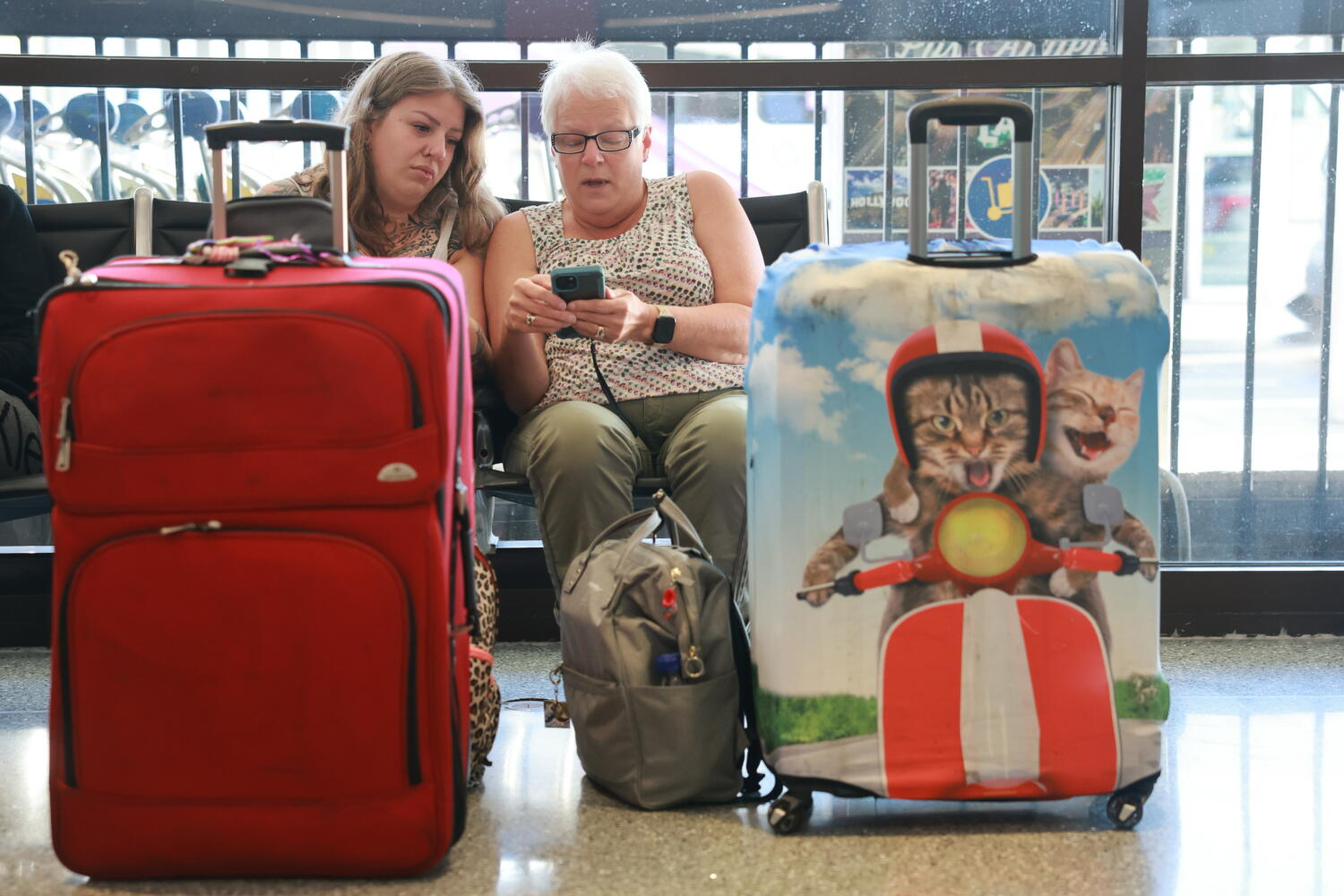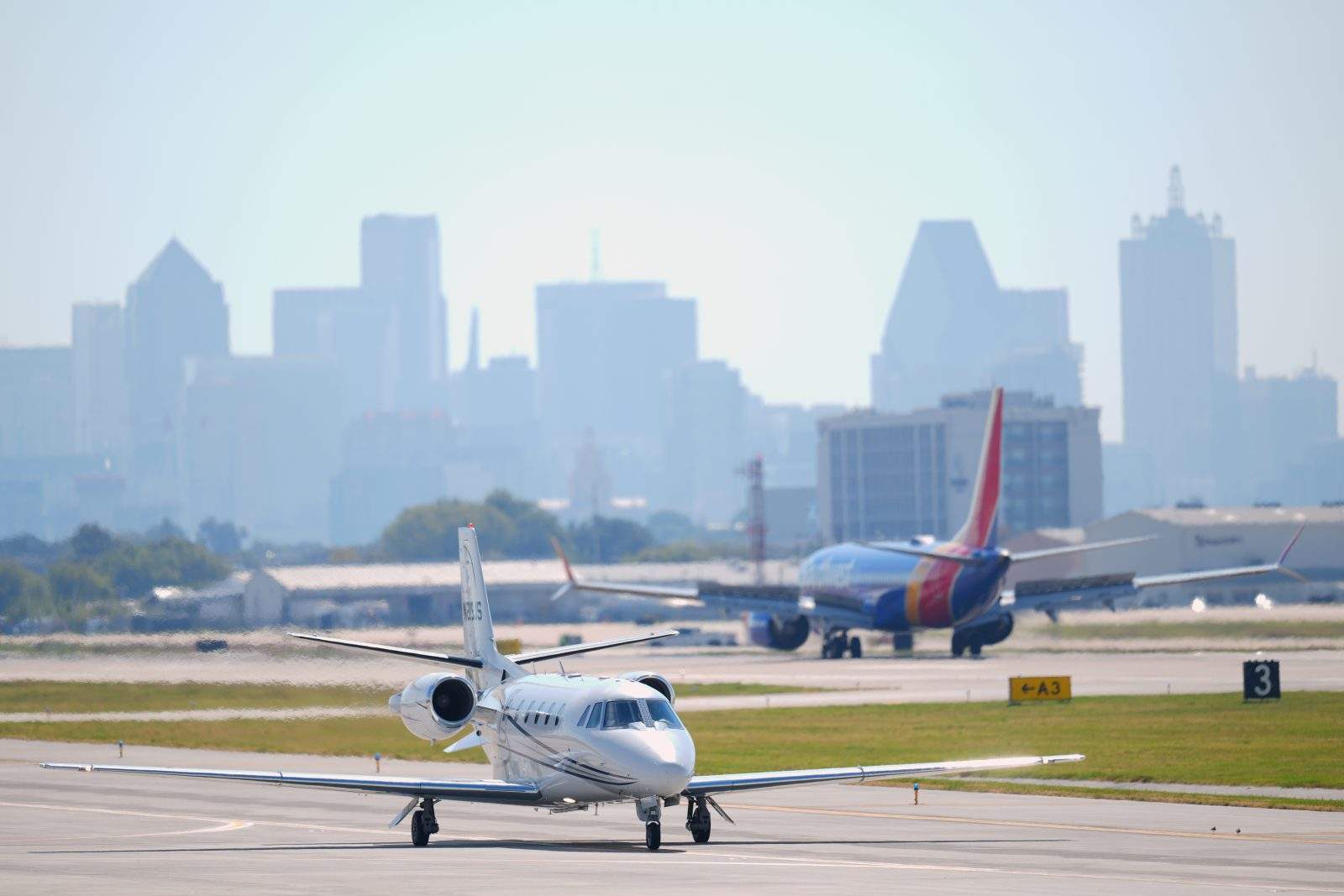
When an air traffic control communication outage forces the Federal Aviation Administration to ground flights nationwide, the immediate cause is rarely a dramatic cyberattack or an isolated hardware fluke. Instead, these nationwide ground stops happen because America’s airspace runs on a brittle patchwork of aging copper wiring, legacy mainframe computers, and dangerously understaffed radar facilities. When a single regional telecommunications hub or voice switching system fails, controllers lose the ability to speak directly with pilots or see accurate radar handoffs. Under strict federal safety protocols, zero communication means zero movement, triggering an instant domino effect that strands hundreds of thousands of passengers within minutes.
To understand why a localized equipment failure paralyzes an entire continent, you have to look behind the curtain of the National Airspace System. Most travelers imagine air traffic control as a sleek, satellite-driven command center straight out of a modern aerospace thriller. The reality is closer to a museum of late-twentieth-century telecommunications held together by duct tape, institutional memory, and heroic troubleshooting by overworked technicians. Learn more on a connected topic: this related article.
How a Single Failure Freezes the Sky
Commercial aviation relies on absolute precision. At any given moment during peak daytime hours, roughly five thousand commercial aircraft are moving through United States airspace at speeds exceeding five hundred miles per hour. Keeping those aluminum tubes separated requires continuous, redundant data streams and instantaneous voice channels.
When an air traffic control communication outage occurs, it typically strikes one of two critical arteries. The first is the voice switching and control system, the massive telephone switchboard that routes radio frequencies from ground antennas to controller headsets. The second is the telecommunications backbone—often leased lines operated by private telecom carriers—that carries radar data and flight plans between regional Air Route Traffic Control Centers. Additional analysis by Associated Press highlights similar perspectives on this issue.
Safety rules leave zero room for guesswork. If a sector controller loses primary and backup radio frequencies, or if radar screens stop updating aircraft altitude and airspeed, the FAA must immediately issue a ground stop. Planes currently in the air are handed off to adjacent sectors, placed into holding patterns, or diverted to the nearest available airport. Meanwhile, every aircraft sitting on a tarmac bound for the affected airspace is held at the gate.
Consider a hypothetical scenario to see how fast the gridlock spreads. Imagine a primary fiber-optic trunk line feeding the Atlanta Air Route Traffic Control Center gets severed by a construction crew, and the secondary backup circuit fails to switch over due to a configuration mismatch. Within three minutes, controllers overseeing the busiest airspace corridor on the East Coast go dark.
Flights departing Miami, New York, Chicago, and Dallas that must pass through Georgia airspace are immediately frozen on the ground. Within thirty minutes, departure gates at dozens of airports are clogged with stationary jets. Incoming flights land, have nowhere to park, and sit on taxiways burning fuel. By hour two, flight crews begin hitting their federally mandated maximum duty hours, meaning even after the communication lines are restored, airlines cannot legally fly the planes until fresh pilots and flight attendants are deadheaded in from other cities.
The Infrastructure Debt Nobody Wants to Pay For
For decades, aviation insiders, government watchdogs, and inspector general reports have warned that the FAA is operating on borrowed time. The agency manages thousands of facilities, many built in the 1960s and 1970s, housing equipment that has long passed its intended service life.
Replacement parts are a chronic headache. Technicians regularly scour secondary markets or rely on custom-fabricated components to keep legacy systems running because original manufacturers went out of business twenty years ago. Some critical subsystems still depend on antiquated operating systems and physical paper flight strips as a last-resort failsafe when automated screens freeze.
Why hasn't this been fixed? The answer lies in the dysfunction of federal funding and the sheer scale of the engineering challenge.
- Stop-and-Go Congressional Budgeting: Modernizing national airspace infrastructure requires predictable, multi-year capital investments. Instead, the FAA has repeatedly been subjected to short-term continuing resolutions and budget standoffs that stall long-term procurement contracts.
- The Live-Surgery Dilemma: You cannot shut down the United States economy for six months to rip out old wires and install new servers. Every upgrade must be performed while thousands of lives hang in the balance overhead, forcing engineers to build parallel systems and execute agonizingly slow cutovers.
- The NextGen Bottleneck: For over two decades, the FAA has poured billions of dollars into the Next Generation Air Transportation System (NextGen), aiming to transition from ground-based radar to satellite-based GPS tracking. While satellite navigation has improved routing efficiency, the underlying ground communications infrastructure—the actual pipes moving the data—has often been left behind.
When an outage hits, officials inevitably describe it as a "rare anomaly." Veterans of the industry know better. It is the predictable mathematical outcome of running high-density modern flight schedules through twentieth-century plumbing.
The Invisible Crisis Inside the Control Room
Hardware is only half the story. The other major vulnerability amplifying every air traffic control communication outage is an acute, worsening shortage of certified professional controllers.
Across the country, critical facilities—particularly high-traffic terminal radar approach control centers and en-route centers—are operating well below their targeted staffing levels. Many controllers are working mandatory six-day weeks and ten-hour shifts just to keep normal operations moving. Fatigue is baked into the daily schedule.
When equipment fails, staffing shortages turn a manageable hiccup into a systemic meltdown. Handling a communication outage requires intense cognitive load. Controllers must instantly shift to manual separation procedures, increase spacing between aircraft, coordinate frantically via landline telephones with neighboring facilities, and manage pilots declaring low-fuel emergencies due to unexpected holding patterns.
A fully staffed facility can split sectors, putting two controllers on a single scope—one to talk to pilots and one to coordinate landlines and paperwork. An understaffed facility does not have that bench strength. One exhausted controller is left juggling radios, backup frequencies, and emergency reroutes simultaneously. To keep the sky safe under those conditions, the FAA has only one lever left to pull: shut the tap off completely and ground flights nationwide.
Why Airlines Struggle to Recover After the Fix
Passengers often watch the news in frustration when an outage lasts forty-five minutes, yet their flight remains canceled twelve hours later. From the outside, it looks like corporate incompetence. Inside airline operations centers, it is a brutal math problem.
Modern commercial airlines operate on a tightly wound hub-and-spoke network designed for maximum aircraft utilization. A single Boeing 737 or Airbus A321 might be scheduled to fly five or six legs in a single day, bouncing from Boston to Charlotte, then to Phoenix, Seattle, and back east. There is almost zero slack built into the schedule because an airplane sitting on the ground loses money.
When a ground stop halts departures for even an hour, that carefully choreographed ballet collapses.
The Crew Legality Trap
Federal Aviation Administration regulations strictly govern how many hours pilots and flight attendants can remain on duty. These rules exist for obvious safety reasons, preventing exhausted crews from flying commercial jets. However, when a communication outage traps crews on the tarmac for three hours, their duty clocks keep ticking.
Once the FAA lifts the ground stop, hundreds of crews suddenly "time out." They are legally required to walk off the airplane and go to a hotel for mandatory rest. Even if the runway is clear and the radar screens are glowing green, an airline cannot move an aircraft without a legal crew.
Aircraft Out of Position
At the same time, airplanes end up in the wrong cities. A widebody jet supposed to fly from New York to London might be stuck in a diversion airport in Bangor, Maine, or Pittsburgh. Rebuilding the schedule requires untangling thousands of interlocking crew pairings, maintenance checks, and gate assignments. Automated recovery software helps, but during a nationwide disruption, airline dispatchers spend days manually stitching the network back together.
What Actually Needs to Change
Fixing this vulnerability requires moving past press releases and task forces. Industry analysts, aviation safety boards, and labor unions largely agree on the core remedies, though none of them are cheap or politically convenient.
First, the FAA must decouple critical infrastructure maintenance from annual political budget battles. Dedicated, protected capital funding is essential to accelerate the replacement of aging copper circuits with modern, multi-path fiber and IP-based communication networks. True redundancy means ensuring that a backup line does not run through the exact same physical conduit or switchboard as the primary line—a shockingly common flaw in legacy installations.
Second, the controller training pipeline needs an aggressive overhaul. Training a fully certified air traffic controller takes two to three years of intense simulator and on-the-job instruction, and the washout rate at the FAA Academy remains high. Expanding training capacity, modernizing simulator technology, and addressing chronic burnout are non-negotiable if the system is going to handle projected air traffic growth.
Third, transparency around infrastructure resilience needs teeth. Airlines and passengers routinely absorb billions of dollars in economic losses when federal systems fail, yet accountability often disappears into bureaucratic reviews. Independent audits of single-point-of-failure vulnerabilities across all major en-route centers should be mandatory, public, and tied to strict remediation deadlines.
Navigating the Fallout When the System Fails
Until the federal government finishes rebuilding the invisible architecture of the sky, nationwide outages will remain an unavoidable hazard of modern travel. If you are caught in the terminal when a ground stop hits, waiting in a two-hundred-person customer service line is the worst move you can make.
Open your airline’s mobile app immediately to look for rebooking options before inventory vanishes, while simultaneously calling the carrier’s international support number, which often connects faster than domestic lines during a U.S. crisis. Under Department of Transportation rules, if your flight is canceled due to an outage—even one caused by the FAA rather than the airline—and you choose not to travel, you are legally entitled to a full cash refund to your original payment method, not a travel voucher. However, because air traffic control failures are classified as outside the airline's direct control, carriers are not federally required to pay for your hotel rooms or meals during the delay.
Keep your receipts, book refundable backup fares on competing carriers if you have an immovable deadline, and watch the incoming flight tracker rather than the departure board—because until the inbound plane actually touches down at your gate, your scheduled departure time is pure fiction.