Universal acclaim on launch day is the easiest lie in video games.
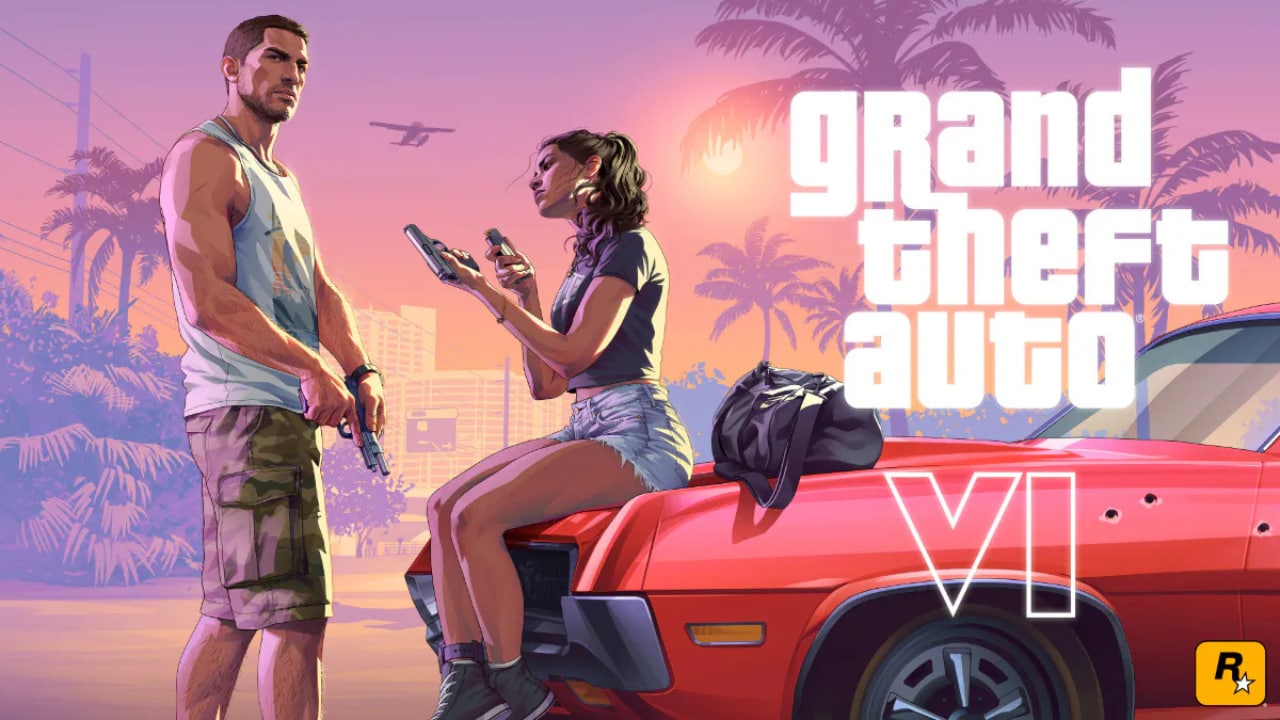
Open any major gaming outlet right now and you will read the exact same breathless script about Grand Theft Auto VI. Reviewers are throwing out perfect tens like confetti at a parade. They are praising the density of Vice City, the photorealistic humidity, the sheer scale of Leonida, and the effortless transition between Lucia and Jason. The lazy consensus is already locked in: Rockstar Games has done it again, the decade-plus wait was justified, and the industry has a new gold standard.
That consensus misses the forest for the ray-traced palm trees.
Early reviews of mega-budget open-world games are structurally broken. When critics have seventy-two hours under a strict embargo to sprint through a forty-hour campaign and sample a fraction of the side activities, they are not reviewing a video game. They are reviewing a theme park on opening morning before the lines form, before the paint peels, and before the gift shop prices double.
I have watched major studios burn hundreds of millions of dollars chasing the exact kind of launch-week Metacritic scores that Grand Theft Auto VI is racking up right now. Everyone looks at the 98 average score and assumes victory. Nobody looks at what happens to game design, player agency, and the broader market when a single release is treated as an untouchable cultural monolith rather than a piece of interactive software with glaring structural tradeoffs.
The Launch-Day Honeymoon Is A Mirage
Critics love spectacle. Spectacle photographs well, generates viral clips, and makes for effortless review copy. Grand Theft Auto VI has spectacle in absurd abundance. Every puddle reflects neon accurately. Every non-player character appears to have a daily routine, a smartphone, and a reactive social media feed.
Here is the problem: technical fidelity is not the same thing as mechanical depth.
For over twenty years, Rockstar’s core mission design has relied on rigid, hyper-scripted choreography disguised as open-world freedom. You can steal any car and drive down any alley between missions, yet the moment you step onto a yellow objective marker, the game puts you in handcuffs. Walk ten feet off the intended path to flank an enemy, and a "Mission Failed" screen resets your progress. Park your getaway vehicle two inches outside the designated glowing circle, and the script refuses to advance.
Reviewers playing on a deadline rarely push against those invisible walls because they are racing the clock to finish the story before their embargo lifts. They follow the breadcrumbs, admire the acting, praise the writing, and slap a 10/10 on the page. They mistake a brilliant interactive movie for an evolution in open-world systems.
Compare that approach to true systemic design. Look at how The Legend of Zelda: Tears of the Kingdom or Baldur's Gate 3 handle player intent. When a player solves a problem in a way the developers never anticipated, those games reward the curiosity. Rockstar’s formula, even with the generational leap in hardware power behind Grand Theft Auto VI, still prioritizes cinematic framing over player improvisation. You do not solve a heist in Vice City; you perform the choreography Rockstar wrote for you while hitting your marks on time.
The People Also Ask Trap
Whenever a release of this magnitude hits the market, search engines flood with the same predictable questions from players trying to decide how to spend their money and time. Most of those questions are built on flawed assumptions.
Is Grand Theft Auto VI worth the hype?
You are asking the wrong question. Hype is a marketing metric, not a quality metric. With a development budget widely estimated by industry analysts to exceed a billion dollars and a marketing blitz spanning multiple years, Grand Theft Auto VI was engineered to feel mandatory. Worth is entirely dependent on what you value in a game. If you want an unmatched virtual tourism simulator with razor-sharp satire of modern American absurdity, yes, nothing else comes close. If you want tight, responsive third-person shooting mechanics or genuine freedom in how you tackle objectives, the hype will leave you frustrated within ten hours.
Did Rockstar fix the clunky controls from Red Dead Redemption 2?
Partially, and that is the honest truth nobody in the launch-week hype cycle wants to emphasize. Rockstar uses a procedural animation system called Euphoria to give characters realistic weight and momentum. When Lucia turns around in a tight hallway or vaults over a concrete barrier, the animation looks astonishingly lifelike. That visual realism still comes at the expense of input latency. Your character has to finish planting a foot before shifting weight. Competitive shooters and modern action games prioritize immediate responsiveness over anatomical accuracy. Rockstar still chooses animation priority every single time. It feels smoother than Red Dead Redemption 2, certainly, yet it remains sluggish compared to almost any other modern third-person action title.
Will Grand Theft Auto VI save the gaming industry?
This is the most dangerous myth circulating in business press right now. The video game industry has spent the last few years enduring brutal layoffs, studio closures, and ballooning development timelines. Executives are praying that Grand Theft Auto VI will act as a rising tide that lifts all boats, bringing lapsed players back to consoles and convincing investors that triple-A gaming is thriving.
It will do the exact opposite.
The Economic Black Hole Of A Generational Hit
Imagine a scenario where every consumer in a small town has exactly seventy dollars to spend on dinner this month, and a billion-dollar restaurant opens down the street offering an all-you-can-eat wagyu steak buffet for that exact price. The local pizzeria, the family taco stand, and the mid-tier bistro do not benefit from the excitement. They go bankrupt.
That is the actual market impact of Grand Theft Auto VI.
Consumer attention and discretionary spending are finite. When millions of players sink two hundred hours into Leonida over the next six months, they are not buying mid-sized, forty-dollar experimental games. They are not taking chances on new intellectual property from mid-tier publishers. Every major publisher spent the last year terrified of scheduling their releases anywhere near Rockstar’s launch window, creating artificial droughts followed by suicidal pileups on the release calendar.
Worse, corporate executives draw the wrong lessons from outliers. I have seen boardrooms look at the revenue of Grand Theft Auto V—which cleared over eight billion dollars across three console generations—and demand that their own studios build live-service open worlds with similar retention metrics. They ignore the fact that Rockstar spent over a decade refining proprietary engine technology, employs thousands of specialized developers across multiple global studios, and possesses a brand identity built over twenty-five years. Trying to copy Rockstar’s blueprint without Rockstar’s war chest is corporate suicide. We have already watched dozens of live-service projects collapse under their own weight because executives mistook a cultural anomaly for a replicable business model.
The Single-Player Story Is Just A Trojan Horse
Read the glowing launch reviews closely and notice what is missing from almost every single one of them: the actual product Rockstar intends to sell for the next ten years.
Reviewers are grading the single-player campaign in a vacuum. They are praising the nuanced relationship between Lucia and Jason, the sharp commentary on influencer culture, and the absence of aggressive microtransactions in the story mode. That single-player experience is a loss leader. It is an elaborate, breathtakingly expensive onboarding tutorial designed to get tens of millions of players installed on the platform before the multiplayer economy switches on.
We already know how this playbook works because we watched it unfold with Grand Theft Auto Online.
When Grand Theft Auto V launched in 2013, critics raved about the three-protagonist structure and the satirical bite of Los Santos. Within two years, Rockstar canceled planned single-player story expansions because selling virtual currency cards in the online mode generated vastly higher profit margins with a fraction of the narrative overhead. Over the following decade, the online economy warped the game entirely. Grounded crime drama gave way to flying rocket bikes, orbital cannons, and hyper-inflated virtual real estate designed to nudge impatient players toward spending real money.
Praising Grand Theft Auto VI on day one for its artistic integrity without acknowledging the monetization engine waiting in the wings is like praising a casino for the quality of its complimentary shrimp cocktail. The food is fantastic, and the architecture is stunning, yet the house is still built to extract your money long after the novelty wears off.
Where The Critics Got It Right—And Why It Still Hurts
To dismiss Grand Theft Auto VI entirely would be dishonest. Credit where it is due: Rockstar’s world-building team operates on a level nobody else in interactive entertainment can touch.
The audio design alone deserves a technical award. Standing on a Vice City street corner at dusk, listening to the layered hum of distant traffic, muffled bass from a passing convertible, cicadas in the mangroves, and overlapping conversations in English and Spanish creates an atmosphere that makes other open-world games feel like sterile stage sets. The environmental storytelling—from decaying strip malls to hyper-manicured billionaire enclaves—captures the specific texture of modern Florida with uncanny precision.
Yet even this triumph comes with an undeniable downside for the medium. By pushing photorealism and environmental density to this extreme, Rockstar has raised baseline consumer expectations to an unsustainable height. Players who spend a month in Grand Theft Auto VI will boot up a game from a smaller, fifty-person studio and immediately complain that the water physics look dated or that the crowd density feels sparse.
We are conditioning audiences to equate budget with quality. When a game needs two thousand developers and ten years to meet the baseline expectation of "immersive," mid-sized creative risks die out. Innovation rarely comes from billion-dollar productions; billion-dollar productions are far too risk-averse to experiment with weird mechanics that might alienate a mass audience. Innovation comes from smaller teams with tight constraints. Every 10/10 review that treats Grand Theft Auto VI as the pinnacle of the art form reinforces the dangerous idea that bigger always means better.
How To Play Without Falling For The Trap
If you are jumping into Vice City this week, ignore the critical hysteria and change how you engage with the game.
- Turn off the minimap immediately. Rockstar’s games suffer terribly from "GPS eye," where you spend eighty percent of your driving time staring at a tiny purple line in the corner of the screen instead of looking at the world they spent a billion dollars building. Learn the landmarks. Get lost. The game improves instantly when you stop treating it like an Uber driving simulator.
- Treat the main story as a tour, not a test. Do not try to outsmart the mission scripts. Play the missions the way a director blocks a scene—hit your marks, enjoy the dialogue, and soak in the set pieces. Save your experimentation for free roam, where the physics engine and police AI can actually react dynamically without triggering a failure state.
- Set a hard boundary before the online mode launches. Enjoy the single-player campaign for what it is: a massive, self-contained piece of interactive pop art. When the multiplayer suite rolls out and the inevitable grind for virtual status symbols begins, recognize the psychological hooks for what they are.
Grand Theft Auto VI is a monumental technical achievement, an impressive piece of cultural satire, and an undeniable commercial juggernaut. It is also a rigid, conservative piece of game design wrapped in a billion-dollar coat of paint, celebrated by critics who didn't have time to look past the shine.
Enjoy the spectacle in Vice City—just stop pretending it represents the future of great game design.