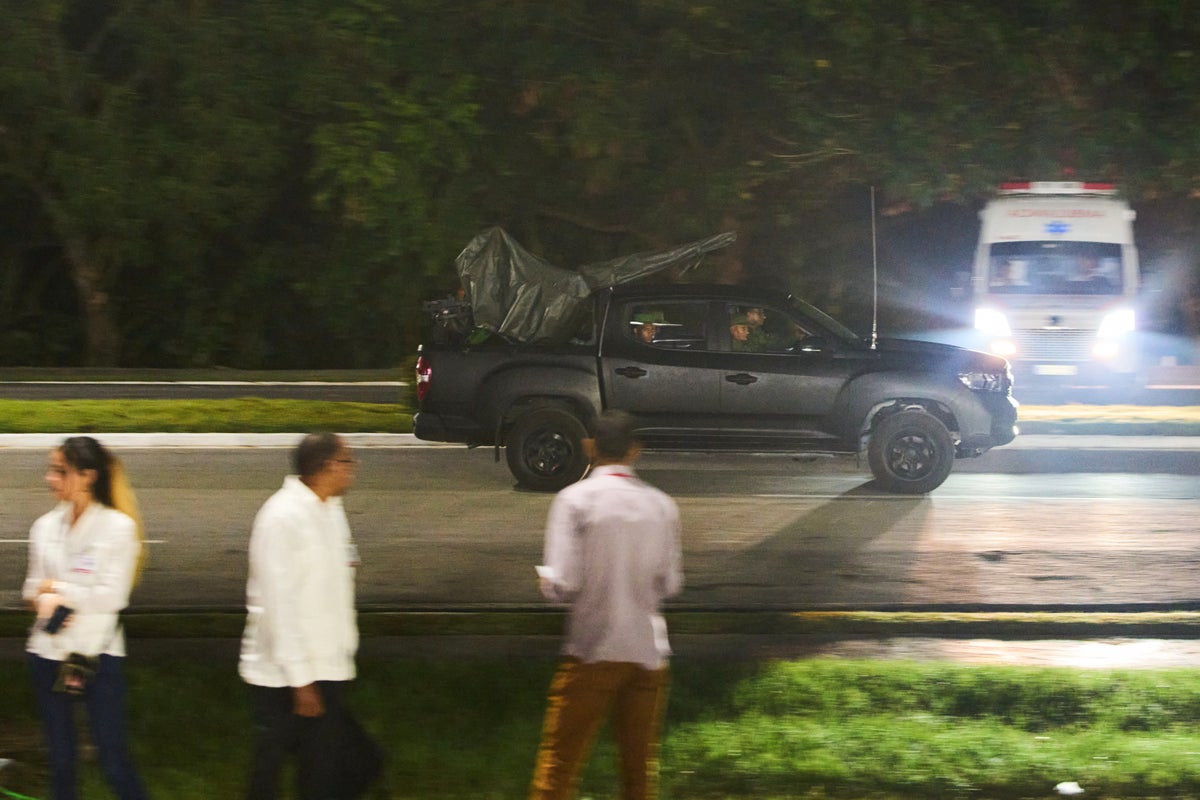
Every western desk editor with a Wi-Fi connection spent the morning hyperventilating over an empty chair. Raúl Castro did not show up for the anniversary of the Moncada barracks attack. The mainstream analysis arrived with predictable, clockwork laziness: aging revolutionary leadership, a symbolic fracture in the regime, an authoritarian state wobbling on its last legs because a nonagenarian skipped a parade.
It is a narrative built for people who understand Cuban politics entirely through the lens of a Cold War spy thriller. It is also completely wrong.
Focusing on who sits on a viewing platform misses the structural reality of how power actually operates on the island today. Cuba is not waiting for a geriatric ghost to vanish before it changes; it is already transforming beneath the weight of an unprecedented economic contraction, and the old guard knows it. When analysts obsess over absences at commemorative rituals, they mistake theater for mechanics.
The Moncada Fallacy
Hagiography and obituary journalism share the same fatal flaw. They treat political longevity as structural permanence.
When the state media broadcasts footage of Díaz-Canel flanked by empty spaces where the historical generation used to stand, foreign correspondents read it as a succession crisis. They write long, speculative pieces about factional infighting between the military-industrial complex and the old-school party ideologues.
I have spent years tracking supply chains, currency reforms, and administrative bottlenecks inside the Caribbean basin. The reality on the ground in Havana, Santiago, and Cienfuegos has very little to do with ideological purity tests or who misses a national holiday. It is an excruciating daily scramble for fuel, grid stability, and basic caloric intake.
The lazy consensus says Raúl's absence signals a split. The actual data says the Cuban state is managing a managed contraction, prioritizing regime survival through localized decentralization while keeping the central security apparatus welded shut. They are not arguing over Marxist-Leninist doctrine in the politburo; they are calculating how many hours of rolling blackouts the population can absorb before social friction turns into physical revolt.
The Real Economy That Journalists Refuse to Cover
If you want to understand modern Cuba, throw away the speeches from the July 26 celebration and look at the import statistics from the Dominican Republic, Mexico, and Spain. Look at the expansion of small and medium-sized private enterprises, known locally as MIPYMEs, which the state grudgingly legalized to keep the shelves from going entirely bare.
Back in 2021, the government opened up private micro-businesses to absorb surplus labor and siphon hard currency off the black market. Western observers dismissed it as window dressing. They were wrong. Today, these private importers are the only reason food is moving into the provinces.
This creates a bizarre economic ecosystem. You have state salaries paid in collapsing pesos that cannot buy a carton of eggs, sitting right next to private stores stocked with imported goods priced in foreign currency or digital exchange rates.
Here is the nuance the media misses: the Cuban state is not being overthrown by capitalism; it is outsourcing its own survival to it.
The military conglomerate GAESA still controls the high-margin nodes of the economy—tourism, high-end retail, and major logistics. But they have effectively subcontracted the miserable, low-margin job of feeding the population to a new class of private entrepreneurs. These business owners are not nascent democrats or Western-style venture capitalists. They are survivors cutting deals with municipal bureaucrats to keep their containers moving through the ports of Mariel.
Focusing on whether Raúl Castro clapped or stayed home while this massive economic restructuring unfolds is like analyzing the health of a pilot while the plane is out of fuel.
The Myth of Imminent Collapse
For sixty-odd years, Washington pundits have predicted the imminent fall of the Cuban government. They point to food shortages, fuel crises, inflation, and massive migration waves—hundreds of thousands leaving for the United States and Europe over the past three years.
By every traditional metric of political stability, the regime should have collapsed a decade ago.
Why hasn't it? Because political science models built on Western electoral cycles fail to account for the unique resilience of a security state that has perfected the management of scarcity.
When a population hits absolute breaking point, it does not necessarily organize a revolution. Most of the time, it votes with its feet. The massive emigration wave acts as a pressure valve for the state. Dissidents, young professionals, and frustrated workers do not stay to build barricades; they catch a flight to Nicaragua, cross the border, or fly to Europe.
The regime loses its most active critics, while the diaspora sends back billions in remittances that keep their families afloat and prop up the very economy the state cannot service. It is a cynical, brutal feedback loop. But it works.
Expecting a symbolic absence at a revolutionary anniversary to trigger an uprising is wishful thinking disguised as journalism. Revolutions do not happen because an old man misses a speech. They happen when the security forces lose their incentive to protect the status quo. And right now, the security apparatus is deeply invested in the transition of state assets into private hands that they control.
The Question Nobody is Asking
When people look at Cuba, they ask: When will the regime fall?
It is the wrong question. It assumes a binary outcome: either the current system stays frozen in amber forever, or it collapses overnight into a Western-style liberal democracy.
History rarely offers such clean transitions.
The real question you should be asking is: How is the Cuban state mutating into a military-run state-capitalist hybrid similar to Vietnam or China?
Look at the structural shifts. The Communist Party of Cuba is quietly shedding its ideological pretense of egalitarianism while tightening the screws on political dissent. You can own a restaurant, import chicken from Miami, and run a digital marketing agency in Havana today. You just cannot organize an independent labor union, launch an opposition newspaper, or challenge the monopoly of power held by the armed forces.
Raúl Castro’s absence from a podium is not a crack in the monolith. It is the background noise of an elite that is already living in the post-historical era, having long ago traded ideological fervor for asset management.
Stop watching the empty chairs. Watch the bank accounts, the port manifests, and the quiet transfer of commercial power into the hands of people who answer to generals, not voters.