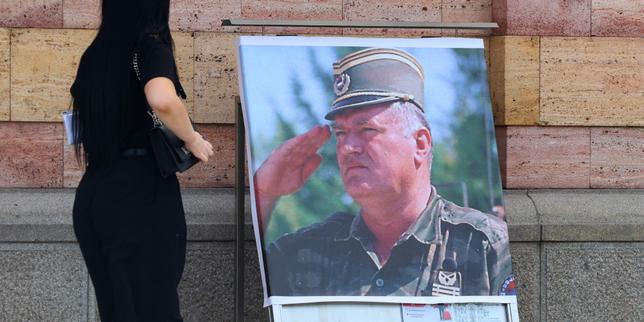
History doesn't just fade away in the Balkans. It marches down the streets with torches and flares. Thousands of people across Republika Srpska recently gathered to honor Ratko Mladic following his death in a UN prison.
If you expected remorse or a quiet reckoning after the passing of the man known as the "Butcher of Bosnia", you haven't been paying attention. Instead, public squares filled with mourners, candlelit processions, and defiant banners. It is a stark reminder that the wounds of the 1990s conflict remain wide open. You might also find this related story useful: Stop Cheering For Airstrikes Because You Are Celebrating Geopolitical Failure.
The Divided Legacy of a Convicted War Criminal
Ratko Mladic wasn't just a military figure. He was the commander who carved out the Serbian entity within Bosnia through a hurricane of violence between 1992 and 1995. The International Criminal Tribunal for the former Yugoslavia sentenced him to life imprisonment for genocide, crimes against humanity, and war crimes, notably for his role in the Srebrenica massacre.
Yet, perspective depends entirely on which side of the inter-entity boundary you stand on. As highlighted in latest articles by The New York Times, the effects are notable.
To international courts and survivors in Sarajevo, he remains a monster who orchestrated atrocities. To many Bosnian Serbs, he is framed as a defender of freedom. Political leaders in Republika Srpska openly praise his wartime role, fueling a culture of denial that persists three decades after the Dayton Accords. When thousands turn out to light candles, they aren't just mourning an old general. They are validating an ideology.
Why the Tributes Keep Happening
You might wonder how public glorification of a convicted war criminal happens in modern Europe. The answer lies in institutional memory and political utility.
Local politicians frequently leverage ethnic divisions to maintain power. By painting figures like Mladic as national heroes, they deflect from economic stagnation and institutional corruption. Schools in parts of the region teach conflicting versions of history. A young person growing up in Banja Luka receives a drastically different narrative than someone growing up a few miles away in Sarajevo.
Collective amnesia becomes policy. Denying war crimes isn't a fringe movement; it's mainstream political posture. When football fans display banners praising the general or citizens march through towns like Zvornik, they are operating within an ecosystem that rewards historical revisionism.
The Cost of Unresolved Trauma
Bosnia remains trapped in a political standstill. State institutions in Sarajevo struggle to function because leaders from Republika Srpska actively undermine central authority. Every commemoration for Mladic deepens the ethnic chasm. It tells survivors that their pain doesn't matter. It signals that justice delivered in The Hague failed to penetrate local hearts and minds.
True reconciliation requires facing uncomfortable truths. Until political leaders stop glorifying architects of mass violence, the region will stay handcuffed to its past. The crowds in the streets proved that the ghost of the 1990s war is still very much alive, dictating the rhythm of daily life in the Balkans.