The headlines are bleeding heart and predictable. They describe "infestations" in Gaza’s displacement camps as if the rodents dropped from the sky as a biblical plague. They paint a picture of helpless victims and an unstoppable biological surge. They are wrong. What we are witnessing isn't a "pest problem." It is a total collapse of urban metabolism. If you’re looking at the rats, you’re looking at the symptoms. You’re missing the machinery of the failure.
The lazy consensus suggests that more traps and more poison are the answer. That is a fantasy. In my years analyzing urban infrastructure in high-stress zones, I’ve seen millions of dollars poured into chemical "solutions" that do nothing but create more resilient pests. You cannot poison your way out of a structural disaster. The rats aren't the enemy; they are the indicators. They are the most honest biometric data we have on the ground right now.
The Caloric Math of an Infestation
Rats don't multiply in a vacuum. They are calorie-driven machines. A pair of brown rats (Rattus norvegicus) can lead to a population of hundreds within a year, but only if the "carrying capacity" of their environment permits it.
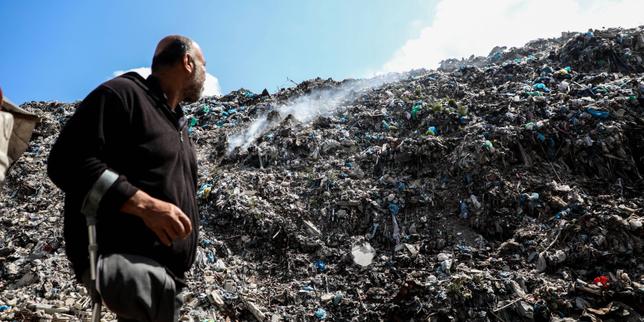
In Gaza, the carrying capacity has been artificially spiked. When you condense two million people into shrinking "safe zones" without a functioning waste management grid, you aren't just creating a human crisis. You are building a massive, open-air caloric engine for rodents.
- Waste Accumulation: Every ton of uncollected organic waste is a fuel source.
- Infrastructure Breach: Destroyed sewage lines provide the ultimate "rat superhighway," offering protection from predators and easy access to shelters.
- Density: High human density leads to fragmented food storage, which is impossible to secure in a nylon tent.
The competitor articles focus on the "horror" of the bite. I focus on the logistics of the buffet. Until the flow of solid waste is diverted or neutralized, every penny spent on rodenticides is a donation to the manufacturer, not a solution for the displaced.
The Myth of the "Clean" Camp
NGOs often talk about "sanitation kits" as the silver bullet. This is a profound misunderstanding of how displaced environments function. Distributing soap and small plastic bags to a family living in a sea of mud and rubble is like trying to dry the ocean with a sponge.
The reality is that "pest control" in a conflict zone is an engineering problem, not a hygiene problem.
- Elevation is Life: Rats are ground-dwellers. The closer a family sleeps to the earth, the higher the risk. A contrarian but effective move? Stop sending more tents. Start sending pallets or modular flooring. Getting humans six inches off the dirt does more for health than a thousand leaflets on "hand washing."
- The Perimeter Fallacy: You cannot clear a "camp." You have to clear a zone. Rats do not respect the boundaries of a humanitarian plot. If the surrounding rubble isn't managed, the camp is just a feeding trough.
Why Poison is Actually Making it Worse
Most people ask: "Why don't they just spray?"
Because "spraying" for rats doesn't exist, and the poisons we do have—anticoagulants like Brodifacoum—are a nightmare in a dense camp.
Imagine a scenario where thousands of pounds of high-toxicity bait are dropped into a crowded camp.
- Secondary Poisoning: Domestic animals and, god forbid, children are at extreme risk.
- The Smell of Death: A poisoned rat crawls into a wall or under a floorboard to die. In the Gaza heat, that carcass becomes a breeding ground for flies and disease that is arguably worse than a living rat.
- Resistance: Over-reliance on a single chemical leads to "super-rats" that can metabolize the toxin.
If you want to kill the infestation, you don't kill the rats. You kill their opportunity. This requires heavy machinery to move waste, not more "outreach" programs.
The Invisible Cost of the "Rat Narrative"
The focus on rats is often a convenient distraction for political actors. It’s "natural." It’s "unfortunate." It frames the suffering as an act of nature rather than a direct result of the systematic destruction of civil infrastructure.
When a sewage plant is bombed, the rats don't "infest"—they are invited. When the electricity for water pumps is cut, the rats don't "invade"—they simply fill the void left by human systems. To talk about the rats without talking about the fuel blocks and the border closures is to participate in a lie.
The Brutal Truth of Urban Warfare
I’ve worked in environments where the infrastructure was "only" 50% degraded, and the rodent population still tripled in months. In Gaza, the degradation is near total.
We need to stop asking "How do we kill the rats?" and start asking "How do we restore the metabolism of the city?"
- Centralized Waste Burning: If you can't transport trash out, you must incinerate it in controlled zones. It’s dirty, it’s ugly, but it’s better than the plague.
- Metal Storage: Every humanitarian food shipment should be delivered in rodent-proof metal containers that can be repurposed by families. Plastic bags are a joke.
- Predator Preservation: Stop killing the stray cats and dogs that are the only natural checks left in the ecosystem.
The "status quo" approach is to wait for a ceasefire and then send in a specialized UN team. That is too late. The biological clock is ticking faster than the diplomatic one.
A Note on Disease
The fear of the "Black Death" is a great way to get clicks, but the real threat in Gaza is more mundane and just as deadly: Leptospirosis and Salmonellosis. These are spread through urine and feces contaminating the limited water supply.
When the competitor article talks about "rats in the beds," they are appealing to your phobia. When I talk about the contamination of the few remaining aquifer wells, I am appealing to your logic. One is a scary story; the other is a mass-casualty event in the making.
Stop Trying to "Manage" the Symptom
The humanitarian industry loves "management." They want to "manage" the camps, "manage" the health crisis, and "manage" the pest problem.
Management is for stable systems. Gaza is a system in collapse. You don't manage a collapse; you intervene in its mechanics.
If the international community actually cared about the "infestation," they wouldn't be sending boxes of rat poison. They would be demanding the entry of garbage trucks, fuel for incinerators, and the concrete necessary to seal the breached sewage veins of the city.
The rats are just the cleanup crew for a civilization that has been stripped of its ability to care for its own waste. They are doing their job perfectly. The question is why the humans are failing at theirs.
The infestation isn't coming. It's already here, and it's wearing a suit, sitting in an office, calling this a "sanitation challenge" instead of a deliberate environmental catastrophe.
Stop looking at the rats. Look at the empty garbage trucks sitting at the border. There's your "infestation."