The Pacific Northwest air smelled of damp cedar, stale beer, and the electric, terrifying ozone of an impending collapse. Inside the stadium, seventy thousand people were screaming, but it was the kind of noise that carries a desperate undertone. They were trying to manufacture a miracle through sheer volume.
On the touchline, Mauricio Pochettino stood with his hands shoved deep into his pockets. His dark coat was slicked with rain. He looked like a man watching his house burn down from across the street, fully aware that the water pressure had just failed.
This was supposed to be the night American soccer grew up. Mexico was gone. Canada was gone. The weight of an entire continent’s hosting duties had been awkwardly shunted onto the shoulders of eleven men in white jerseys. For ninety minutes, the United States men's national soccer team didn't just lose a football match; they experienced a systemic failure of the soul.
The scoreboard in Seattle read 4-1. It felt much worse than that.
The Ghost in the Lineup
Every tragedy needs a catalyst, and this one arrived days before the opening whistle. Folarin Balogun should not have been on that pitch. He had seen red in the previous round, a definitive, unambiguous expulsion that under any normal circumstance carries the weight of suspension.
Then came the telephone calls.
When political machinery grinds against the rigid gears of international sports governance, the friction is ugly. Donald Trump’s public intervention with FIFA to lift Balogun’s ban became a global spectacle, an aggressive display of host-nation exceptionalism that European football federations watched with open disgust. The UEFA brass called it a crossed line. The public called it a circus. FIFA, trapped in its own labyrinth of diplomacy, yielded. Independent review, they called it.
Balogun was cleared to play.
But football has a strange way of punishing arrogance. From the moment the young forward stepped onto the grass, he looked heavy. Not from a lack of fitness, but from the invisible, crushing weight of a nation’s political ego strapped to his back. Every touch he took felt like an apology. Every run was choked by the knowledge that his presence was a bureaucratic heist.
Consider what happens next: a team that relies on the clinical, cold execution of a game plan suddenly finds itself playing inside a political thriller. The focus was gone before the anthem finished playing.
A Masterclass in Red
Bélgica did not care about Washington’s legal maneuvers. In fact, the controversy acted like a shot of pure adrenaline directly into the veins of a Belgian side that had spent the tournament looking somewhat detached.
Nine minutes. That is all it took for the illusion of American defensive stability to shatter.
Nicolas Raskin seized a loose ball, cutting through a static American backline that looked like they were still debating the ethics of the Balogun decision. He squared it. Charles De Ketelaere, moving with the languid elegance of a player who sees the game two seconds before everyone else, simply guided it home. One-zero.
The stadium went cold. The rain kept falling.
There was a brief, blinding flash of what could have been. In the 31st minute, Malik Tillman stood over a free kick. He took three steps, struck the ball with a beautiful, curling trajectory, and watched it nestle into the back of the net. For roughly one hundred and twenty seconds, Seattle believed. The roar was deafening, a collective catharsis that shook the concrete foundations of the arena.
Hope is a dangerous thing when you lack the structure to protect it.
Two minutes later, De Ketelaere struck again. It was a goal born of pure composure, a ruthless exploitation of an American defense that had pushed forward, drunk on the euphoria of their own equalizer. The Belgian forward didn't just shoot; he dismissed the keeper with a flick of his boot.
The air left the building. You could hear the individual drops of rain hitting the plastic seats.
The Collapse of the Gatekeeper
If the first half was a tactical lesson, the second half was a psychological eviction.
Matt Freese will likely see the 56th minute in his nightmares for the next decade. There is a specific horror reserved for goalkeepers, a lonely vulnerability that no other position on the pitch understands. When a striker misses, it is a missed opportunity. When a goalkeeper errs, it is a monument to human frailty.
Freese hesitated. He drifted outside his six-yard box, caught in two minds between claiming a migrating ball and retreating to his line. In that split second of paralysis, Hans Vanaken arrived. He didn't just steal the ball; he took Freese’s dignity with it, slotting the third goal into an empty, abandoned net.
Pochettino reacted instantly, pulling Christian Pulisic from the match. It was a concession speech in the form of a substitution. The captain walked off, his face pale, looking less like an elite athlete and more like a kid who had realized the summer was over.
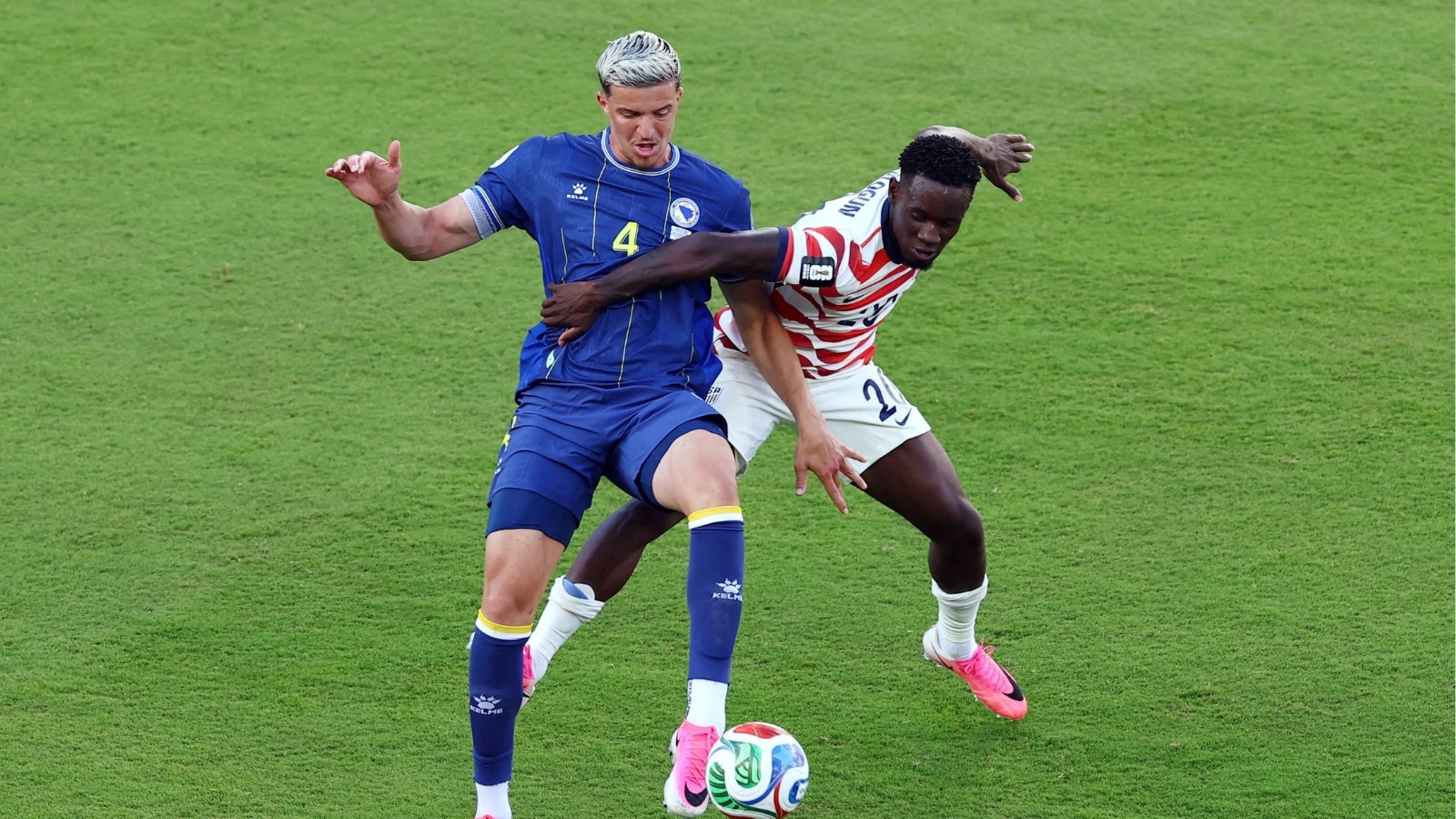
The final half-hour was an exercise in cruelty. Weston McKennie picked up a yellow card for a desperate, wrestling tackle on a Belgian midfielder, a physical manifestation of a team that had run out of ideas and space. Balogun had one final chance in the 81st minute, a sweeping left-footed strike that Thibaut Courtois rebuffed with the casual indifference of a man swattering a fly.
Then, the final blow. Romelu Lukaku, brought on to put a ceiling on the night, capitalised on a grotesque defensive error by Chris Richards in stoppage time. 4-1.
The Silent House
The final whistle didn't bring boos. It brought something far worse: the rustle of thousands of waterproof jackets as people quietly stood up and headed for the exits.
The United States had spent years preparing for this tournament, building facilities, marketing identities, and convincing themselves that home-field advantage was an armor thick enough to deflect the tactical superiority of the old world. Instead, they found out that when the lights are brightest, politics cannot save you, and a football doesn't care who called the head of FIFA.
The tournament moves on, packing its bags for Los Angeles, where Belgium will face a Spain side fresh off ending Cristiano Ronaldo’s international existence. The giants will play the giants.
But in Seattle, the grass remained littered with discarded cups and sodden banners. The last host had left the building, leaving behind nothing but the quiet, rhythmic sound of water hitting an empty pitch.