Two thousand meters down, the ocean has no weather. There is no wind to rattle a hull, no sunrise to measure the passing of a watch, no blue sky reminding a sailor which way is up. Down there, water turns heavy, cold, and deaf to everything except sound.
Listen closely through a hydrophone and you will not hear a battle. You will hear a whisper that stretches across continents. A low, rhythmic thrum from a distant cargo freighter. The snap of shrimp in warm coastal shallows. And sometimes, a faint, metallic tick that does not belong to any creature that ever swam.
When naval officers and maritime strategists—among them French Rear Admiral Cédric Chetaille—compare modern undersea competition to a new kind of "star wars" beneath the waves, they are not reaching for sci-fi drama to fill headlines. They are naming a shift in how power works when everything above the water is watched, tracked, and crowded. Satellites circle overhead. Drones hover over coastlines. Radar sweeps the horizon. Yet the deepest trenches and widest ocean basins remain stubbornly opaque, hiding quiet machines, fragile cables, and high-stakes maneuvers far from any camera.
I have stood on the steel deck of a naval vessel at night, watching the black wake churn behind us while the sonar screen inside glowed a pale, clinical green. Out on the bridge, the air smelled of salt, diesel, and cold coffee. Everything felt solid—steel bulkheads, heavy chains, familiar maps. Then you walk down into the dim ops room and realize how much of modern life hangs by glass threads resting on soft mud miles below your boots. It is a humbling sensation. Honestly, it can make a person a little uneasy, because the things that keep a hospital running or a bank clearing trades or a family video call alive are out of sight, out of reach, and far harder to guard than a border fence.
Why the Deep Suddenly Matters So Much
For decades, public imagination treated submarines as Cold War relics—steel tubes playing hide-and-seek with nuclear warheads while the real news happened on land or in the air. That picture is out of date.
Today, the seabed is the nervous system of the global economy. Roughly ninety-five percent or more of intercontinental data travels through undersea fiber-optic cables—bundles often no thicker than a garden hose carrying trillions of bits of information every second. Add offshore wind farms, subsea power interconnectors, deep-sea mineral exploration, and energy pipelines, and the ocean floor stops looking like empty wilderness. It looks like critical infrastructure without a security guard on every corner.
Consider what happens next: when a system is both essential and difficult to observe, it invites quiet pressure. Naval thinkers point out that rival powers do not need to fire a torpedo to cause massive disruption. A cut cable, a tampered sensor, a mysterious anchor drag, or an unmanned underwater vehicle lingering near a junction box can blur the line between peace, gray-zone harassment, and open conflict.
To make this concrete, let us trace a hypothetical scenario grounded in real-world maritime mechanics. Imagine a fictional hydrographic specialist—call her Claire—working aboard a survey ship in the North Atlantic. Claire is not a Hollywood spy; she is an engineer who reads bathymetric charts, acoustic returns, and seabed telemetry. One grey Tuesday, her team notices an anomaly near a major communications corridor: a small, uncrewed underwater craft drifting along a contour line, using low-frequency acoustic bursts and terrain-following navigation rather than surface radio. No shots are fired. No flag is raised. Yet every naval command monitoring the sector has to ask the same exhausting question: is this routine research, a mapping run, a rehearsal for sabotage, or a test of how fast defenders can spot it?
That ambiguity is the heart of the new undersea race. On land, if a tank crosses a border, you see dust, smoke, and satellite photos. Beneath the surface, water bends sound waves depending on temperature, salinity, and pressure, turning sonar into an art form as much as a science. A thermocline—a sharp layer where warm water meets cold water—can act like a ceiling or a mirror, hiding a submarine or an autonomous drone from listeners just a few hundred meters away.
Acoustic Chess and Autonomous Machines
If the Cold War was a game of heavy submarines playing cat-and-mouse, the current era adds a swarm of smaller, smarter, and cheaper players.
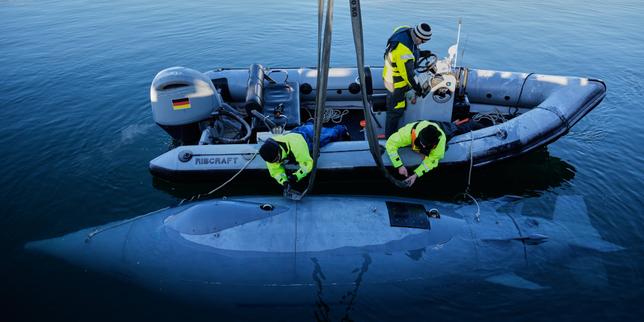
Unmanned underwater vehicles, or UUVs, are changing the math of the deep. Some are long-endurance gliders that ride buoyancy changes like underwater birds, sipping minimal battery power while crossing thousands of kilometers over months. Others are sleeker autonomous vessels carrying cameras, magnetometers, or acoustic payloads. Because they do not carry a human crew, they do not need oxygen scrubbers, bunks, or provisions. They can stay out longer, go into riskier spots, and force larger, costlier navies to spend hours hunting something the size of a surfboard or a small torpedo.
Here is a metaphor that helps me make sense of it: picture a chess match played in a dark room where half the pieces on the board are tiny wind-up toys that only move when the lights flicker. You cannot see the whole board at once. You hear a click over on the left, a scrape near the center, and you have to decide whether you are losing pawns or being walked into a trap.
Defenders are pushing back on every front. Navies are investing in seabed sensor networks, acoustic AI that filters ocean noise from real contacts, patrol aircraft dropping sonobuoys, and specialized vessels built to inspect and protect undersea cables. Allies are sharing data faster because no single country can watch millions of square kilometers of ocean alone.
Yet technology cuts both ways. Quieter propulsion makes submarines harder to detect. Artificial intelligence helps sort through oceans of acoustic data, but adversaries also use decoy emitters, spoofing, and stealthy hull coatings to confuse sensors. Even international law struggles to keep pace when an incident happens in deep international waters or looks like an accident—a ship dragging an anchor in rough weather versus deliberate interference.
I will admit something candidly: when experts talk about "gray-zone" operations and resilient seabed networks, it can sound like diplomatic shorthand for a problem nobody has fully solved. Watching how quickly commercial tech, robotics, and naval doctrine are colliding under the sea, it is fair to wonder if rules written for surface ships and traditional warfare are stretched too thin.
What Is Actually at Stake for People on Shore
Why should someone sitting in a living room in Lyon, Ho Chi Minh City, or Chicago care about an acoustic contact two miles beneath the Atlantic or the Indo-Pacific?
Because invisibility creates an illusion of safety. When you tap a screen and a message appears across the world in milliseconds, it feels as weightless as air. In reality, it travels through glass fibers laid across continental shelves, amplified by repeaters spaced tens of kilometers apart, landing at coastal stations that connect to national grids and cloud servers.
Disrupting those links does not just delay emails. It can rattle financial markets, complicate emergency coordination, slow industrial supply chains, and strain trust between nations during moments of high tension. And even when nothing breaks, the suspicion that critical lines are vulnerable changes how governments behave—pushing them toward heavier surveillance, faster military posturing, and expensive redundancy.
History offers a quiet reminder here. In 1914, at the very start of the First World War, cutting German undersea telegraph cables severed one of Berlin's primary links to the wider world within hours. What was once a niche engineering feat became an immediate instrument of strategic isolation. A century later, the cables carry vastly more than telegrams, and the seabed holds far more than copper and gutta-percha—yet the basic logic remains familiar: control or threaten the hidden arteries, and you shape what happens above ground.
Back in our hypothetical scenario, Claire does not get a dramatic chase scene. She gets a quiet debriefing, logs the acoustic signature, and watches two patrol units adjust their search grid. Nothing explodes. Nobody makes the evening news. Still, as she steps out onto the open deck into the cool night air, she knows that down in the dark, the quietest contests of the century are already underway.
Silent. Deep. Relentless.
Out there beneath the waves, the sea keeps its own counsel—and every ripple that reaches the surface begins in the dark.


