Winter in the northern forests arrives not with a bang, but with a slow, tightening squeeze. The light bleeds out of the sky by three in the afternoon. The trees turn to iron. Frost crawls across double-paned glass in intricate, terrifying ferns.
Picture Matti. He is fifty-four, with hands like cured leather and a stubborn refusal to turn up his thermostat past nineteen degrees Celsius, even when the wind howls off the Baltic and bites at the windowframes of his timber home outside Tampere. Matti remembers the cold of the nineteen-eighties. He remembers the quiet tension that lived in the back of every Nordic kitchen, the unspoken awareness that a single frozen shipping lane or a severed pipeline could turn his quiet woodland life into an endurance test.
Most of the modern world lives on a knife-edge. We trade our security for the seductive efficiency of the single click, the just-in-time delivery truck, the warehouse with three hours of inventory. We have built an economy that runs on momentum, like a bicycle coasting down a hill. It feels fast. It feels smart.
Until the hill ends in a wall.
Deep beneath the granite bedrock of Finland, away from the biting wind and the silent snow, something extraordinary is waiting. It is not an armory. It is a pantry. And it is a coal pile. And it is a pharmaceutical chest big enough to sustain a population through the worst winter the earth could throw at them.
The Architecture of Quiet Readiness
For decades, the rest of Europe watched Finland with a mixture of polite amusement and mild bewilderment. Why did this sparsely populated northern democracy insist on maintaining massive warehouses filled with grain, liquid fuels, imported fertilizers, and medical supplies long after the Cold War supposedly ended? Why did private bakeries keep secret silos of rye? Why did industrial plants maintain dual-fuel systems, ready to switch from natural gas to oil at a moment's notice?
The critics called it paranoia. They called it an expensive ghost insurance policy bought by a people too haunted by their history on the border of a restless empire.
Then the world cracked.
Supply chains snapped like dry twigs. Energy prices spiked into the stratosphere. Borders closed, ships stalled, and governments that had spent thirty years outsourcing their basic survival to the lowest global bidder suddenly found themselves scrambling for masks, grain, and gas.
Suddenly, the Finnish model did not look paranoid. It looked like the only sane thing in a madhouse.
Other European nations are finally waking up. Officials from Berlin to Paris are quietly studying the Finnish system, scratching their heads over how a nation of five point six million people managed to engineer a society that simply refuses to panic when the lights flicker.
To understand why this system works, you have to look past the bureaucratic title of the National Emergency Supply Agency and look instead at how people actually live when they trust their infrastructure.
The Invisible Engine
Security is usually sold as a spectacle. It wears body armor, carries rifles, and shouts through bullhorns.
The Finnish model of strategic reserves does none of this. It wears a wool sweater and drinks black coffee from a chipped ceramic mug.
It relies on a concept the Finns call huoltovarmuus, a word that translates roughly to security of supply, but feels much more like an existential state of grace. It is the quiet conviction that a community has a moral obligation to protect its members from the sudden cruelty of circumstance.
Consider how the system is structured. It is not a monolithic government warehouse guarded by men with clipboards. It is a vast, decentralized web woven directly into the fabric of private enterprise. The state partners with major industrial players, agricultural cooperatives, and energy companies. The grain does not sit in a rotting bureaucratic silo; it rotates through commercial bakeries, constantly refreshed, fresh flour going out to the supermarkets while the deep reserves stay locked in reserve.
This is genius wrapped in common sense. It prevents waste. It keeps the private sector sharp. And most importantly, it embeds resilience into everyday commerce so that survival is not a separate emergency protocol, but simply how business is done on an Arctic Tuesday.
When global shipping lanes choke, Finnish grain mills keep grinding. When fuel tankers are diverted by geopolitical squabbles, strategic petroleum reserves—mandated to cover at least five months of net imports—begin feeding the refineries and power plants. When pharmaceutical ingredients get trapped across distant oceans, local stockpiles of raw active medical ingredients ensure that hospitals do not run out of antibiotics.
It is boring. It is methodical. It is breathtakingly effective.
The Human Cost of Vulnerability
We forget what it feels like to be truly dependent because we have spent two generations living inside an illusion of infinite abundance.
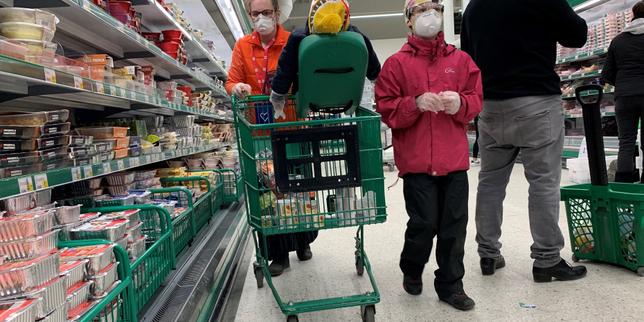
Imagine walking into your local supermarket on a Tuesday morning. The shelves stretch into the distance, bursting with avocados from Peru, berries from Chile, beef from Argentina, and coffee from the highlands of East Africa. It is a miracle of modern logistics. It is also a house of cards.
Remove three links from that chain—a cyberattack on a port authority, a regional conflict blocking a narrow strait, a sudden shortage of diesel for the transport trucks—and that same supermarket becomes an empty cavern within forty-eight hours.
We saw the preview during the pandemic. People brawled over toilet paper. They hoarded yeast. They looked at pasta aisles with the wide-eyed desperation of shipwreck survivors. That was just a minor tremor.
A real crisis—a prolonged energy cutoff, a systemic financial freeze, or a severe geopolitical rupture—does not care about your shopping habits. It strips away the polite veneer of civilization with astonishing speed.
When you look at the Finnish model through this lens, you realize it is not about grain or oil at all. It is about human dignity.
Matti doesn't worry about whether he will freeze to death in January. Not because he is braver than anyone else, but because his society decided long ago that basic survival should never be left to the whims of an unregulated global market.
The Lesson We Refuse to Learn
The rest of the world is currently trying to retrofit this peace of mind into economies built entirely on the gospel of maximum efficiency. They are finding out that you cannot buy strategic resilience overnight. You cannot download a five-month reserve of diesel fuel or magic six million bushels of rye into existence because a crisis just broke out on the evening news.
Resilience requires patience. It requires spending money on things that hope you will never need. In a political culture addicted to quarterly results and short-term electoral cycles, that is a terrifying proposition. Investing in a warehouse full of coal or grain that sits untouched for a decade looks like waste to a politician who only cares about the next twelve months.
Yet the nations that fail to make this investment are building their futures on quicksand.
The wind is rising outside. The temperature is dropping. Across the globe, the old certainties are fraying at the edges, and the luxury of complacency is burning away in the cold light of reality.
Somewhere deep beneath the Finnish granite, the sensors hum, the fuel tanks rest heavy and dark, and the wheat waits in the cool, silent dark. Above ground, a people sleep without fear, insulated not by luck, but by the quiet, unglamorous wisdom of preparation.
The storm is coming. It always is. The only question left is whether you built a shelter, or whether you spent the sunny days admiring the view.