Mile twenty-two is where the lies stop.
Before mile twenty-two, you can fool yourself with playlist curation, expensive carbon-plated foam, and the lingering adrenaline of a starting corral packed with nervous strangers. At mile twenty-two, your glycogen stores are hollowed out, your form collapses into a heavy, mechanical shuffle, and the human brain begins a relentless negotiation to make you stop.
Now, imagine—and this is a real scenario I lived through during the 2023 Chicago Marathon—looking down at your wrist for a lifeline, only to see your GPS pace wildly swinging from a 7:15 mile to a 9:40 mile because the downtown skyscrapers are bouncing satellite signals off Lake Michigan like pinballs. Or worse, watching a tiny battery icon blink red just as you turn onto Roosevelt Road.
Panic. That is what bad technology induces when you are already redlining.
We have been sold a bloated myth by wearable tech companies. Walk into any electronics store or scroll through any fitness forum, and you will be drowned in a flood of biometric noise. Sleep scores. Body batteries. Stress graphs. Pulse oximeters. Training readiness gauges. Most modern running watches are no longer tools for runners; they are anxiety engines strapped to your radial artery. They turn a primal, joyful human movement—putting one foot in front of the other until the horizon changes—into a spreadsheet audit.
I spent years buying into the hype, strapping $800 chunks of titanium and sapphire glass to my arm, convinced that if I just had enough data, I could outsmart fatigue. I was wrong. When you are training for your first 5K or clawing your way toward a Boston Qualifying marathon time, you do not need a wrist-mounted supercomputer that judges your REM cycle. You need a reliable witness. You need a piece of hardware that disappears when things go right and refuses to fail when things go wrong.
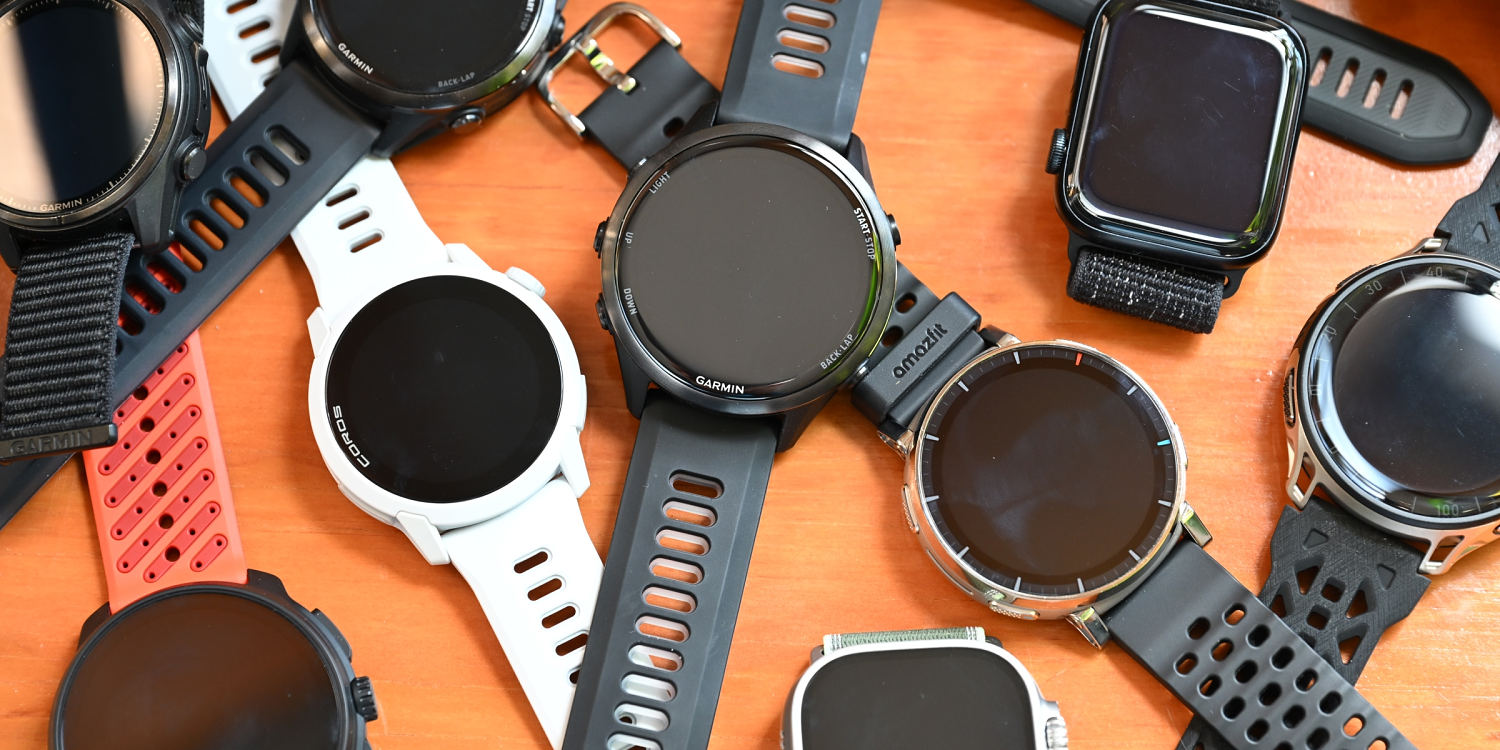
Out of the dozens of watches cluttering the market today, only a tiny handful actually earn their place on a runner's wrist. To understand which ones matter, we first have to strip away the marketing theater and look at what actually happens to a human body—and a GPS chip—when the rubber meets the asphalt.
The Illusion of Precision
Consider a hypothetical runner named Elena. Elena is thirty-four, works an unpredictable desk job, and has decided to run her first half-marathon in the fall. She buys a sleek, glossy smartwatch—the kind that matches her work outfits, takes phone calls, and glows with an OLED screen bright enough to land a commercial airliner.
For the first three weeks, Elena loves it. Then comes her first real tempo run in the rain.
Sweat and drizzle coat the glass. She tries to swipe the screen to check her split time, and the capacitive touch display ignores her wet fingers entirely, accidentally skipping her Spotify track instead. When she finishes her run and uploads the map, the red line tracking her route looks like a drunken spider staggered across the neighborhood, cutting straight through houses and rivers. Her watch tells her she ran 5.2 miles when the certified course was actually 4.8. Her confidence—built entirely on false numbers—evaporates the moment she steps onto a real race course and realizes her pace is thirty seconds slower per mile than she thought.
This is the fundamental divide in wearable technology: lifestyle watches that happen to track running, versus dedicated running instruments that happen to tell the time.
Historically, runners relied on simple digital stopwatches—the iconic Timex Ironman—and pre-measured loops in local parks. You knew the fire hydrant by the oak tree was the two-mile mark because someone drove a car along the route with a calibrated odometer. When consumer GPS arrived in the early 2000s, strapped to wrists in bricks the size of walkie-talkies, it felt like magic. Suddenly, the whole world was a track.
Yet standard single-band GPS has a fatal flaw. Satellites orbit roughly 12,500 miles above the Earth, broadcasting relatively weak radio signals. When those signals hit dense tree canopies, canyon walls, or urban high-rises, they reflect and refract—a phenomenon engineers call multipath error. Your watch gets confused about which signal arrived directly from space and which one bounced off a glass office tower.
The breakthrough that actually changed distance running wasn't heart-rate variability tracking or animated yoga workouts. It was multi-band (dual-frequency) GNSS. By communicating with multiple satellite constellations (GPS, GLONASS, Galileo) across two different frequency bands simultaneously, modern running watches can filter out bounced signals in real time.
If a watch does not have accurate satellite lock and physical buttons you can mash with numb, freezing fingers at 6:00 AM in January, it is a toy.
The Minimalist Workhorse for the 5K Dreamer
Let’s talk about the beginning. Starting to run is terrifying. Your lungs burn, your calves ache, and the voice in your head whispers that you aren't built for this. If you are training for a 5K, your biggest enemy isn't a lack of VO2 max analytics; it is friction. Anything that makes getting out the door more complicated is a threat to your habit.
This is where the Coros Pace 3 enters the room, and why it has quietly embarrassed companies three times its size.
Pick up a Coros Pace 3, and your first reaction is disbelief. At roughly 30 grams on a nylon band, it weighs less than a slice of bread. You genuinely forget it is on your wrist. There is no brushed titanium bezel, no flashy luxury branding, and no bloatware trying to sell you a monthly subscription just to look at your own sweat data.
Instead, Coros stripped the running watch down to its bare, ferocious essentials. You get dual-frequency GPS accuracy that rivals watches costing $700. You get a transflective memory-in-pixel screen that doesn't burn battery power to stay lit—in fact, the brighter the midday sun shines on it, the clearer the numbers become. And you get nearly two weeks of daily use, or 38 hours of continuous GPS tracking, on a single charge.
Think about what that battery life means psychologically. When you are trying to build a running habit from scratch, charging your watch every night alongside your phone is one more chore. With the Pace 3, you charge it twice a month. You lace up your shoes, hit the physical start button, and run. The digital dial lets you scroll through your pace, distance, and heart rate with one gloved thumb. It treats a beginner running three miles around a suburban cul-de-sac with the exact same engineering respect it gives Eliud Kipchoge—the greatest marathoner in history, who happens to wear the exact same watch.
Is the plastic casing going to impress anyone at a formal dinner? No. It looks unapologetically like a piece of athletic gear. That is the entire point. It removes every excuse between you and the pavement.
The Gold Standard of the Daily Grind
Once you survive the 5K and catch the bug, the nature of your training changes. You stop just running to finish, and you start running to improve. You begin flirting with structured workouts: 800-meter repeats on a local high school track, lactate threshold runs, progressive long runs that start at a conversational shuffle and end at a breathless sprint.
Now, your watch needs to become a coach, not just a tape measure. And nobody has mastered the art of translating raw biometric chaos into actionable human guidance better than Garmin with the Forerunner 265.
I used to be deeply skeptical of algorithmic training advice. For years, watching a little bar on a screen tell me my training status was "Unproductive" after I had just vomited from effort on a track workout made me want to throw my watch into a river. Garmin fixed that cruelty.
The Forerunner 265 sits in the exact sweet spot of the running universe. It swaps out the muted screen of older models for a vibrant, hyper-crisp AMOLED display that makes reading complex interval workouts at a glance effortless, while still maintaining physical five-button navigation so you never have to fight a touchscreen mid-sprint.
What makes the 265 indispensable for marathon and half-marathon builders is how it handles the invisible variable of running: recovery.
To explain why this matters, think of your body like a bank account. Every hard run is a withdrawal. Sleep, nutrition, and rest days are deposits. Most ambitious runners go bankrupt because they keep making withdrawals when the account is overdrawn, leading straight to stress fractures, Achilles tendinitis, or burnout.
The Forerunner 265 tracks your heart rate variability (HRV) while you sleep—not as a gimmick, but as a window into your autonomic nervous system. If your nervous system is still fighting to repair yesterday's damage, your HRV drops. When you wake up, the watch presents a simple "Training Readiness" score and adjusts its daily suggested workout accordingly. If you slept poorly and your resting heart rate is elevated, it gently scraps the brutal hill sprints you had planned and suggests a 35-minute easy recovery jog instead.
It acts as the rational adult in the room when your ego wants to push too hard. And when race day finally arrives, Garmin’s PacePro feature acts like a personal pacing strategist strapped to your wrist, dynamically adjusting your target splits mile-by-mile based on the hills of the specific course you uploaded. You stop guessing if you are going out too fast; you just follow the math.
The Ultra-Endurance Fortress
Then there is the territory beyond the standard road marathon—the muddy, rocky, vertical world of trail ultras, fifty-milers, and mountain races where getting lost isn't just annoying, it's dangerous. Or perhaps you are the type of road runner who simply refuses to compromise on durability, who bangs your wrist against gym kettlebells, swims in open water, and wants a timepiece built like an armored vehicle.
For this breed of athlete, the Garmin Forerunner 965 (or its rugged sibling, the Fenix 8, if you prefer steel over lightweight polymer) represents the absolute ceiling of what is actually useful.
Let’s be honest: the Forerunner 965 is overkill for 80% of runners. It costs roughly $600, sports a titanium bezel, and tracks metrics so niche—like ground contact time balance and vertical oscillation—that even sports scientists debate how to apply them in daily training.
Yet the 965 possesses one feature that justifies its existence entirely: full-color, onboard topographic maps with turn-by-turn navigation.
Picture yourself traveling to a new city for a work conference, or visiting family in an unfamiliar rural town. You want to get an eight-mile run in before breakfast, without spending forty minutes studying Google Maps and memorizing street names. With the 965, you simply tell the watch, "Give me an eight-mile loop heading north," and within seconds, it generates a safe, runnable route along local paths and bike lanes, guiding you turn-by-turn with gentle wrist vibrations.
On a mountain trail shrouded in fog, where trail markers vanish and every ridge looks identical, seeing your exact position overlaid on contour lines with elevation profiles ahead of you isn't a luxury. It is pure, unadulterated freedom. You can explore without fear.
What About the Watch You Already Own?
At this point, a reasonable voice in the back of your mind might be asking: What about the Apple Watch?
Millions of people run 5Ks and marathons wearing an Apple Watch, and if you already own an Apple Watch Series 9, Series 10, or Ultra 2, you do not need to rush out and buy another piece of plastic. Apple’s optical heart rate sensors are arguably the most accurate on the consumer market, and recent updates to watchOS finally introduced structured workouts, heart rate zones, and customizable data screens that make it a genuinely capable running partner.
However, you need to understand the trade-off you are making. An Apple Watch is a brilliant smartphone extension that moonlights as a fitness tracker. A Garmin or a Coros is a dedicated sports instrument that grudgingly shows you text messages.
If you run a four-hour-and-thirty-minute marathon with an older standard Apple Watch, streaming music over cellular while tracking GPS, you are going to spend the final four miles praying the battery doesn't die before you cross the timing mat. Only the $800 Apple Watch Ultra 2 solves the battery anxiety and adds dual-frequency GPS, and at that price point, you are paying a heavy premium for smartwatch features that have nothing to do with making you a faster, healthier runner.
The Quiet Truth Beneath the Glass
Years ago, before GPS satellites hung in orbit above our heads and before algorithms predicted our race times down to the second, running required a different kind of literacy. You learned to read the rhythm of your own breathing—four steps in, four steps out for an easy pace; two steps in, two steps out when you were pressing the threshold. You learned to listen to the slap of your soles on the pavement to know when your form was falling apart.
The danger of modern running watches—even the extraordinary ones—is that they can make us deaf to our own bodies. We become so obsessed with staring at our wrists to see if we are hitting our target pace that we forget to feel what that pace actually costs us. On a humid July morning when the dew point is seventy-five degrees, a 9:00 mile requires vastly more cardiovascular effort than an 8:15 mile on a crisp October afternoon. Your watch doesn't always feel the humidity. Your lungs do.
The best running watch is never the one with the longest list of features on the back of the box. It is the one that earns your trust quietly in the background, captures the truth of your effort without drama, and leaves your mind free to do the only thing that actually moves you forward.
Strap it on. Hit start. Then look up at the road.