Two weeks.
On a normal calendar, fourteen days is nothing. It is two grocery runs, a couple of laundry cycles, maybe a weekend trip if the weather holds. You blink, and half a month is gone.
Unless you are sitting in a cold examination room wearing a paper gown that rustles every time you breathe, waiting for an oncologist to tell you whether the shadow on your scan is a harmless scar or the reason your children will grow up without you. Then, fourteen days stops behaving like time. It becomes a heavy, suffocating fog that settles into your lungs and refuses to lift.
I know that fog. Anyone who has ever sat beside a loved one while a doctor traces a finger across a glowing monitor knows it intimately. You memorize the exact pattern of the acoustic tiles on the ceiling. You listen to the muffled footsteps in the hallway outside, convinced every approaching pair of shoes belongs to the person carrying your death sentence. Your phone sits face-up on your knee, silent, mocking you, while your mind writes a thousand terrible scripts before breakfast.
Patients call it scanxiety, a neat, clinical little portmanteau that sounds almost cute until you are the one vomiting in the clinic bathroom from sheer dread. In reality, it is a prolonged psychological ambush. For decades, modern oncology has operated on a brutal paradox: we have developed astonishingly precise ways to destroy tumors, yet the process of simply finding out if a treatment worked—or if a cancer has quietly returned—still forces human beings to live in agonizing purgatory for weeks at a time.
Until now. Quietly, inside hematology labs and oncology clinics across the globe, a simple vial of blood is dismantling that waiting room torture.
The Architecture of Dread
To understand why a routine blood draw represents a quiet revolution in cancer care, you first have to look at why the old system hurts so much.
Consider a hypothetical patient—let’s call her Elena. Elena is fifty-two, a high school biology teacher who finished six grueling months of chemotherapy for colon cancer last autumn. Her doctors declared her clear. She rang the brass bell in the infusion center, cried with her sister, and went back to grading papers.
Then, during a routine checkup in the spring, a standard CT scan shows a tiny, ambiguous smudge near her liver. Four millimeters across. Smaller than a pencil eraser.
Under traditional diagnostic protocols, that four-millimeter smudge triggers an exhausting, terrifying chain reaction. The CT scan cannot tell the radiologist whether those cells are malignant or merely benign inflammation left behind by chemotherapy. So Elena is scheduled for a PET scan three weeks later. When that proves inconclusive, she needs a tissue biopsy—an invasive procedure where a needle is guided through her abdomen to physically snatch a piece of the mystery spot. Then comes the pathology wait. Tissue samples must be sliced, stained, mounted on glass slides, and examined under a microscope by overworked specialists.
Between the initial smudge and the final verdict, six weeks vanish. Forty-two days of Elena staring at the ceiling at 3:00 AM, wondering if she should rewrite her will, afraid to book a summer vacation, flinching every time her husband asks how she feels. And the cruelest part? In roughly forty percent of suspicious follow-up scans across various solid tumors, those ambiguous shadows turn out to be completely harmless. Patients endure weeks of trauma, invasive surgeries, and crippling anxiety for a false alarm.
Even when the news is bad, the traditional timeline steals precious ground. While Elena waits six weeks for a biopsy result, microscopic cancer cells aren't politely pausing their division cycle. They are adapting, mutating, and digging deeper into surrounding tissue.
Listening to the Whispers in the Stream
The shift happening right now is built on a deceptively simple biological truth: tumors are messy eaters.
Think of a healthy human body as a tightly regulated city where waste is bagged, sealed, and hauled away neatly. Normal cells die quietly through a controlled process called apoptosis, packaging their internal components so the immune system can sweep them up without making a scene.
Cancer cells do not play by civic rules. They grow recklessly, outstrip their own blood supply, and die violently in chaotic bursts. As those malignant cells rupture and break apart, they spill their fragmented genetic code directly into the bloodstream. Scientists call these microscopic genetic breadcrumbs circulating tumor DNA, or ctDNA.
For years, trying to find ctDNA in a standard blood sample was like trying to hear a single whispered secret in the middle of a packed rock concert. A single tube of blood contains billions of fragments of normal, healthy DNA shed by your skin, your gut, and your white blood cells. Against that deafening genetic roar, a few stray fragments from an early-stage tumor were practically invisible.
Not anymore. Advances in ultra-deep genomic sequencing have essentially handed doctors a pair of noise-canceling headphones tuned specifically to the frequency of cancer. By scanning a standard blood draw—the exact same kind of needle stick you get during an annual physical—liquid biopsy tests can now hunt down a single mutated strand of tumor DNA floating among ten thousand normal strands.
No scalpels. No hospital gowns. No waiting six weeks for a tissue biopsy slot to open up in interventional radiology. Just a phlebotomist, a tourniquet, and two small vials of blood.
What Happens When the Clock Shrinks
The practical impact of replacing a surgical biopsy with a blood test goes far beyond convenience. It fundamentally alters the emotional and clinical physics of surviving cancer.
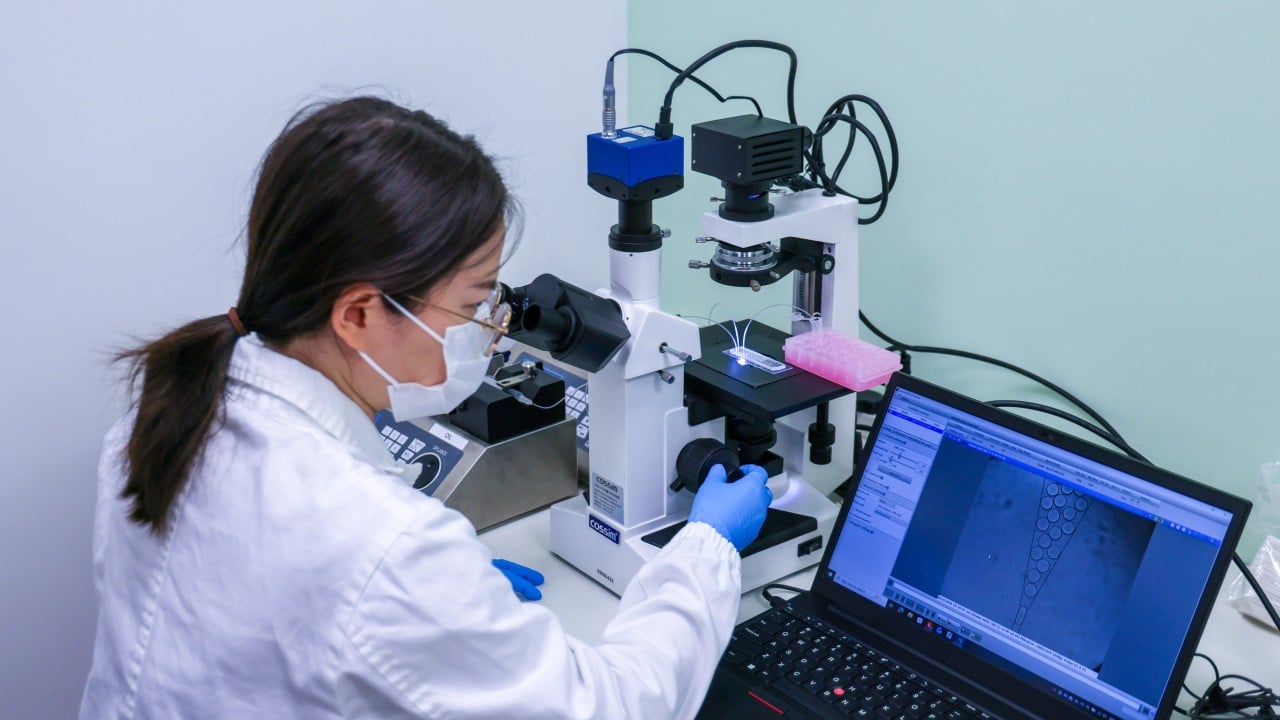
Let’s return to Elena and that four-millimeter smudge on her liver. In a clinic using liquid biopsy technology, her oncologist doesn't immediately send her down the rabbit hole of invasive procedures and month-long delays. Instead, a nurse draws blood before Elena even leaves the building. Within days—sometimes as little as seventy-two hours—the lab sequences the free-floating DNA in her plasma.
If the test finds zero traces of her tumor’s specific genetic signature, the psychological weight lifts almost instantly. Her doctors can confidently monitor the spot without slicing into her abdomen. Elena gets her life back in days rather than months.
Conversely, suppose the blood test does detect circulating tumor DNA. Even though that news is devastating, it arrives without the prolonged torture of uncertainty. Worse than bad news, any cancer survivor will tell you, is the paralysis of not knowing who the enemy is. With a liquid biopsy, the test doesn't just confirm the cancer has returned; it reads the tumor’s exact genetic blueprint in real time.
This matters enormously because cancer is a shapeshifter. A tumor that returns two years after treatment rarely has the exact same genetic vulnerabilities as the original mass. Under the old system, doctors often based second-line treatments on archived tissue samples taken during a surgery years earlier—essentially fighting today’s war using yesterday’s maps. A blood test captures what the tumor is doing right now. If the cancer has developed a specific resistance mutation, the oncologist sees it immediately and pivots to a targeted therapy that actually works, skipping months of toxic, ineffective chemotherapy.
The Invisible Enemy Called MRD
Perhaps the most profound application of this technology happens when a patient looks completely cured on every conventional screen.
Imagine finishing surgery and chemotherapy. Your scans are pristine. Your doctor shakes your hand and tells you there is no evidence of disease. You go home, throw away your anti-nausea pills, and try to rebuild a normal life. Yet a quiet terror lingers in the back of your mind: Did they really get all of it?
Standard imaging machines—CT, MRI, PET scans—are remarkable tools, but they are ultimately limited by physics. A tumor generally needs to grow to at least a few millimeters in diameter, containing millions of tightly packed cells, before it registers as a visible blob on a screen. Anything smaller flies completely under the radar. In oncology, those microscopic, invisible stragglers left behind after surgery are known as Minimal Residual Disease, or MRD.
MRD is the reason a patient can be told they are cancer-free in January, only to discover stage four metastasis by November. For years, doctors had no way to see those hidden cells until they grew large enough to show up on a scan—by which point the window for an easy cure had often slammed shut.
Liquid biopsies act like a tripwire for invisible disease. Clinical trials across colorectal, breast, and lung cancers have shown that patients who test positive for ctDNA right after surgery face a dramatically higher risk of recurrence than those who test negative, even when both groups have identical, spotless scans.
Think about what that means for treatment decisions. Historically, doctors gave post-surgery chemotherapy to millions of patients based purely on statistical guesswork—treating everyone because they couldn't tell who still harbored microscopic cancer cells. Millions of people suffered permanent nerve damage, heart strain, and crushing fatigue from chemo they never actually needed, while others who desperately needed aggressive follow-up therapy slipped through the cracks.
A simple blood test turns that guesswork into precision. If your blood is clear of tumor DNA after surgery, you might safely skip grueling rounds of preventative chemo and go back to living your life. If microscopic fragments are still floating in your veins, your medical team knows immediately to hit those remaining cells hard while they are still tiny, isolated, and vulnerable—months before they ever coalesce into a visible tumor.
The Honest Limits of a Miracle
It would be irresponsible—and deeply unfair to anyone currently staring down a diagnosis—to pretend this blood test is a magic wand that solves every problem in oncology. Science rarely moves in clean, triumphant straight lines, and liquid biopsies carry real, frustrating blind spots.
First, not all tumors shed DNA at the same rate. Brain tumors, for instance, sit behind the blood-brain barrier, a biological fortress designed to keep toxins out of the central nervous system that also happens to trap tumor DNA inside. Similarly, very early-stage or slow-growing cancers sometimes release so little genetic material into the bloodstream that even the sharpest sequencing machines come up empty, creating the risk of a false negative. A clean blood test is deeply reassuring, yes, but it cannot completely replace imaging or physical exams.
Second, our own bodies can muddy the waters. As we age, our bone marrow naturally accumulates harmless genetic mutations in white blood cells—a common phenomenon called clonal hematopoiesis. To an uncalibrated blood test, those benign age-related mutations can look remarkably like cancer signals, potentially triggering false alarms if the lab doesn't carefully filter them out against the patient's normal white blood cell DNA.
And then there is the question of access. Whenever a transformative diagnostic tool emerges, an ugly gap inevitably opens between patients treated at elite urban research hospitals and those relying on underfunded community clinics. Insurance coverage for serial ctDNA monitoring remains patchy in many regions, leaving too many families caught between a test that could save their sanity and a bill they cannot afford.
Acknowledging these flaws doesn't diminish the breakthrough; it simply keeps our feet on the ground. A liquid biopsy is not a replacement for human judgment, careful imaging, or traditional pathology. It is a spotlight shone into a dark hallway that used to be pitch black.
Reclaiming the Days
At its core, medicine isn't just about extending the quantity of human life; it is about protecting the quality of the days we actually get to live.
When someone hears the word cancer, time immediately fractures into a rigid binary: before the diagnosis, and after. Every plan becomes tentative. Every minor ache becomes a suspected relapse. And every follow-up appointment brings back that familiar, cold paralysis in the waiting room, where weeks of your finite, precious life are held hostage by a scheduling backlog and a microscope slide.
We cannot yet promise every patient a cure. We cannot erase the grief, the nausea, or the fear that comes with fighting a disease born from our own cells.
But we can stop forcing terrified human beings to sit in the dark for six weeks waiting for an answer that is already flowing right beneath their skin. When a nurse wraps a blue rubber band around a patient's arm, slides a needle into a vein, and watches crimson fill a glass tube in four seconds flat, something profound shifts in the room. The machinery of fear loses its monopoly on time. The silence gets shorter. And a person who just wants to know if they are going to live gets their answer before the fear has a chance to swallow them whole.