February in Winnipeg does not forgive hesitation. When the wind comes off the Red River at thirty below, the frost finds every crack in the asphalt, every aging water main beneath Portage Avenue, and every gap in a city budget stretched thin by decades of outward sprawl.
For most of us, local politics feels like background noise—a dry parade of zoning variances, snow-clearing schedules, and committee minutes buried on page six of the morning paper. We tend to treat a municipal election like a routine changing of the guard, skimming a quick directory of newly elected faces before going back to scraping ice off our windshields.
That is a mistake.
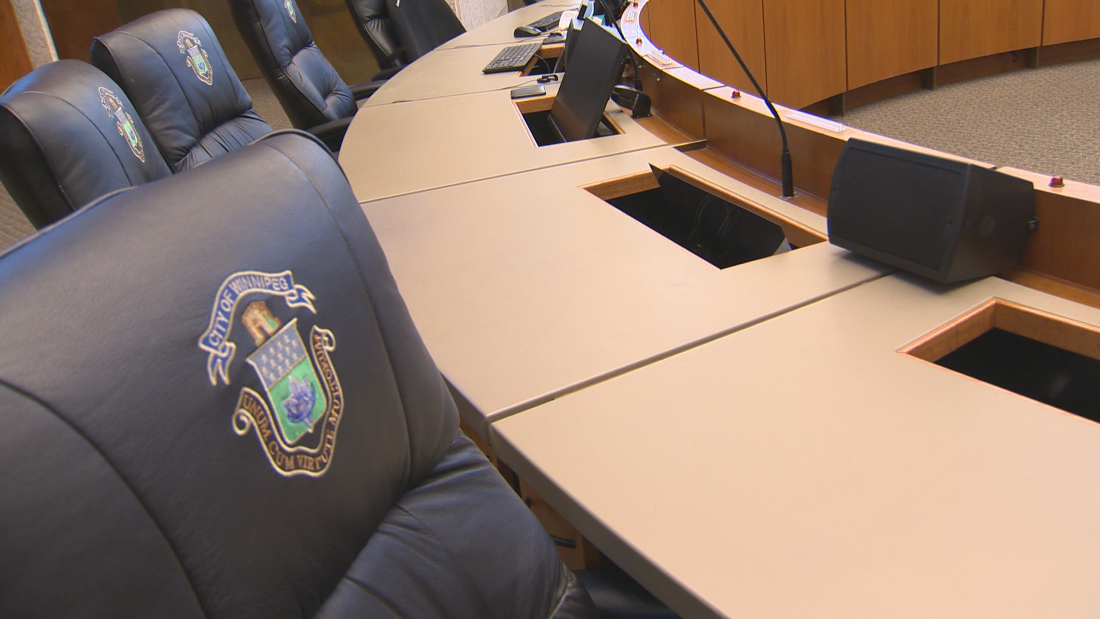
Because when a fresh cohort of councillors walks into the chamber at 510 Main Street, they are not just taking seats around a horseshoe desk. They are inheriting the quiet, daily mechanics of your life. Whether your bus arrives on time during a January whiteout, whether the community center down the block stays open past eight, and whether your property taxes climb another five percent next spring all come down to the human beings who just won their wards.
Let us invent a neighbor to make this concrete. Call him David. David lives in a modest bungalow in St. Vital, drives a twelve-year-old hatchback over potholes that could swallow a compact tire, and watches his water bill creep upward every quarter. To David, City Hall feels like a distant, impenetrable fortress where decisions happen to him rather than for him. When he glances at a standard post-election rundown—a list of names, wards, and vote tallies—he sees politicians. He does not see the specific pressures, ideological fault lines, and neighborhood histories those newcomers carry through the brass doors of the council chamber.
If you want to understand where Winnipeg is headed over the next four years, forget the dry electoral scoreboard. You have to look at who actually stepped into the arena, what drove them out of their living rooms and onto the campaign trail, and the invisible tug-of-war they are about to enter.
The Anatomy of an Incumbency Shakeup
Winnipeg politics has long suffered from a peculiar kind of inertia. Historically, once a councillor claims a ward, they tend to hold it until they retire or run for higher office. Name recognition is a powerful shield when voter turnout hovers around forty percent. People vote for the sign they recognize on the boulevard.
Which makes the arrival of genuine newcomers in the council chamber all the more electric.
Whenever fresh faces break through that wall of incumbency—or step into open seats left behind by longtime fixtures—it signals a rupture in the status quo. Look closely at the anatomy of recent Winnipeg elections, and a clear pattern emerges. The people unseating established players or winning tightly contested open wards are rarely career party operatives. More often, they are community organizers, small business owners, former school trustees, and neighborhood advocates who got tired of shouting at public consultations and decided to take the microphone themselves.
Take a typical ward transition in the city’s inner ring versus its sprawling outer suburbs. In central wards like Daniel McIntyre or Fort Rouge-East Fort Garry, the pressure points are visceral and immediate: housing affordability, addiction crisis response, transit reliability, and aging infrastructure that predates the Second World War. A newcomer stepping into these seats does not get a honeymoon period. On day one, their inbox is flooded with messages from business owners on Corydon or Selkirk Avenue worried about safety, sitting right alongside emails from tenants facing renovictions.
Contrast that with a newcomer elected in a fast-growing suburban ward like Waverley West or Transcona. There, the urgency wears a different face. It looks like bumper-to-bumper morning traffic on Kenaston Boulevard, overcrowded schools, and residents furious that they are paying steep property taxes while waiting years for basic recreational amenities or paved collector roads.
These two realities are on a collision course inside City Hall. Every dollar spent repairing a crumbling combined sewer in the core is a dollar that cannot widen a suburban artery. Every new fire hall built on the edge of the Perimeter Highway stretches the operating budget thinner for the neighborhoods inside it.
What Happens When Ideals Meet the Executive Policy Committee
Here is the secret about Winnipeg’s municipal governance that rarely makes it into election-night soundbites: not all councillors hold equal power.
Think of Winnipeg City Council like a theater production where fifteen actors share the stage, yet only a handful get to rewrite the script between acts. That inner circle is the Executive Policy Committee—the EPC. Appointed directly by the mayor, the EPC acts as the city’s cabinet, steering the budget, shaping major policy before it ever reaches the floor, and deciding which initiatives live or die in committee.
For a newly elected councillor, the first ninety days are a masterclass in political gravity.
You campaign on big, clean promises. You promise to fix the roads, protect the tree canopy from Dutch elm disease, reform Winnipeg Transit, and hold the line on taxes. Then you sit down with the city’s chief financial officer, and the math hits you like a bucket of slush.
Winnipeg is geographically massive for a city of roughly 800,000 people—spread across more than 460 square kilometers of flat prairie. That low-density footprint means we have far more kilometers of road, pipe, and sidewalk per taxpayer than almost any comparable Canadian city. For decades, successive councils kept property taxes artificially low by deferring maintenance, kicking the infrastructure deficit down the road like a rusted tin can.
Now the bill has come due.
Watch what happens to the new faces on council when that reality sets in. Some are tapped by the mayor for the EPC, gaining real leverage over the budget while suddenly having to defend unpopular compromises to the very neighbors who elected them. Others are left on the outside, relegated to standing committees on property, infrastructure, or community services. From those outer chairs, a sharp newcomer has to learn the subtle art of coalition building—trading votes, mastering procedural rules, and using public pressure to force their ward’s priorities onto the mayor’s desk.
I remember sitting in the public gallery during a marathon budget delegation a few winters ago. Outside, the snow was piling up in dirty gray drifts; inside, the air smelled of stale coffee and damp wool. A first-term councillor—someone who had campaigned passionately on freezing taxes—was listening to a retired nurse explain what a twenty-minute reduction in evening bus frequency meant for her shift work at Health Sciences Centre. You could literally watch the shift happen behind that councillor’s eyes. The neat ideological certainty of the campaign trail dissolved, replaced by the heavy, unglamorous weight of governing a real city where every line item has a pulse.
The Human Stories Behind the Ward Maps
When we reduce new councillors to biographical bullet points—former nonprofit director, parent of two, longtime resident—we miss the friction that actually shapes their voting records.
Consider the wave of diverse voices that have reshaped Winnipeg’s council chamber in recent cycles. For over a century, the faces staring down from the portraits in City Hall reflected a narrow slice of the city’s demographic reality. When new councillors arrive from newcomer communities, Indigenous backgrounds, or working-class trades, they bring muscle memory that cannot be learned from a staff briefing binder.
A councillor who has personally relied on the number 16 Osborne or the Blue Line to get to a minimum-wage job in January views transit funding differently than someone who has driven a heated SUV into a reserved underground stall for twenty years. A councillor who grew up watching their parents navigate small business permitting on McPhillips Street understands intuitively how a six-month delay at the planning desk can bankrupt a family restaurant.
Even the internal dynamics between councillors shift when new blood enters the room. Veteran politicians know all the institutional excuses. When city administration says, "That’s just not how we’ve done things," a ten-year incumbent often nods and moves on. A rookie councillor, still close enough to the pavement to remember the anger on people’s front porches, is much more likely to ask: Why?
That single word—why—is the most dangerous tool in municipal politics.
It is the question that uncovers why snow-clearing contracts cost what they do, why bike lanes end abruptly in the middle of busy intersections, and why multi-million-dollar mega-projects routinely blow past their initial estimates while neighborhood wading pools sit empty.
The Traps Waiting for the New Guard
If you are rooting for the new faces on Winnipeg City Council to shake things up, you should also understand the traps waiting to swallow them whole.
The first trap is the pothole distraction. In Winnipeg’s ward-based system, a councillor’s political survival depends on hyper-local constituent service. If Mrs. Gable’s back lane isn't plowed or a tree branch is threatening a power line in Crescentwood, the councillor’s office has to jump. That work matters deeply. Yet it can easily consume sixty hours a week, leaving a new councillor zero bandwidth to tackle the structural diseases threatening the city’s long-term survival—like our reliance on unsustainable greenfield sprawl or our broken provincial funding formula.
The second trap is the paralysis of process. City Hall runs on reports, consultations, feasibility studies, and referrals back to administration. A clever bureaucrat or a veteran opponent can bury a rookie’s bold idea under two years of "further study" without ever voting against it in public. By the time the report comes back, the political momentum has evaporated, and the next election is already looming on the horizon.
The third trap is polarizing theater. It is easy for a new councillor to become a media darling by taking maximalist positions—either opposing every single tax increase regardless of the service cuts required, or demanding sweeping new programs without explaining who pays the tab. Viral clips from the council floor feel good in the moment, yet they rarely pour concrete or house the unhoused.
How to Read Your New Councillor’s First Year
So how do you, sitting at your kitchen table with a mug of coffee and a rising tax assessment, separate the genuine reformers from the ones who will quickly blend into the woodwork?
Stop listening to their press releases and watch three specific behaviors over their first twelve months:
- Watch how they vote on infill housing. Everyone claims to support affordable housing and efficient infrastructure until a four-story apartment building is proposed next to single-family homes in their own ward. When the room fills up with angry neighbors shouting about parking and shadows, does your new councillor stand up for the city’s long-term sustainability, or do they fold to the loudest voices in the room? That single vote reveals more about a councillor’s spine than a dozen campaign speeches.
- Track their amendments, not just their speeches. Anybody can deliver a fiery five-minute monologue for the television cameras. Real legislative skill shows up in the boring paperwork: specific, costed budget amendments that redirect money from low-priority vanity projects toward measurable neighborhood needs.
- Notice who they bring into the building. Do they only meet with well-connected developers and established business associations, or are they actively pulling renters, youth advocates, and marginalized residents into the committee rooms where decisions get made?
Let us return for a moment to David, our hypothetical neighbor in St. Vital, staring out at the cracked asphalt in front of his house.
David does not need a political savior. He knows nobody at 510 Main Street is going to wave a magic wand and turn Winnipeg into a fiscal paradise overnight. The prairie winter will still test our pipes. The rivers will still rise every spring. The tension between our historic core and our expanding edges will never completely vanish.
What David needs—what all of us need—are representatives who remember what the city looks like from the sidewalk rather than the podium.
The fresh faces now settling into their leather chairs at City Hall have a brief, precious window before institutional habit hardens around them. Right now, they still hear the echoes of the doorbells they rang, the kitchen tables where they sat, and the quiet frustrations of people who just want their city to work.
Whether those new names become footnotes in another dry civic directory or the architects of a smarter, fairer Winnipeg depends entirely on whether we let them forget who sent them there—and whether we show up to remind them when the winter wind starts blowing again.