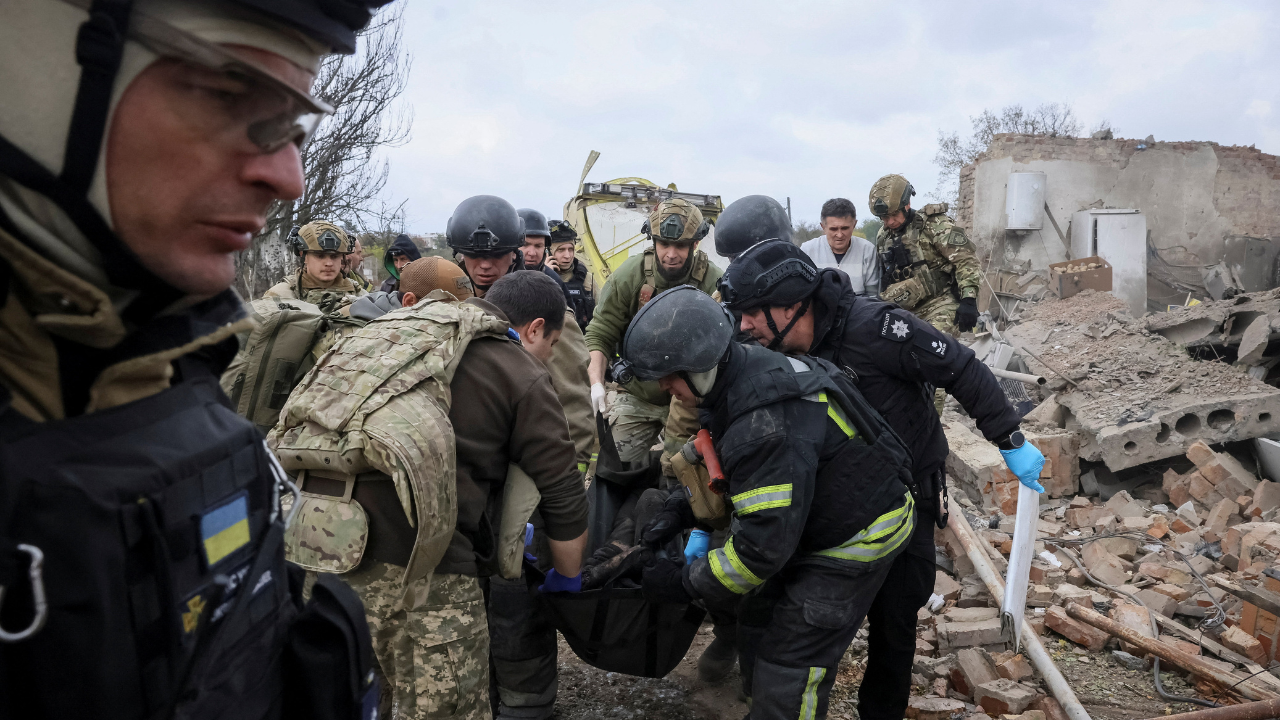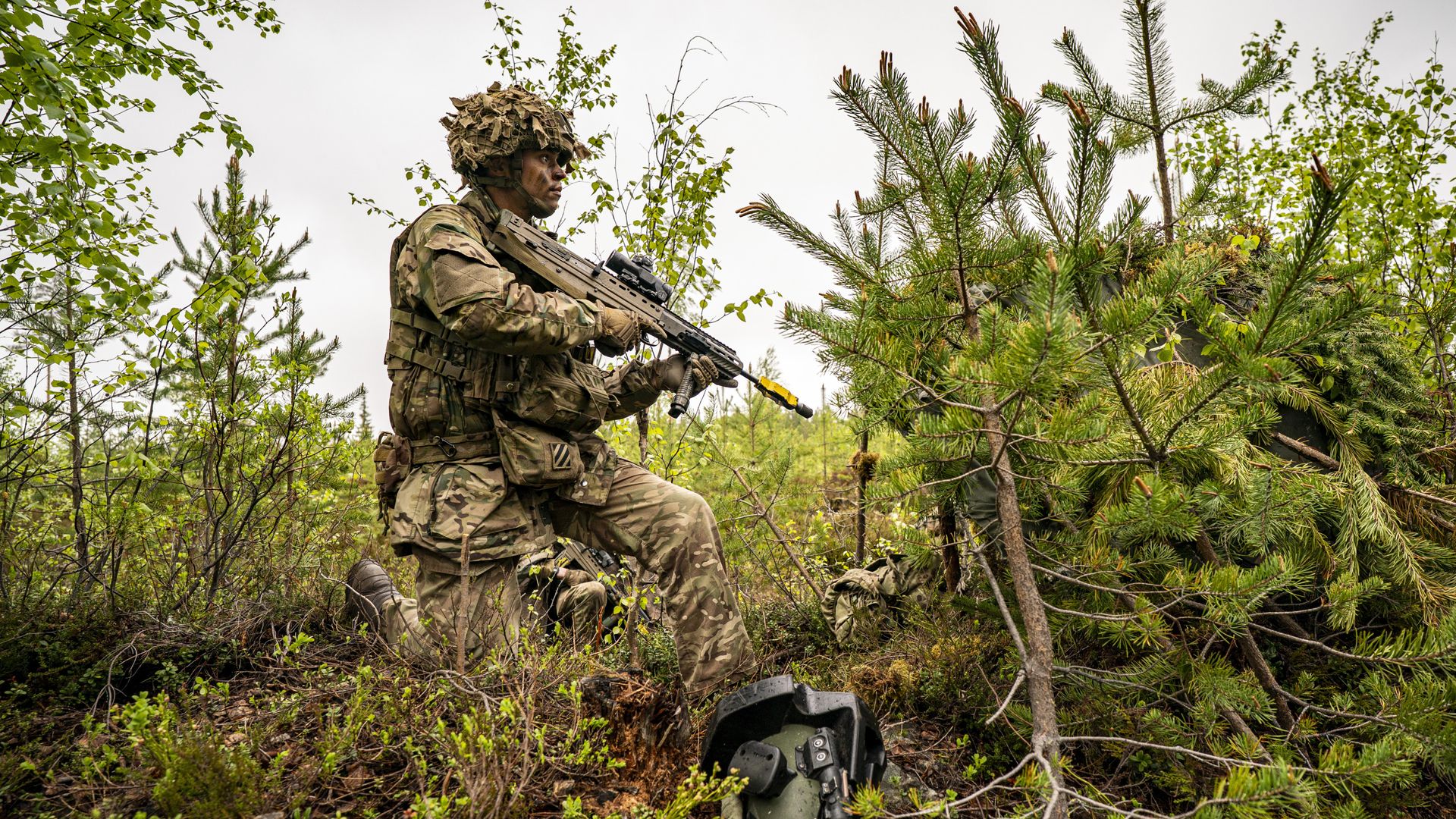
Cold.
That is the first thing you notice when standing watch on the eastern flank of Europe, long before the politics of Westminster or the grand strategies of Moscow ever cross your mind. It is a damp, bone-deep chill that settles into the wool of your socks and turns the steel of an SA80 rifle into an ice block against your cheek. For years, the hardest part of the job for a British soldier deployed near the Russian border was not the physical deprivation, nor the endless hours staring through thermal optics into empty pine forests. It was the psychological weight of a single, suffocating question.
What happens if they actually shoot?
For decades, the unspoken architecture of Western peacekeeping and deterrence relied on a delicate, almost theatrical restraint. Troops were sent to the edge of the map to be seen, to act as a tripwire, a living symbol of international resolve. Yet behind closed doors, in briefings thick with legal jargon and diplomatic caveats, the rules of engagement were often written with a trembling hand. De-escalation was the supreme commandment, even when the other side stopped playing by the rules.
That era just ended.
With the confirmation that British troops will be authorized to return fire against Russian forces if attacked during multinational missions, a quiet earthquake has rumbled beneath the floorboards of European security. On paper, it reads like a dry bureaucratic adjustment—a standard clarification of self-defense protocols for soldiers operating in contested spaces. In reality, it is the removal of a diplomatic safety catch that has been clicked firmly into place since the end of the Cold War.
To understand why this matters, you have to step out of the newsroom and into the mud.
The Weight of the Safety Catch
Consider a hypothetical scenario, built directly from the operational realities facing multinational task forces in Eastern Europe and the Baltic states today.
Meet Corporal Miller. He is twenty-four, from a town outside Leeds, and he is currently sitting in the turret of a Jackal reconnaissance vehicle three kilometers from a disputed border zone. Beside him are soldiers from France, Poland, and Estonia—a patchwork of uniforms stitched together under a single multinational mandate. Their mission is stabilization, monitoring, and deterrence. They are not there to conquer territory. They are there to hold a line.
Suddenly, the silence of the treeline fractures. A mortar round impacts two hundred meters to their left, throwing frozen dirt against the windshield. Small arms fire begins to chew through the birch trees above their heads.
Under the old orthodoxy of hyper-cautious peacekeeping—a mindset haunted by the failures of the 1990s, where blue-helmeted soldiers were forced to watch atrocities unfold while waiting hours for higher command to approve a single shot—Miller’s instincts would have been chained to a radio. He would have had to seek permission to defend his own life, weighing the geopolitical fallout of a dead Russian soldier against the immediate reality of his own bleeding squad. Hesitation in a firefight is not a strategy. It is a death sentence.
When British defense officials clarify that troops will be allowed to fire at Russian forces if attacked during a multinational mission, they are speaking directly to Corporal Miller. They are telling him that his right to survive is no longer subordinate to a diplomat’s desire for a clean press conference.
I remember the first time I stood in a briefing room where rules of engagement were being debated in real time. The air smelled of stale instant coffee and wet Gore-Tex. A young platoon commander—barely old enough to rent a car—kept asking the legal advisor the same question in three different ways, trying to find the exact millimeter where self-defense ended and an international incident began. The advisor kept retreating into abstractions. The commander just stared at his boots, realizing that if things went wrong, he would be judged by lawyers in warm offices for decisions he had half a second to make in the dark.
That ambiguity is poison to an army. You cannot ask young men and women to stand in front of an artillery barrage with their hands tied behind their backs.
Why Deterrence Only Works When It Bleeds
There is a persistent myth in modern commentary that authorizing soldiers to shoot back makes war more likely. It is an intuitive fear, rooted in the memory of July 1914, when a cascade of rigid mobilizations dragged a continent into the trenches. People hear that British troops can engage Russian forces, and they immediately picture mushroom clouds over London.
History tells a very different story.
Deterrence is like a lock on a front door. A lock does not stop a determined burglar with a sledgehammer, nor does it make the neighborhood violent. What it does is raise the cost of entry from a casual turn of the handle to a loud, risky, and exhausting break-in. For years, Moscow’s military doctrine has thrived on what strategists call the gray zone—actions just aggressive enough to intimidate neighbors, probe defenses, and humiliate Western patrols, yet carefully calibrated to stay below the threshold that triggers a full-scale military response.
Think of it as a schoolyard bully who shoves you against the lockers every morning, betting everything on the certainty that you are too afraid of getting suspended to throw a punch back. The moment you plant your feet and make it clear that the next shove gets met with a broken nose, the math changes entirely. The bully does not necessarily start a brawl; usually, he walks away to find an easier target.
By explicitly stating that British forces operating alongside allies have the green light to return fire when attacked, London is stripping away Russia’s favorite weapon: ambiguity. The Kremlin can no longer assume that a "rogue" drone strike, a "stray" artillery shell, or an ambush by deniable mercenaries will be absorbed with a strongly worded letter from the Foreign Office. If Russian forces pull the trigger on British troops, the response will be immediate, kinetic, and lethal.
This is not escalation. It is the restoration of sanity.
The Fragile Glue of a Multinational Mission
Yet the sharpest edge of this policy is not just about Britain and Russia. It is about the word multinational.
Anyone who has ever worked inside a coalition—whether in the deserts of Helmand Province or the snowy plains of Eastern Europe—knows that alliances are far more fragile on the ground than they look on summit stages. Every nation brings its own constitutional limits, its own domestic political fears, and its own private red lines to the battlefield.
During the height of the NATO mission in Afghanistan, soldiers famously joked that the acronym ISAF stood for "I Saw Americans Fighting," a bitter nod to the dozens of national caveats that prevented certain European contingents from patrolling at night, engaging insurgents without parliamentary approval, or leaving their bases when the weather turned bad. Nothing destroys trust faster than realizing the soldier covering your left flank is legally prohibited from pulling the trigger when you get ambushed.
Imagine a joint patrol today. British infantry are moving alongside allies from smaller nations whose own military doctrines might be untested against a peer adversary. If that patrol comes under Russian fire, and the British contingent immediately lays down coordinated, devastating suppressive fire while coordinating air support, two things happen in the span of ten seconds.
First, the patrol survives. Second, every allied soldier in that ditch realizes that the British are not tourists. They are there to fight if a fight is forced upon them.
That certainty is the real currency of alliances. Treaties are just ink on vellum until someone is willing to bleed for the person standing next to them. By locking in clear rules of engagement for multinational deployments, Britain is acting as the load-bearing wall for whatever coalition it joins. When the storm hits, the other nations know the roof will not cave in.
The Human Cost of Clarity
Still, we should not pretend that this clarity comes without a terrifying price. Anyone who celebrates the prospect of British and Russian soldiers exchanging fire has never smelled cordite or watched a casualty evacuation helicopter lift off into a gray sky.
The anxiety people feel when reading these headlines is completely valid. We are living through a period where the guardrails that kept great powers from colliding directly for eighty years are rusting away. Every new directive, every updated rulebook, feels like another step closer to a fire we might not be able to put out.
What happens if a localized firefight spirals? What if a young lieutenant, operating under the stress of incoming fire and jammed communications, mistakes a warning shot for a lethal attack and wipes out a Russian reconnaissance unit?
Those questions do not have comfortable answers. Command and control in modern warfare is messy. Electronic warfare blinds sensors, drones turn every square meter of dirt into a surveillance zone, and the time between spotting an enemy and being destroyed by them has shrunk from minutes to seconds. In that environment, giving soldiers the authority to fire back transfers an immense moral and strategic burden onto the shoulders of twenty-something captains and sergeants.
They become the diplomats now. Every squeeze of a trigger carries the weight of foreign policy.
Yet the alternative is far worse. A military force that deploys into a danger zone without the authority to defend itself is not a deterrent; it is a hostage waiting to happen. We learned that lesson in blood at Srebrenica in 1995, when Dutch peacekeepers, bound by impossible rules of engagement and denied air support, were forced to stand by helplessly while thousands of men and boys were led away to be slaughtered. The psychological scars of that failure still haunt European defense ministries thirty years later.
Britain’s decision is an admission that the world has become too dangerous for symbolic deployments. If you are going to put boots on the ground near Russian guns, those boots must belong to soldiers who are fully armed, fully authorized, and completely unambiguous about what happens if they are tested.
The Silence Before the Snow
Back in that hypothetical treeline along the eastern border, the wind picks up, rattling the bare branches of the birches. Corporal Miller adjusts his grip on the weapon mount, his breath pluming white in the freezing air.
Nothing has happened yet. The border is quiet. Across the cleared strip of frozen earth, the distant silhouettes of watchtowers sit motionless against a bruised, slate-colored sky. With any luck, nothing will happen tomorrow either, or the day after that, and Miller will eventually pack his kit, fly back to RAF Brize Norton, and complain about the price of a pint in his local pub.
Peace, when it holds, always looks boring from the outside. It looks like soldiers drinking lukewarm tea out of plastic cups, checking tire pressures, and staring at empty horizons.
Nobody sees the invisible architecture keeping that horizon empty. They do not see the quiet shift in a classified binder, the removal of a lawyer’s caveat, or the unspoken understanding passing across a few hundred meters of frozen dirt between two opposing armies.
For the first time in a generation, both sides know the exact rules of the game. The safety catch is off, the line is drawn in the frost, and the finger resting beside the trigger no longer has to ask permission to survive.