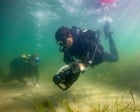
Below the surface of Studland Bay in Dorset, a slow-motion catastrophe used to happen every single weekend. Heavy metal anchors, dropped from leisure boats seeking shelter in the calm, turquoise waters, hit the sandy floor with a thud. Then came the chain. As the tide turned and boats swung, long iron links dragged across the seabed like ploughs, carving wide, barren trenches through lush meadows of green Zostera marina seagrass.
For decades, this invisible destruction went unnoticed by the holidaymakers sunbathing on the Dorset shore. Out of sight meant entirely out of mind. Yet every scrape left a scar. Every trench tore up root systems that had taken centuries to weave together into dense, living carpets. Meanwhile, you can explore related developments here: Inside Stephen Antonakos and His Neon Lit SoHo Space.
Then a quiet shift began.
Researchers from the University of Southampton, alongside conservationists from the National Trust and local marine partnerships, started tracking what happened when humans simply stopped dragging iron chains across the ocean floor. The results, analyzed over a five-year period, reveal an astonishing truth about the resilience of the natural world. Given even half a chance, the sea heals itself with fierce determination. To explore the complete picture, check out the detailed article by Cosmopolitan.
To understand why these underwater meadows matter, you have to look past their unassuming appearance. Seagrass is not just weed. It is a powerhouse. Operating like an underwater forest, it locks away carbon dioxide from the atmosphere at rates that put terrestrial woodlands to shame. It acts as a natural breakwater, softening the punch of coastal storms and protecting Dorset’s shores from erosion.
More than that, it is a nursery.
Imagine a sprawling, emerald city hidden beneath the waves. Spiny seahorses drift vertically among the blades, wrapping their prehensile tails around sturdy stalks. Corkwing wrasse dart through the canopy, while spider crabs scuttle along the sandy alleys, and slender eels weave through the shadows. When traditional anchors tore up the meadows, they demolished homes. They fractured a delicate biological network that supported dozens of vulnerable species.
The turning point arrived with a simple piece of engineering: the eco-mooring.
Instead of heavy blocks and dragging chains that scour the seabed clean, modern eco-moorings utilize a two-metre helical screw drilled directly and securely into the sand. Attached to this is a thick, elasticated riser connected to a surface buoy. As the tide rises and falls, the elastic tether stretches and retracts smoothly. Nothing drags. Nothing scrapes. The seabed remains entirely undisturbed, allowing the seagrass to creep back across the sandy gaps.
When researchers measured the recovery zones after five years, the data stunned even the optimists. In areas where trial eco-moorings replaced traditional heavy anchors, bare patches of seabed shrank by an average of ninety-four percent. Even in secondary study zones where traditional chains remained longer before being phased out, scars decreased by sixty-five percent.
Kira Dunn, a researcher who analyzed the data as part of her studies at the University of Southampton, noted how rapidly the habitat regenerates once the physical disturbance is lifted. The evidence is clear. The seagrass is not just surviving; it is marching back into the territory it lost.
For the human visitors who sail into Studland Bay, the transition requires a minor adjustment in habit. Boaters now choose between anchoring outside the protected zone or picking up one of the specialized eco-moorings. Many are happy to pay a small fee knowing their leisure time is no longer destroying the very landscape they came to enjoy.
Volumen and vitality are returning hand in hand. Volunteer divers monitoring the bay have reported rising numbers of seahorses navigating the recovered blades. Species that had grown scarce are finding their footing in the dense, restored thickets.
Consider what this means for the broader fight against environmental degradation. Much of our environmental news arrives wrapped in a shroud of permanent loss. We hear endlessly about coral bleaching, melting ice, and forests turning to ash. We are conditioned to believe that human impact is a one-way street of permanent decay.
Studland Bay proves otherwise.
It demonstrates that restoration does not always require active, expensive replanting or futuristic technology. Sometimes, the most effective conservation strategy is simply getting out of nature's way. Stop the tearing. Stop the scraping. Remove the heavy iron weight from the throat of the ecosystem, and let the tides do what they have done for millennia.
The green blades are returning to the Dorset coast, inch by silent inch, reclaiming the sandy floor in a quiet triumph of regeneration.