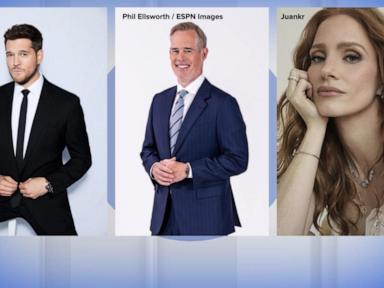
Thirty seconds before the red light blinks on a live network broadcast, nobody is looking at the nominees.
They are looking at the person standing three feet behind the velvet curtain, holding a heavy cream-colored envelope and trying not to sweat through tailored wool.
Every November, when the Country Music Association unveils the presenter lineup for the CMA Awards, the press releases arrive looking like grocery receipts. A block of bolded names. A few polite adjectives. Star-studded. Iconic. Unforgettable. And every year, millions of readers skim the roster, nod at a few familiar faces from television or sports, and move on to the real business of predicting who will walk away with the Entertainer of the Year trophy.
We treat presenters like human mic stands. They are the connective tissue between commercial breaks and tearful acceptance speeches—the well-dressed messengers who read a teleprompter, tear open a seal, and step aside before the orchestra swells.
We have that completely backward.
If you want to understand where country music is actually going—who holds the keys to the kingdom, which outsiders are being invited to the supper table, and which ghosts the industry is still trying to appease—do not look at the ballot. Look at the people standing at the podium.
The Envelope Is Never Just Paper
Consider a hypothetical scenario that plays out in Nashville boardrooms every autumn. Picture a young executive producer sitting across from a veteran talent booker, two whiteboards covered in magnets between them. On the left board are the nominees: the sure things, the critical darlings, the streaming juggernauts. On the right board are the presenters.
To the casual viewer, the right board looks like a party guest list. To the people in that room, it is a high-stakes peace treaty.
Every slot on a three-hour live broadcast from Bridgestone Arena is worth hundreds of thousands of dollars in airtime and immeasurable cultural capital. When the CMA announces that a Hollywood actor, an NFL quarterback, an Olympic gold medalist, or a rising viral songwriter will step up to present an award, they are making a calculated bet on relevance. They are building a bridge between the die-hard fans in East Tennessee who know every fiddle player by name and the casual viewer in Chicago who only tuned in because a favorite actor was trending on their feed that afternoon.
I learned this the hard way years ago, standing in the press room backstage during awards week in downtown Nashville. I was there to cover the winners, armed with a notepad full of statistics about radio airplay and album sales. Yet the loudest buzz in the room didn't follow the trophy winners. It followed the presenters. Whenever a crossover star or a fiercely guarded country legend walked off the stage after merely reading three sentences from a card, the room shifted. Reporters leaned forward. Publicists started furiously typing on their phones.
Why? Because in Nashville, presence is endorsement.
To stand on that stage—even for forty-five seconds—is to cosign the genre. And for the Country Music Association, inviting someone to hold that envelope is the ultimate signal of who belongs inside the tent.
The Invisible Stakes of Forty-Five Seconds
Think of the CMA Awards podium like the front porch of a sprawling, slightly rowdy family home. The nominees are the relatives arguing inside about who gets the biggest piece of pie. The presenters are the neighbors, the prodigal cousins, and the intriguing strangers invited up the steps to knock on the door.
Who gets invited onto that porch tells you everything about the mood inside the house.
When country music feels insecure—when critics whisper that the genre is too insular, too slow to change, or out of step with mainstream pop culture—the presenter lineup suddenly fills up with Hollywood heavyweights, late-night hosts, and pop-adjacent athletes. It is a subtle, unspoken flex: Look who wants to be here with us.
Conversely, when the genre is riding high on commercial dominance, topping global streaming charts and selling out football stadiums from Dublin to Dallas, the lineup shifts. Suddenly, the podium belongs to the architects. You see the revered songwriters who rarely step in front of a camera. You see the legacy trailblazers from the seventies and eighties, brought out to remind the twenty-two-year-old streaming sensations that they are standing on shoulders that carried heavy loads long before Spotify existed.
Watch the choreography of a single presentation the next time you tune in. It is a masterclass in silent storytelling.
First comes the walk-on music—usually an instrumental snippet of the presenter's own biggest hit, or a nod to their day job. Then comes the banter. Yes, the jokes are scripted, often painfully so, written by television veterans trying to balance down-home warmth with prime-time punchiness. Watch closely, though, at the micro-expressions. Watch the relief when a non-singer lands a laugh in front of eighteen thousand music industry insiders. Watch the genuine reverence when a young chart-topper shares a microphone with a Hall of Famer who barely reaches their shoulder.
Silence.
Then the tear of the paper.
In that half-second before the name is spoken, the presenter holds absolute power over the room. For a nominee sitting in the front row—someone who spent ten years playing to twelve people in smoky dive bars in Lubbock or Macon, living out of a dented van, wondering if the whole thing was a delusion—that presenter's voice is the final verdict. The person holding the card isn't just announcing a winner. They are permanently attached to the most important memory of another human being's life.
Ask any CMA winner twenty years after the fact who won Best New Artist in their year, and they might pause to think. Ask them who handed them the crystal trophy, and they will describe the exact color of the presenter's suit, the warmth of their handshake, and the precise words whispered into their ear as the cameras cut away.
Why the Crossover Guest List Always Sparks a Fight
Of course, not everyone loves watching outsiders walk onto country music's biggest stage. Every year, without fail, the presenter announcement triggers a familiar grumble across social media and call-in radio shows.
What does a sitcom star know about pedal steel?
Why is a football player handing out a music award while real country legends sit at home?
It is a fair question, and pretending that tension doesn't exist would be dishonest. Country music has always had a complicated, push-and-pull relationship with the mainstream. The genre was built on authenticity—on three chords and the truth, on muddy boots and heartbreak that cannot be manufactured in a focus group. To a purist, watching a celebrity with zero ties to Nashville stumble through a joke about pickup trucks and cold beer feels like cosplay. It stings. It feels like the culture is being rented out for ratings.
Yet look at the historical pattern, and a different truth emerges.
Country music has never survived in a vacuum. From the earliest days of the Grand Ole Opry broadcasts to the era when Glen Campbell and Johnny Cash hosted prime-time variety shows welcoming rock stars, comedians, and civil rights icons onto their stages, the genre has always grown by colliding with the wider world.
When an actor from a hit drama or a champion athlete steps up to the CMA podium, they aren't there to prove they can sing a high lonesome harmony. They are acting as a translator. They are telling millions of viewers who might never have clicked on a country playlist that the music happening in Nashville matters right now. And in return, those guests often bring an unvarnished, wide-eyed enthusiasm that industry insiders have long since grown too jaded to show.
There is something disarming about watching a hardened NFL linebacker look genuinely starstruck because he gets to stand ten feet away from George Strait or Dolly Parton. That awe is contagious. It reminds the audience watching from their living rooms that what is happening on that stage isn't just another corporate awards show—it is a living, breathing cultural milestone.
The Unscripted Moments Behind the Curtain
If you want the real story of the CMA presenter lineup, though, you have to look past the broadcast altogether and trace what happens in the hallways underneath the arena.
Awards shows are pressure cookers. Nominees are terrified of losing on live television; performers are terrified of a vocal crack or a blown guitar rig. Presenters, by contrast, operate in a strange, weightless pocket of freedom. They don't have to sing. They don't have to prepare a speech just in case they win. Their only job is to show up, look sharp, and celebrate someone else.
Because the stakes for them are different, they become the emotional shock absorbers of the entire night.
Backstage, in the labyrinth of black curtains and catering tables, presenters are the ones breaking the tension. A veteran actor cracks a dry joke to a nervous twenty-something songwriter pacing outside the stage door. Two artists from completely different eras, paired together by a producer purely for visual contrast, end up leaning against a stack of road cases talking about songwriting, parenting, or the bizarre miracle of still having a career after decades on the road.
More than a few landmark collaborations in country music didn't start in a record label conference room. They started because two people were assigned to read a teleprompter together at the CMAs, spent fifteen minutes laughing in a green room while waiting for their cue, and realized they liked each other enough to book studio time the following Tuesday.
That is the part the press releases never capture. When you read a list of names on a screen, you see static publicity photos. In reality, you are looking at a collision of trajectories—past, present, and future forced into the same square footage for one electric Wednesday night in November.
How to Watch the Lineup Like an Insider
So when the announcements roll out and the familiar headlines declare another star-studded roster, skip the reflex to treat it as trivia. Read the lineup like a map.
Notice who gets paired with whom. Producers rarely throw two names together by accident. When a legacy outlaw icon stands next to a glossy, pop-leaning newcomer, that is an intentional olive branch—a visual argument that the roots and the branches belong to the same tree.
Pay attention to the timing in the broadcast. The presenters who appear in the first forty-five minutes are chosen to hook the casual channel-surfers with sheer star power and momentum. The ones saved for the final hour—leading into Album of the Year, Song of the Year, and Entertainer of the Year—are chosen for gravitas. By the time the clock approaches eleven on the East Coast, the jokes disappear. The tone shifts. The people walking out to hand over those final trophies are there because their mere presence carries weight.
And watch the hands.
Watch the way a presenter grips the envelope when they realize the name printed inside belongs to a dear friend, or a mentor, or an underdog nobody expected to win. No teleprompter can script the sudden catch in a voice or the split-second grin a presenter tries—and fails—to hide before reading the winner's name aloud.
The lights dim in the arena. The house band hits a sharp, brassy chord that reverberates right through the floorboards. Out from the wings steps someone you recognize—maybe a legend in a custom rhinestone jacket, maybe an actor looking slightly overwhelmed by the roar of eighteen thousand country fans—carrying a small white card that is about to change the trajectory of someone's life forever.