Silence. In the West Wing, silence is rarely peaceful; usually, it is the thick, pressurized quiet that settles over a room just before a door slams or a schedule gets torn up.
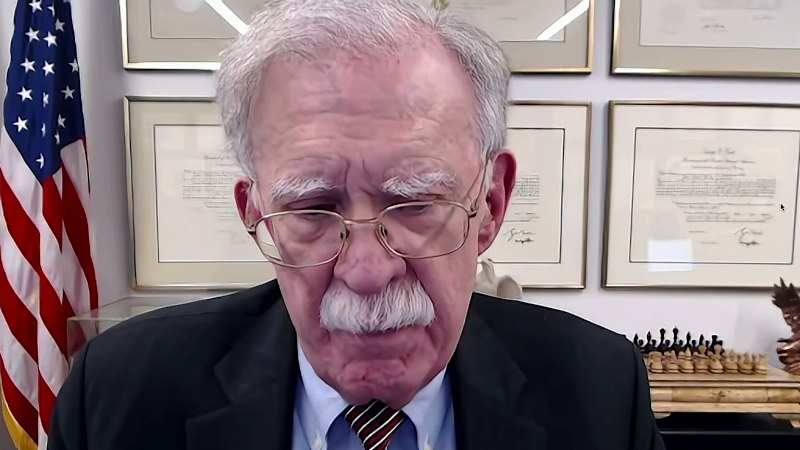
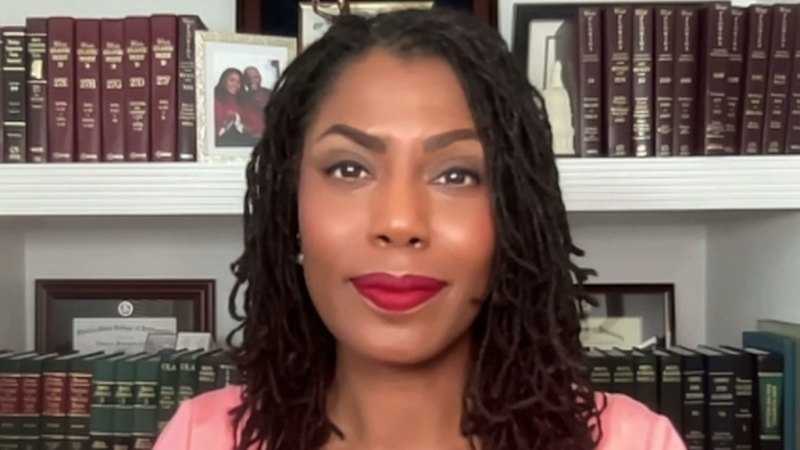
Anyone who has ever worked inside a high-stakes executive office knows the physical sensation of a leader's mood shifting. You feel it in your shoulders before a word is spoken. The air conditioning suddenly feels too cold, the fluorescent lights hum a little louder, and every staffer in the outer office begins calculating the distance between their desk and the nearest exit. When former White House aides—people like Alyssa Farah Griffin, Cassidy Hutchinson, Stephanie Grisham, or John Bolton—step in front of television cameras and describe a frustrated Donald Trump as "dangerous," they are not merely offering a partisan talking point. They are describing a specific, recurring dynamic of executive psychology that has defined modern political debates around presidential temperament. Read more on a similar issue: this related article.
To understand why those warnings resonate with millions of voters—and why millions of others dismiss them entirely—we have to look past the cable-news soundbites. We have to examine what happens when impulsive human emotion collides with the largest institutional apparatus on earth.
The Anatomy of a Warning
Consider a hypothetical scenario, built directly from the public testimony and memoirs of former administration officials. Picture a late Tuesday evening in the residence or the dining room just off the Oval Office. A television screen is muted on the wall, scrolling breaking news chyrons about a stalled legislative priority, a disappointing polling memo, or a legal setback. The advisors in the room have spent weeks drafting careful, legally vetted options—Option A, which preserves institutional alliances; Option B, which buys time in the courts. Additional reporting by The New York Times explores similar perspectives on this issue.
Then the frustration hits.
According to repeated accounts from former insiders—such as former Defense Secretary Mark Esper, who wrote in his 2022 memoir A Sacred Oath about having to talk the president down from extreme military or domestic deployments, and former communications director Alyssa Farah Griffin, who has repeatedly stated on air that a frustrated or cornered Trump becomes "dangerous" because the traditional guardrails are gone—frustration in that room does not produce quiet reflection. It produces an immediate demand for action, loyalty, and visible retaliation.
One word changes everything in the presidency. Do it.
When a private citizen gets angry, they might send an ill-advised text message, fire a contractor, or slam a laptop shut. The collateral damage is contained within a few city blocks or a single balance sheet. When a President of the United States gets frustrated, however, that emotional impulse travels down a fiber-optic network of immense federal authority. It lands on the desks of generals, attorneys general, cabinet secretaries, and agency heads whose entire professional training is built around executing the commander-in-chief's directives.
Think of the American presidency not as a throne, but as a massive hydraulic press. Every lever pulled at the top multiplies force exponentially by the time it reaches the bottom. A mild annoyance at the top becomes an investigation at the bottom; a flash of anger at the top can become a tariff war, a troop movement, or a constitutional crisis by morning.
Two Competing Visions of Leadership
Yet if you step outside the Beltway and talk to voters in diners across Ohio, Pennsylvania, or Florida, that exact same temperament is often viewed through a completely opposite lens. Understanding this divide requires acknowledging a profound disagreement over what the presidency is actually supposed to be.
For critics and former aides who have broken ranks, the danger lies in unpredictability and the erosion of institutional norms. In their view, the modern world is too interconnected—nuclear deterrence, global supply chains, intelligence-sharing alliances—to be managed by gut instinct and personal grievance. When former aides warn that a frustrated Trump is dangerous, they are pointing to moments like the aftermath of the 2020 election, detailed extensively in the House January 6th committee hearings, where advisers testified that the president resisted their legal conclusions and sought alternatives that aligned with his frustration rather than the law. To institutionalists, a president's primary duty is to absorb pressure without transferring that volatility onto the country.
Supporters, however, see those same aides not as courageous whistleblowers, but as entrenched bureaucrats who tried to suffocate the will of the voters.
From the perspective of Trump's defenders and current allies, the frustration a leader feels when confronted with a slow-moving, risk-averse government is entirely justified. In business, if a project stalls, you demand results and replace the people making excuses. Supporters argue that Washington has spent decades hiding behind "process" and "decorum" while manufacturing towns hollowed out and border enforcement faltered. To them, an unpredictable, frustrated leader is not a threat to democracy; he is a battering ram aimed at a stagnant system. When critics hear recklessness, supporters hear resolve. When former aides see a lack of guardrails, supporters see a leader finally unshackled from unelected staffers who thought they knew better than the electorate.
Both interpretations are looking at the exact same set of facts. They are watching the same press conferences, reading the same transcripts, and observing the same personality. What separates them is not a lack of information, but a fundamental clash of values: stability versus disruption.
The Erosion of the Buffer Zone
History offers plenty of examples of volatile presidents. Lyndon B. Johnson was notorious for intimidating lawmakers and aides in claustrophobic bursts of temper. Richard Nixon routinely barked orders to staffers late at night—orders to audit enemies, fire officials, or retaliate against journalists—that his chief of staff, H.R. Haldeman, quietly placed in a drawer until the president cooled off the next morning.
That "drawer" is what political scientists call the institutional buffer zone. For decades, the American executive branch relied on an unwritten system of friction. A president could vent, rage, and demand the impossible at 11:00 PM, knowing—consciously or subconsciously—that seasoned chiefs of staff, White House counsels, and cabinet secretaries would slow-walk the impulse until daylight restored perspective.
The core argument made by former Trump aides is that this buffer zone vanished over time.
During the first two years of the Trump administration, figures like Jim Mattis, John Kelly, and Rex Tillerson openly viewed themselves as stabilizing forces—a dynamic famously, and controversially, described in an anonymous 2018 New York Times op-ed later revealed to be written by former DHS official Miles Taylor. Those officials believed their job was to filter presidential frustration through traditional policy channels. By the final months of the administration, however, many of those figures had resigned or been fired, replaced by loyalists who believed the president's instincts should never be second-guessed.
This is the specific context behind the "dangerous" label. Former aides are not simply saying that Donald Trump gets angry; every president gets angry. They are arguing that the surrounding ecosystem—the lawyers, the deputies, the gatekeepers who used to say "Mr. President, you can't do that"—has been systematically redesigned to say "Yes, sir, how fast do you want it done?"
The Human Cost Inside the Machine
It is easy to talk about constitutional guardrails and executive authority in the abstract, as if they were diagrams in a civics textbook. In reality, those guardrails are made of human beings—often mid-level officials in their thirties and forties sitting in windowless offices, forced to make split-second moral decisions when a directive comes down the chain.
Consider the human reality described by Cassidy Hutchinson, a former aide to Chief of Staff Mark Meadows, during her 2022 testimony. Regardless of how one views her political evolution, her account captured the claustrophobic atmosphere of a West Wing where personal loyalty was treated as the ultimate currency. Young staffers who entered public service expecting to draft memos and coordinate schedules suddenly found themselves navigating legal subpoenas, furious phone calls, and the terrifying realization that a single misstep could define the rest of their lives.
When an executive operates through personal loyalty rather than institutional process, fear becomes a management tool. Staffers stop bringing bad news into the Oval Office because nobody wants to be the messenger who triggers an eruption. Intelligence briefings get shortened. Legal warnings get softened. Over time, the leader becomes trapped inside an echo chamber of their own making, growing even more frustrated when reality inevitably refuses to bend to the flattering reports on their desk.
It is a feedback loop. Frustration breeds isolation; isolation breeds bad advice; bad advice breeds worse outcomes; worse outcomes breed deeper frustration.
Why These Warnings Often Backfire
If the warnings from former aides are so stark, why haven't they permanently altered the political landscape?
Part of the answer lies in messenger fatigue. Over the past decade, the American public has been subjected to a relentless stream of breaking-news alarms. Words like unprecedented, existential, and dangerous have been deployed so frequently—often for minor rhetorical gaffes alongside genuinely serious institutional breaches—that they have lost their sharp edge. To an exhausted voter trying to afford groceries and pay a mortgage, another former aide appearing on television to promote a book or a punditry contract can easily blur into background noise.
Furthermore, there is an inherent skepticism toward insiders who waited until after they left the building—or until a lucrative media opportunity arose—to voice their alarms. Voters naturally ask: If it was truly that dangerous, why did you stay for two years? That question lingers over every interview, creating a credibility gap that critics struggle to bridge.
Meanwhile, Trump's political operation has masterfully turned those very criticisms into badges of honor. Every warning from a former general or cabinet secretary is reframed as proof that the "establishment" fears losing its grip on power. In this framing, the anger of the insider is evidence of the outsider's effectiveness.
Sitting With the Uncertainty
We are left, then, with an uncomfortable truth that resists easy partisan comfort.
On one hand, the historical record and the on-the-record testimony of dozens of high-ranking former officials establish a clear pattern: Donald Trump governs through personal intuition, values loyalty above institutional procedure, and reacts to frustration with an intensity that has repeatedly tested the boundaries of executive norms. Ignoring the unified warnings of a former Vice President, a former Defense Secretary, a former Attorney General, and multiple former Chiefs of Staff requires dismissing an extraordinary amount of firsthand evidence.
On the other hand, millions of Americans continue to look at that exact same temperament and see the only kind of strength capable of confronting entrenched bureaucracy and global instability. They believe that a leader who plays by polite Washington rules will inevitably be defeated by them.
Ultimately, the debate over whether a frustrated leader is "dangerous" or "decisive" cannot be settled by pundits or former aides. It rests on a wager that every voter has to make for themselves: whether the greater risk to a democracy lies in a system that moves too slowly to fix its problems, or in a leader who moves too fast to respect its limits.
And somewhere in Washington, a heavy wooden door still waits for the next hand on the brass handle.