Cold fluorescent light hums at sixty cycles per second. If you sit under it long enough, inside a processing facility with cinderblock walls painted the exact shade of wet concrete, that hum stops being a sound and becomes a physical weight behind your eyes.
For decades, the unspoken contract of American immigration rested on a simple, comforting premise. You play by the rules, you file your paperwork, you pay your taxes, and eventually, the door stays open. A green card was the finish line. It meant permanence. It meant you could fly home to Manila for your mother’s seventieth birthday without wondering if the customs officer at Los Angeles International Airport would look at a twenty-year-old minor offense, or a technicality on an expired form, and decide your life in America was over. If you found value in this article, you might want to check out: this related article.
That contract has been torn up.
Consider a hypothetical scenario, built directly from the real cases landing on consular desks across the United States. Imagine Mateo, a forty-eight-year-old nurse who has worked night shifts in a California hospital for fifteen years. He owns a modest stucco house in Daly City. His two kids were born here. He holds lawful permanent resident status. Returning from a brief family visit in the Philippines, he steps up to the primary inspection booth, tired from a fourteen-hour flight, holding a duty-free box of dried mangoes. Instead of a stamp and a nod, he is directed to secondary inspection. Hours pass. His shoelaces are taken. His phone is confiscated. Within forty-eight hours, Mateo is sitting in a privately contracted detention center in the Mojave Desert, caught in the gears of a zero-tolerance enforcement dragnet that makes almost no distinction between a violent felon and a nurse with an unresolved paperwork discrepancy from a decade ago. For another look on this story, refer to the latest update from TIME.
Mateo is a composite, a narrative stand-in for a very real panic gripping the four million people of Filipino descent living in the United States. When Philippine Ambassador Jose Manuel Romualdez recently addressed the growing number of Filipinos swept into U.S. Immigration and Customs Enforcement custody, he offered a candid, sobering assessment of the situation. The rules have hardened. Enforcement has become sweeping, indiscriminate, and indifferent to community ties. Yet, amid the anxiety, the envoy pointed toward a specific horizon on the American political calendar. Relief, or at least a recalibration of these strict detention policies, might arrive after the midterm elections.
Wait.
Read that again. The fate of thousands of families, the freedom of lawful residents and visa holders, is currently tethered to the shifting winds of a congressional election cycle.
The Architecture of Indefinite Waiting
To understand why an ambassador is reading political tea leaves in Washington, you first have to understand how the machinery of immigration detention actually works. Most Americans picture border enforcement as a fence in the desert. They imagine dramatic river crossings and patrol vehicles kicking up dust. They rarely picture the quiet, bureaucratic trapdoors built into international airports and routine check-ins.
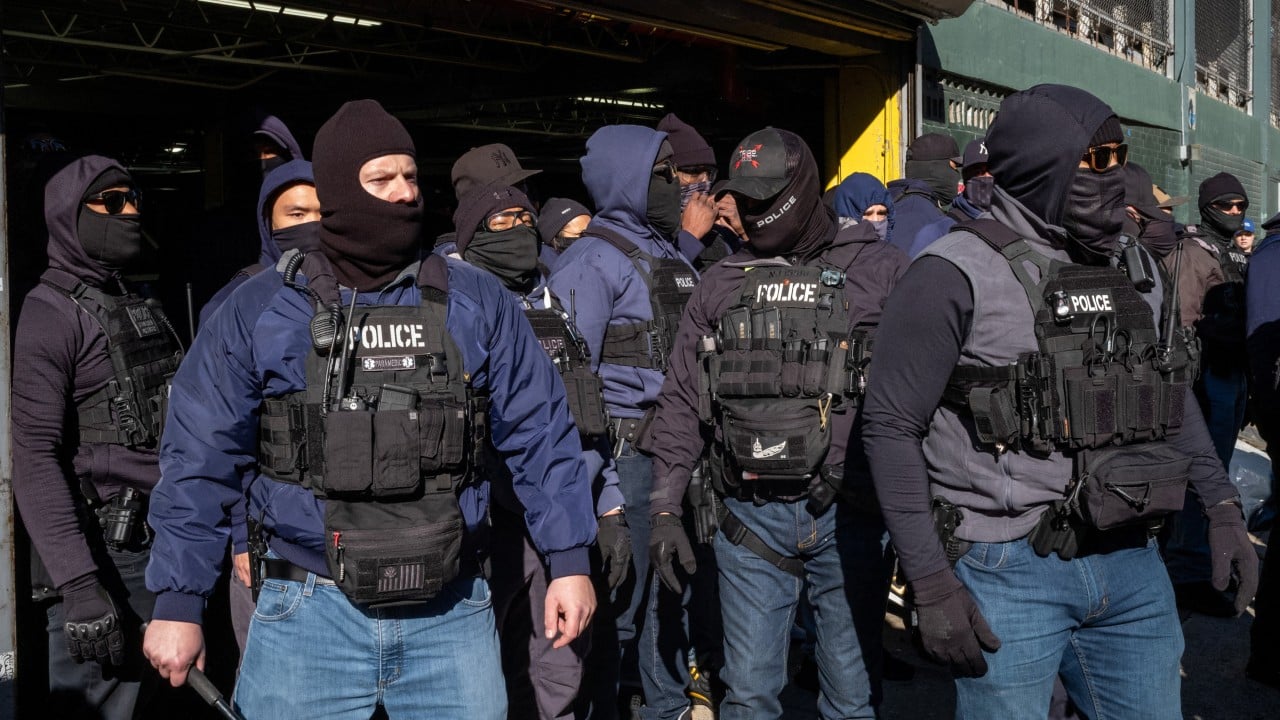
Under intensified enforcement directives, mandatory detention provisions have been interpreted as broadly as the law allows. Think of it like a fishing net designed to catch sharks, suddenly dragged across a shallow coral reef. The mesh hasn't changed, nor has the statutory text written by Congress decades ago, but the boat is moving faster and scraping the bottom. People who previously would have been issued a Notice to Appear—allowing them to fight their immigration case while living at home, working their jobs, and caring for their children—are now being held behind razor wire for months while backlogged courts crawl forward.
I remember standing outside a detention facility in Adelanto a few years back, watching a woman in a heavy winter coat press her palm against the reinforced glass of the visitor lobby. She wasn't crying. She looked exhausted, hollowed out by the sheer administrative impossibility of her life. Her husband had missed a single check-in date because the postal service delivered the notice to an old apartment. That clerical ghost cost him seven months of his life. When you experience that environment firsthand—the smell of industrial bleach mixing with stale coffee in the waiting room, the frantic whispering of families comparing lawyer fees—you stop viewing immigration policy as an abstract debate on cable news. You see it for what it is. A massive, slow-moving machine that consumes time, money, and human dignity without ever raising its voice.
For the Filipino community, this reality carries a specific, stinging irony. Filipino immigrants represent one of the most integrated, essential workforces in the United States. During the height of the pandemic, Filipino nurses accounted for roughly four percent of the nursing workforce in America, yet they suffered nearly a third of all nursing deaths. They staff the hospitals, teach in the public schools, and serve in the U.S. military at disproportionately high rates. Yet, when enforcement sweeps tighten, historical goodwill offers zero insulation.
Why the Midterms Hold the Keys
Why would a midterm election change the way ICE officers operate at an airport terminal or a local field office? The answer lies in the peculiar American tug-of-war between executive discretion and legislative pressure.
Immigration law in the United States is notoriously rigid on paper, a labyrinth constructed largely by the 1996 Illegal Immigration Reform and Immigrant Responsibility Act. Because Congress has failed to pass comprehensive immigration reform for nearly forty years, the executive branch governs through memos, enforcement priorities, and prosecutorial discretion. One administration tells ICE agents to focus strictly on national security threats and recent border crossers. The next administration rescinds those memos on day one, instructing agents that anyone out of status, or anyone with any blemish on their record, is a valid target.
Midterm elections act as a brutal, undeniable referendum on those executive choices.
Politicians in Washington watch swing districts with obsessive intensity. In states like California, Nevada, Virginia, and Texas, Asian American and Pacific Islander voters—with Filipino Americans forming one of the largest blocs—represent the margin of victory in dozens of tight congressional races. When embassy officials like Ambassador Romualdez suggest that detention rules could soften after November, they are acknowledging a fundamental truth of American governance. Ideological purity lasts right up until it threatens a legislative majority.
Consider what happens next in the corridors of power. Right now, hardline enforcement plays well to a specific base ahead of primary battles and early campaign positioning. Nobody in an executive agency wants to look soft while campaign ads are being cut. Once the ballots are cast and counted, however, the political calculus shifts overnight. If suburban districts punish the ruling party for aggressive deportations that tear apart middle-class, church-going, tax-paying families, the memos begin to change. Quietly, without a press conference, enforcement priorities get rewritten. Prosecutorial discretion returns. Bond hearings become easier to win.
It is a cynical rhythm, perhaps, yet historically consistent. We saw variations of this pendulum swing in 2010, in 2014, and again in 2018. Washington rarely changes course because of a moral awakening; it changes course because the electoral math stops working.
The Invisible Cost of the Interim
There is a massive flaw in waiting for November, however. Time moves differently inside a detention cell than it does in a congressional cloakroom.
While diplomats discuss potential post-election policy shifts and pundits analyze voter turnout models, real people are living through the interim. Let us return to our hypothetical nurse, Mateo, or any of the real Filipino nationals currently navigating this system. If you are detained in May, telling your spouse that the political climate might improve in late November is like telling someone drowning in the Pacific that the tide goes out in six hours.
The financial and psychological toll of prolonged detention is catastrophic, even for those who eventually win their cases and walk free. Let us look at the actual mechanics of what happens to a household when the primary earner disappears into the ICE detention system:
- Immediate Income Collapse: Paychecks stop instantly, yet mortgages, car notes, and utility bills continue to accrue late fees.
- Predatory Legal and Bond Costs: Immigration bonds frequently start at ten thousand dollars and must often be paid in full, alongside legal retainers that easily climb past fifteen thousand dollars for complex removal defense.
- Medical Neglect: Detention facilities are notorious for inadequate healthcare, turning manageable chronic conditions like diabetes or hypertension into life-threatening emergencies.
- Generational Trauma: Children left behind struggle in school, haunted by the sudden, unexplained disappearance of a parent who simply went to work or traveled to see relatives.
Even those who are never detained feel the chill. Embassy officials have spent months fielding frantic phone calls from lawful permanent residents terrified to travel abroad for emergencies, funerals, or weddings. Imagine sitting at your kitchen table in Queens or Seattle, looking at a plane ticket to Manila, knowing your father is in the intensive care unit, and having to weigh your desire to say goodbye against the very real risk that you might not be allowed back into the country where your own children live. That is an invisible cage. No bars are required when fear does the guarding.
Navigating the Storm Before the Shift
Admitting that the current moment is confusing and scary is the only honest way to approach it. Immigration attorneys themselves are often baffled by the sudden shifts in how local field offices interpret decades-old statutes. What worked yesterday might fail tomorrow. A waiver that used to be routine now requires a mountain of supporting affidavits.
Until the political winds shift—whether after the midterms or through federal court injunctions—prudence is the only reliable shield. Consular officials and legal advocates have been repeating a clear, urgent set of precautions for anyone who is not yet a naturalized U.S. citizen. If you hold a green card, carry it at all times, as federal law technically requires, and ensure it is not expired. If you have any past criminal record—even an expunged misdemeanor, a dismissed charge, or an old traffic violation involving alcohol—do not leave the United States without consulting a qualified immigration attorney first. An expungement under state law does not erase an offense in the eyes of federal immigration authorities.
Most importantly, pursue naturalization the moment you are eligible. A green card is a privilege that can be revoked under complex statutory triggers; citizenship is a constitutional right that cannot be stripped away at a customs booth. For years, millions of eligible permanent residents delayed filing the N-400 naturalization form simply because of the filing fee, the civics test anxiety, or sheer inertia. Those days of casual delay are over.
The Sound of the Door
Washington will eventually move on to its next crisis. The midterm elections will come and go, analysts will dissect the results on Sunday morning talk shows, and somewhere in a quiet office near the National Mall, a deputy assistant secretary will draft a new set of enforcement guidelines. Perhaps the net will be pulled back from the reef. Perhaps green card holders will once again pass through airport customs without holding their breath.
Until that day arrives, the reality of American immigration policy is not found in diplomatic speeches or campaign promises. It is found in the quiet corridors of processing centers across the country, where fluorescent bulbs hum sixty times a second, and a heavy steel door clicks shut behind someone who thought they were already home.