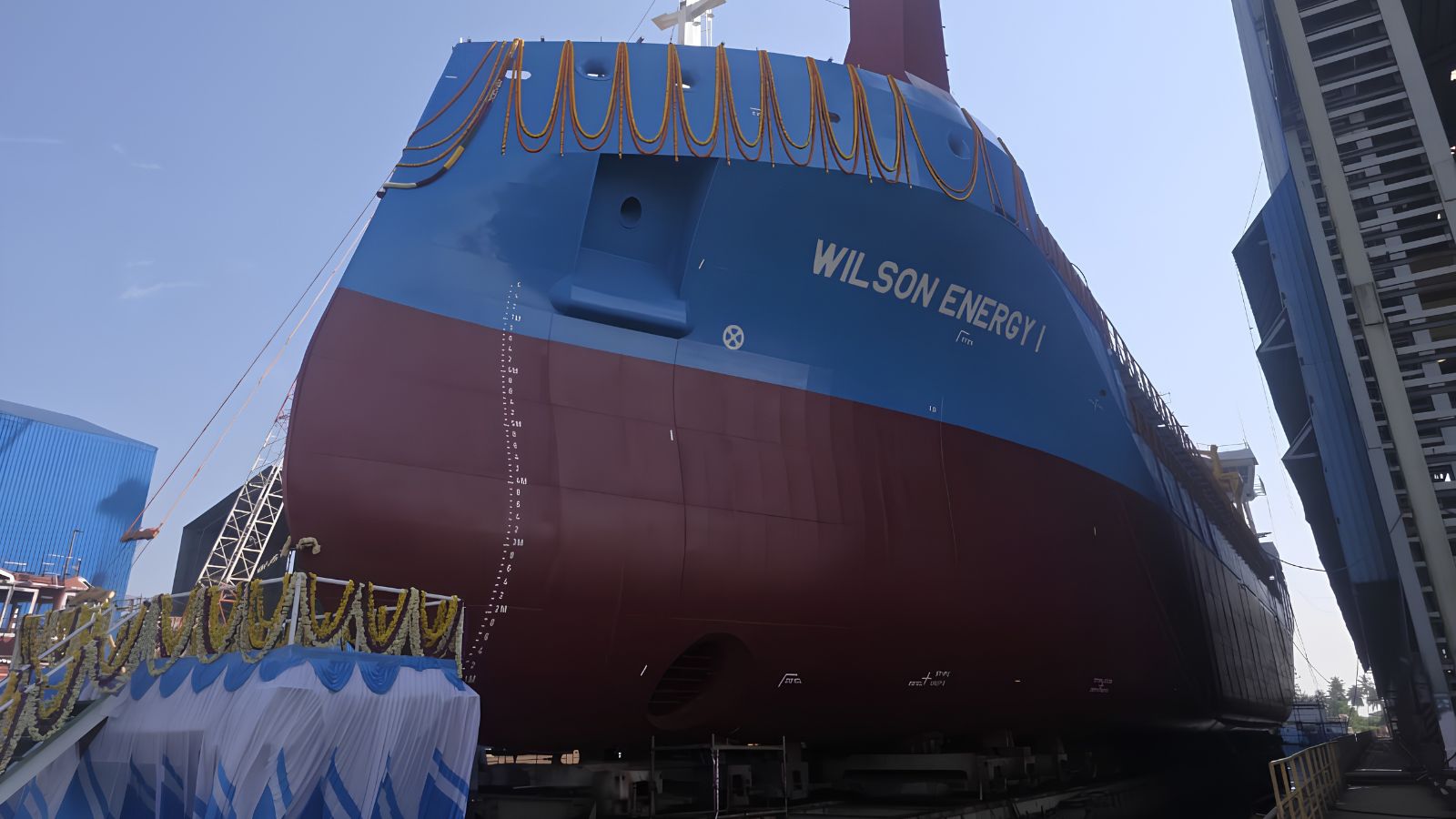
Udupi Cochin Shipyard Limited (UCSL), a wholly owned subsidiary of state-run Cochin Shipyard Limited operating out of Malpe in coastal Karnataka, secured a ₹1,041-crore contract from Norway’s Wilson ASA to construct eight 6,300-deadweight-tonne (DWT) dry cargo vessels. The deal marks the largest shipbuilding order ever executed at the Malpe facility, transitioning a yard historically known for small fishing trawlers into a competitive manufacturer of European short-sea freighters.
That headline figure—₹1,041 crore—is more than a regional manufacturing milestone. It represents a structural shift in how European maritime operators source mid-sized tonnage. For decades, European short-sea shipping fleets relied heavily on yards in the Netherlands, Romania, Turkey, and China to replace aging hulls. Rising labor costs in Western Europe, geopolitical friction with Beijing, and severe capacity bottlenecks across established shipyards forced Scandinavian fleet owners to look elsewhere. They found their answer along the Arabian Sea, tucked behind a busy fishing harbor in Udupi district. If you liked this article, you might want to look at: this related article.
The Economics Behind Wilson ASA’s Bet on India
Wilson ASA is not a speculative startup testing the waters of Indian manufacturing. Based in Bergen, the company operates the largest short-sea fleet in Europe, managing roughly 130 vessels ranging from 1,500 to 8,500 DWT. Their ships haul bulk commodities—timber, steel, fertilizer, grain, and minerals—across narrow European coastal waters, fjords, and river systems where deep-draft ocean giants cannot navigate.
Managing a fleet of that size creates a relentless replacement math. The average age of the European short-sea coaster fleet hovers well above 20 years, and tightening European Union emissions regulations—specifically the EU Emissions Trading System (ETS) and FuelEU Maritime rules—are making older, fuel-guzzling hulls financially toxic to operate. Wilson needed modern, eco-friendly vessels capable of meeting strict Nordic environmental standards, and they needed them in series production to keep unit costs down. For another look on this story, see the latest coverage from The Motley Fool.
Originally, the agreement began in June 2023 as an order for six 3,800 DWT general cargo vessels, valued at roughly ₹580 crore, with options for additional ships. By mid-2024, Wilson exercised its options and upsized the commitment, signing on for eight larger 6,300 DWT vessels. Each ship measures approximately 100 meters in length, engineered by the Dutch maritime design firm Conoship International.
Splitting the design and fabrication across three nations reveals how modern shipbuilding actually works. Conoship provides the hydrodynamic hull form and engineering blueprints from the Netherlands. Scandinavian and European vendors supply specialized propulsion systems, navigation electronics, and cargo-handling gear. Malpe provides the steel fabrication, block assembly, outfitting, and skilled labor at a cost structure European yards simply cannot match.
Why Malpe Shipyard Was Ready for Heavy Steel
Walk through Malpe a decade ago, and you would have seen wooden trawlers, purse seiners, and local repair slipways serving Karnataka’s fishing industry. Transforming a coastal boatyard into an export-grade commercial shipyard required deliberate capital restructuring.
Cochin Shipyard Limited (CSL) acquired the distressed Tebma Shipyards Limited through the Insolvency and Bankruptcy Code (IBC) process in 2020, rebranding the Malpe unit as Udupi Cochin Shipyard Limited. At the time, Tebma was saddled with debt and stalled projects. CSL injected capital, overhauled management protocols, and integrated Malpe into its broader corporate supply chain.
The geographic logic was clear. Cochin Shipyard’s main facility in Kochi handles massive defense and commercial projects—including aircraft carriers, large tankers, and complex offshore support vessels. Dedicating dry dock space in Kochi to 100-meter coastal freighters would have cannibalized higher-margin capacity. Malpe offered the exact physical footprint required for mid-sized commercial hulls between 60 and 120 meters, complete with direct river-to-sea access and proximity to Mangaluru’s industrial port ecosystem.
To build a 6,300 DWT vessel, a yard cannot rely on traditional stick-building methods where steel plates are welded piece by piece on a slipway. UCSL had to adopt modular block construction. In this process, massive steel sections of the hull—weighing dozens of tons each—are fabricated indoors under controlled conditions, fitted with piping and electrical conduits, painted, and then moved onto the assembly bay to be joined together.
Indoor fabrication protects welds from coastal humidity and monsoon rains, which otherwise ruin coatings and introduce structural defects. For a Norwegian client operating in the brutal winter conditions of the North Sea and Baltic Sea, weld integrity and anti-corrosion standards are non-negotiable. Ice-class reinforcements and cold-weather steel specifications leave zero margin for sloppy shipyard practices.
Anatomy of the 6,300 DWT Short-Sea Freighter
Understanding why Wilson ASA committed over a thousand crores to these specific vessels requires looking at their naval architecture. A 6,300 DWT general cargo vessel sits in the sweet spot of European regional logistics. It is large enough to carry profitable bulk loads across the North Sea, yet compact enough to enter smaller regional ports in Norway, Sweden, the UK, and northern Germany without tug assistance or draft restrictions.
Conoship International designed the vessels with a focus on hydrodynamic efficiency and future-fuel readiness. The hull features a specialized bow profile that reduces wave-making resistance in choppy coastal waters, cutting fuel burn compared to older box-shaped coasters.
Inside the engine room, the vessels utilize diesel-electric or optimized multi-fuel propulsion architectures paired with large-diameter, slow-turning propellers. This configuration allows the ship to adjust power output precisely to sea conditions, eliminating the energy waste common in conventional single-engine mechanical setups. The design also reserves structural space and piping pathways for future conversion to alternative fuels like methanol or biofuels, alongside battery-hybrid peak shaving systems.
For UCSL’s engineers in Malpe, executing a Conoship design acts as an intensive technology transfer program. Indian shipbuilders have historically excelled at hull fabrication, yet often lagged behind European yards in complex outfitting—the intricate installation of automated engine controls, ballast water treatment plants, and hydraulic hatch covers. Building eight identical hulls in a continuous series allows UCSL’s workforce to climb the learning curve rapidly. The first hull takes the longest and carries the highest labor hours; by hull number four or five, assembly times drop dramatically, expanding the shipyard's profit margins.
The Structural Challenges Indian Yards Still Face
Celebrating the ₹1,041-crore contract without examining the friction points in Indian shipbuilding would miss half the story. Winning an export order is one thing; delivering eight vessels on schedule without eroding margins is another.
The primary vulnerability for any Indian shipyard building European commercial vessels is supply chain dependency. While UCSL fabricates the steel hull in Karnataka, roughly 60 to 70 percent of a modern European cargo ship’s value sits inside the hull—main engines, reduction gearboxes, thrusters, automation consoles, and specialized marine coatings. Almost all of these components are imported from Europe, Japan, or South Korea.
When a valve or specialized pump arrives late at Mangaluru port, or gets held up in customs clearance, the entire assembly schedule stalls. European shipowners enforce strict liquidated damages clauses in shipbuilding contracts. If a vessel is delivered weeks past its contractual handover date, the shipyard pays daily financial penalties that quickly wipe out thin manufacturing profits.
Financing and working capital also remain persistent hurdles. Shipbuilding is notoriously capital-intensive, requiring massive upfront cash outflows for marine-grade steel plates and imported equipment long before the buyer pays milestone installments. While the Indian government’s Shipbuilding Financial Assistance Policy (SBFAP) provides a crucial subsidy—offering financial support on the contract price to offset India’s higher cost of capital and infrastructure gaps—the policy is slated to expire in 2026 unless renewed and expanded by New Delhi. Without long-term policy certainty, private and public yards hesitate to invest in heavier cranes, automated panel lines, and expanded dry docks.
Labor, Local Ecosystems, and the China Factor
Then there is the human element. Malpe is not Busan, South Korea, or Shanghai, China, where millions of workers live within massive maritime industrial clusters. Scaling up production in Udupi requires recruiting, training, and retaining certified welders, pipefitters, and marine electricians in a region where skilled tradespeople frequently migrate to the Persian Gulf for higher wages.
UCSL has leaned heavily on subcontracting networks and vocational training partnerships across coastal Karnataka and Kerala to maintain workforce stability. Every vessel built in Malpe supports hundreds of secondary jobs—local machine shops, scaffolding contractors, logistics providers, and industrial gas suppliers. Over the multi-year execution timeline of the eight-vessel Wilson contract, that economic multiplier reshapes the local industrial base far beyond the shipyard gates.
Globally, the Malpe deal illustrates a quiet realignment in maritime supply chains. China currently controls over 50 percent of global shipbuilding output, dominating massive container ships, bulk carriers, and tankers. However, Chinese state-backed yards prioritize mega-vessels that maximize steel throughput per berth. European owners ordering smaller batches of specialized 6,000-ton coasters often find themselves at the back of the queue in China, facing long lead times and rising geopolitical anxiety over single-country supply chain concentration.
Indian shipyards—specifically Cochin Shipyard, Mazagon Dock, Garden Reach, and private players like L&T and Chowgule—are stepping into that vacated middle tier. Chowgule Shipbuilding in Goa, just a few hundred kilometers north of Malpe along the same Konkan-Kanara coastline, has spent over a decade building short-sea cargo vessels for European clients like Arklow Shipping and Wijnne Barends. UCSL’s breakthrough in Malpe proves that the model is replicable across India’s western coast when backed by institutional capital and disciplined project management.
What Comes After the Eight Hulls
The real test for Udupi Cochin Shipyard will not be the steel-cutting ceremony or the initial launch into the Arabian Sea. It will be the delivery of the eighth vessel to Wilson ASA.
If UCSL delivers all eight 6,300 DWT freighters on budget, within weight tolerances, and without missing contractual deadlines, Malpe permanently enters the shortlist of trusted European short-sea builders. Norway alone has dozens of coastal shipping operators—from Bergen to Ålesund—facing mandatory fleet renewals over the next decade. Maritime executives in Scandinavia talk constantly; a successful track record in Malpe will travel through Bergen’s shipping circles faster than any government trade delegation ever could.
Conversely, any significant delay or quality dispute will reinforce old prejudices about South Asian industrial execution. In global shipbuilding, reputation is binary. Yards either deliver on time, or they spend years discounting their bids to win back trust. Right now, inside the fabrication sheds of Malpe, welders are assembling the steel blocks that will decide which category Karnataka’s largest shipyard occupies for the next twenty years.