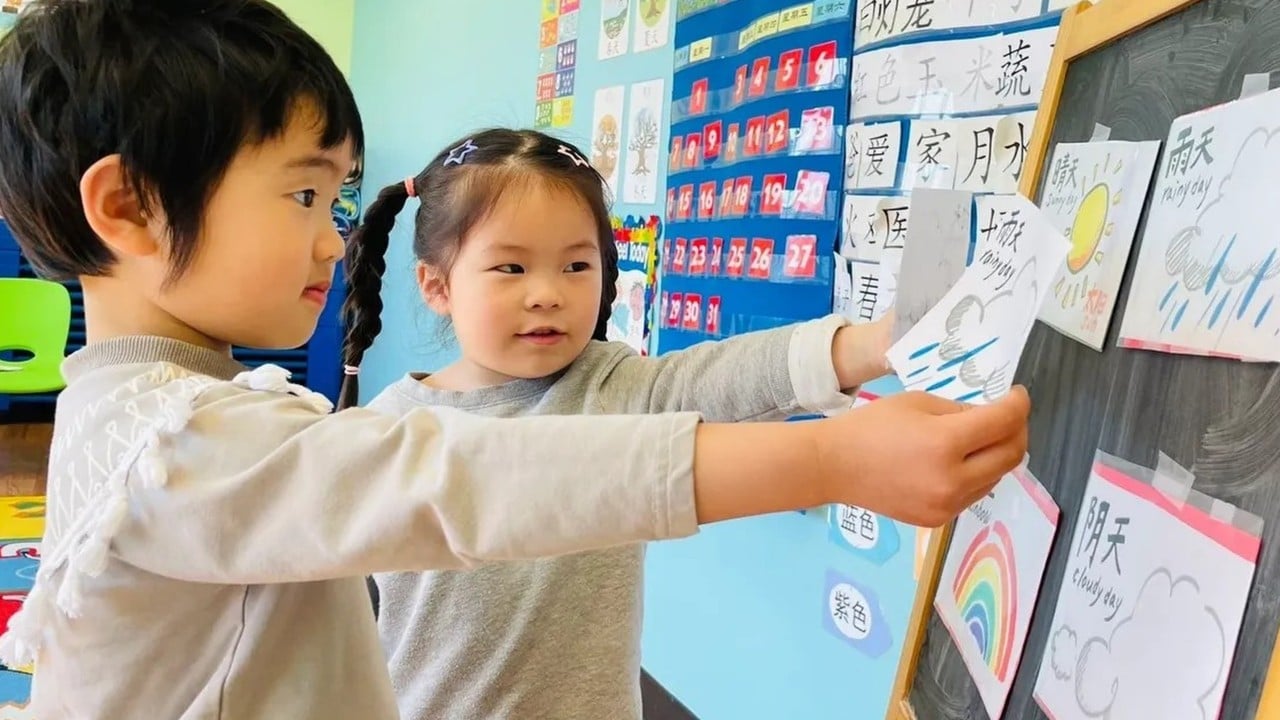
Chinese language education in United States K-12 public schools is spreading faster than administrative systems can support it. Parents line up outside district offices for kindergarten lottery slots, hoping to gift their children bilingual fluency in an increasingly competitive global economy. These programs promise dual-language immersion, splitting instructional hours between English and Mandarin.
Yet behind the glossy brochures and waiting lists lies an operational fracture zone. School districts across the country rushed into dual-language classrooms without securing stable teacher pipelines, long-term funding, or culturally coherent curricula. What looks like an educational gold rush from the outside is often an underfunded experiment held together by exhausted educators and anxious families.
The Structural Mechanics of Dual Language Immersion
To understand why public Mandarin programs are expanding while simultaneously cracking under their own weight, one must examine the mechanics of the 50/50 model. In a standard elementary immersion setup, students spend half their day learning math, science, and social studies entirely in Mandarin, and the other half in English.
The cognitive science behind this is sound. Young brains process phonetic shifts and tonal variations with remarkable plasticity. Children enrolled in these classrooms by age five demonstrate superior executive function and cognitive flexibility compared to their monolingual peers. By third grade, many can read complex characters and converse about basic scientific phenomena in Mandarin.
The friction begins the moment the classroom door closes. Most American public school districts operate on textbooks designed for native speakers in Beijing or Taipei. These materials assume a baseline of cultural context and daily reinforcement that a child of non-Mandarin-speaking parents in Ohio simply does not possess. Teachers spend their evenings redrafting entire units because official state standards do not align with the pacing of second-language acquisition.
Funding models compound the strain. Federal grants often seed these programs for a three-to-five-year window. Once the initial startup money dries up, local school boards absorb the cost. When district budgets tighten, second-language programs face immediate scrutiny.
The Teacher Shortage Nobody Wants to Name
You cannot scale a language program without teachers. Right now, American public schools face a severe shortage of certified bilingual educators who can teach core academic subjects in Mandarin.
School districts routinely recruit overseas, bringing in teachers on J-1 exchange visas. While these educators bring native fluency and deep cultural knowledge, the immigration infrastructure is fragile. Visa caps, bureaucratic backlogs, and high cost-of-living burdens in major American cities mean turnover rates are exceptionally high. A teacher brought in from Shanghai to lead a third-grade classroom in suburban Utah might return home after two years, exhausted by American classroom management styles and low relative pay.
Local certification pathways offer little relief. Traditional teacher preparation programs in the United States rarely offer a dual-language Mandarin track. A candidate who speaks fluent Mandarin often lacks a state teaching license, while a licensed elementary teacher rarely possesses the high-level language proficiency required to teach academic fractions in Mandarin.
The result is a reliance on emergency credentials and stopgap measures. Classrooms combine multiple grade levels or rely on digital software to fill instructional gaps. When the primary resource is a rotating cast of temporary visa holders, program continuity evaporates.
Equity and Access in the Lottery System
Public immersion programs are technically public, meaning tuition is free and entry is determined by random lotteries. In practice, however, these classrooms frequently serve as magnets for socioeconomic segregation.
Middle-class and affluent parents possess the social capital required to navigate complex district bureaucracy. They find out about application windows months in advance, attend informational meetings, and arrange reliable transportation across district lines. Working-class families, particularly immigrant communities who already speak a language other than English at home, often find themselves locked out of the system.
Irony defines this demographic shift. While affluent families enroll their children in Mandarin immersion as an economic resume builder for the twenty-first century, traditional heritage-language programs that serve native Chinese-speaking immigrant communities are chronically underfunded or shuttered entirely. The public education apparatus pours resources into elite-track enrichment for native English speakers while letting organic community language retention wither away.
District administrators defend the lottery system as fair. Statisticians know better. When application forms are available only in English online, equity is an illusion.
The Middle School Cliff
Elementary school success breeds a false sense of security. Parents watch their second-graders converse fluently during parent-teacher conferences and assume the pipeline is secure. Then comes sixth grade.
The educational landscape shifts dramatically upon entering middle school. Elementary immersion relies on a single self-contained classroom where one teacher manages all subjects. Secondary education requires departmentalized scheduling.
Finding a certified teacher who can deliver sixth-grade world history or seventh-grade physical science entirely in Mandarin is extraordinarily difficult. Most middle schools lack the critical mass of students needed to maintain dedicated immersion tracks. Program administrators face stark choices: dilute the immersion model by reducing Mandarin instruction to a single daily elective class, or merge cohorts across the district, forcing twelve-year-olds to commute across town for a single period.
Data from major urban districts indicate that up to forty percent of students enrolled in elementary Mandarin immersion drop out of the track by eighth grade. The academic vocabulary becomes too dense, the scheduling constraints too rigid, or the lack of advanced peer groups too discouraging.
The Geopolitical Undercurrent
Education policy does not happen in a vacuum. The expansion of Mandarin programs in the United States carries a heavy political subtext that administrators try to ignore.
Confucius Institute controversies from the previous decade made school boards hyper-sensitive to foreign government funding or instructional partnerships. While K-12 public schools rarely accepted direct Confucius Classroom funding, the broader geopolitical climate casts a long shadow over Chinese language initiatives.
Parents occasionally question curriculum content, fearing ideological influence from abroad. Conversely, pro-immersion advocates argue that cutting ties or failing to invest in Mandarin capacity borders on strategic negligence. The United States needs diplomats, intelligence analysts, software engineers, and trade negotiators who understand how to operate in Mandarin-speaking markets.
Yet treating language learning merely as an instrument of national security distorts its value. It turns children into economic units in a cold war calculation, stripping the joy from poetry, literature, and cross-cultural dialogue.
Where the System Breaks
The expansion of K-12 immersion schools across the country is not a sign of a robust, forward-thinking educational strategy. It is a decentralized scramble.
School boards approve new programs to attract affluent families back from private schools, boosting enrollment numbers without calculating the systemic cost. Teachers absorb the friction, working unpaid hours to translate worksheets and manage cultural disconnects. Students caught in the middle serve as guinea pigs for programs that look revolutionary on district websites but remain structurally vulnerable on the ground.
Fixing this requires abandoning the illusion that a complex bilingual infrastructure can be built on cheap grants and temporary visas. It requires state legislatures to fund permanent teacher pipelines, establish authentic university-level bilingual education degrees, and restructure middle school scheduling to protect advanced cohorts.
Until school districts face these structural truths, the Mandarin immersion boom will remain a high-stakes lottery. Some children will win the linguistic jackpot. The system itself will continue to run on fumes.



:max_bytes(150000):strip_icc():focal(999x614:1001x616)/kiss-9d4a8f3fa69941658d5596dcb342bf7d.jpg)