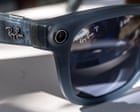
The man across from me on the Northern Line had thick, tortoise-shell frames and a thumb that never moved.
He wasn't looking at a phone. He wasn't reading a paperback. His hands rested flat on his knees as the carriage rattled through the dark between Camden Town and Euston, yet his eyes stayed locked on a woman standing three feet away, gripping the yellow pole. A tiny, pinprick of white light pulsed once near his right temple. Then it vanished. Read more on a connected issue: this related article.
She didn't notice. She was tired, nursing a paper coffee cup, her mascara smudged slightly beneath her left eye after what looked like a ten-hour shift. She had no idea she had just been digitized, compressed, and potentially queued for an algorithm.
I watched him get off at Tottenham Court Road. My stomach felt cold. Further reporting by Wired highlights similar perspectives on the subject.
We have spent the last twenty years training ourselves to recognize the posture of surveillance. When someone wants to take your picture on a train, in a gym, or outside a school gate, their body has to betray them. They have to reach into a pocket, raise a rectangular slab of glass to chest height, and point a lens in your direction. That physical choreography is our social tripwire. It gives us half a second to turn away, pull up a collar, or say, Excuse me, what are you doing?
Smart glasses cut that tripwire cleanly in half.
Now, Westminster is finally waking up to the silence. Reports confirm that UK government officials are actively weighing restrictions—and potentially an outright ban in sensitive public spaces—on smart glasses amid mounting alarm over covert filming, non-consensual recording, and street harassment.
To the tech evangelists in Silicon Valley, this looks like typical British prudishness, another regulatory speed bump thrown in front of wearable computing. To anyone who has ever felt the prickle of unseen eyes on the back of their neck, it feels like a last-ditch effort to save a basic human right before it evaporates entirely.
The Architecture of a Social Contract
To understand why a pair of plastic frames has sparked a parliamentary crisis, you have to look at how human beings share space.
Consider a hypothetical scenario. Picture a young woman named Maya walking into a changing room at a high-street retailer in Manchester, or stepping onto a crowded platform at King’s Cross at midnight. In our current social contract, Maya relies on what sociologists call civil inattention. Strangers share a physical environment without intruding on one another’s psychological space. You might make fleeting eye contact, look away, and grant each other the quiet dignity of being left alone.
That dignity depends entirely on friction.
Think of a smartphone camera like a heavy brass padlock. Everyone can see it. Everyone hears the click when it snaps shut. If someone holds a phone up to record Maya while she argues with a partner on a park bench, the intrusion is loud and undeniable. Witnesses step in. Victims confront the person holding the device.
Smart glasses remove every ounce of that friction. Devices like the Meta Ray-Bans or newer, lighter iterations currently flooding the consumer market weigh less than fifty grams. Their camera lenses are tucked seamlessly into the hinge, indistinguishable from a decorative rivet unless you are standing six inches away under bright fluorescent light. A voice command or a barely perceptible brush of a fingertip against the temple starts recording high-definition video and directional audio.
There is no raised arm. There is no awkward stance. The act of looking and the act of capturing become identical.
When you collapse the distance between seeing something and recording it forever, you destroy the boundary between public presence and permanent exhibition. A bad hair day, a private tear wiped away on a bus, a moment of vulnerability outside a clinic—none of it belongs to you anymore. It belongs to whoever happens to be wearing the frames.
Why the Tiny LED Light Is a Lie
Whenever regulators bring up privacy concerns, hardware manufacturers point to a single feature as proof of good faith. A tiny, outward-facing LED indicator light.
In theory, the light illuminates whenever the camera is active, alerting bystanders that they are being recorded. In practice, it is a flimsy piece of theater.
I tested a pair of first-generation camera glasses two summers ago while researching wearable tech in London. Out on a bright afternoon in Soho, the indicator light was almost invisible against the glare of the sun. Indoors, in a dimly lit pub, people assumed it was a reflection from the bar lights or a gimmick on a pair of novelty frames. Worse still, within weeks of major releases, gray-market stickers and third-party hardware mods began circulating online—tiny blackout dots engineered specifically to cover the LED without triggering the device's proximity sensors.
Even when the light works exactly as designed, it asks the public to become full-time forensic investigators.
Think about what that demands of ordinary people. To protect yourself from being filmed without consent, you now have to inspect the hinges of every pair of spectacles you pass on the street. You have to memorize which brands place their lenses on the left temple and which hide them in the bridge. You have to squint at strangers' faces in gyms, swimming pools, public toilets, and classrooms just to check for a two-millimeter glow.
That isn't consent. That is low-grade paranoia institutionalized as a daily chore.
The Numbers Behind the Creep
The UK government's hesitation to let this technology run unchecked isn't born out of speculative sci-fi panic. It is anchored in grim, escalating patterns already playing out across British streets and courts.
In recent years, police forces across England and Wales have recorded a sharp rise in offenses linked to image-based abuse and voyeurism. While the Online Safety Act finally criminalized the sharing of non-consensual intimate images and cyberflashing, the physical act of capturing someone in a public place remains tangled in legal gray zones. Under current UK law, there is generally no reasonable expectation of privacy in a public street. Anyone can photograph a crowd, a landmark, or a passerby on a pavement.
Those laws were written for a world of SLRs, tourist cameras, and smartphones. They were never built for ambient, continuous surveillance worn on the human face.
Consider what happens when covert recording merges with modern artificial intelligence. A decade ago, a creep filming strangers on the Tube ended up with a shaky video file buried on a hard drive. Today, that same footage can be scraped, run through reverse facial-recognition engines, linked to a victim’s LinkedIn or Instagram profile within seconds, and weaponized for doxxing, stalking, or deepfake generation.
Law enforcement officials and domestic abuse charities have repeatedly warned ministers about this exact pipeline. For survivors of stalking or coercive control, smart glasses represent a terrifying loophole. An abuser or an associate doesn't need to lurk across the street with a telephoto lens. They can sit at the next table in a café, order a flat white, and stream a victim’s exact movements and conversations in real time without lifting a finger.
The Historical Echo Nobody Remembers
We have actually stood on this exact cliff edge before, though most people have forgotten how violently the public pushed back.
In 2013, Google launched Google Glass. The device looked like a prop from a low-budget space opera—a chunky titanium band with a glowing prism hovering over the right eye. Because it looked absurd, people recognized the threat immediately. Bars in Seattle and San Francisco banned them within months. Cinema chains outlawed them. Wearers were mocked in the street, dubbed "Glassholes," and occasionally confronted by patrons who refused to be part of someone else's beta test.
Google Glass didn't fail because the technology was bad. It failed because it violated an unspoken social boundary, and its bulky design made that violation obvious to everyone in the room.
Tech companies learned the wrong lesson from that failure. They didn't conclude that people hate being secretly filmed by strangers. They concluded that the hardware just needed better camouflage.
Over the last ten years, billions of dollars have gone into miniaturizing sensors, hiding batteries inside slim acetate arms, and partnering with legacy eyewear giants so the cameras look indistinguishable from classic Wayfarers or aviators. They solved the aesthetic problem while leaving the ethical rot completely untouched.
And this time, there is no glowing prism to warn us.
Where the Law Hits a Wall
So what is the UK government actually considering, and can a ban even work?
According to briefings emerging from Westminster, ministers and digital policy advisors are looking at a multi-tiered approach rather than a blunt confiscation order at Heathrow Airport. The proposals under discussion range from strict bans inside high-risk environments—such as schools, hospitals, courtrooms, gyms, and government buildings—to mandatory hardware-level restrictions that would force manufacturers to disable recording functions via geofencing or require unmistakable audio cues before a lens can activate.
It is an ambitious idea. It is also a logistical nightmare.
Ask any police officer walking a beat in Birmingham or Glasgow how they are supposed to enforce a smart glasses ban on a crowded high street. Millions of Britons wear prescription glasses every single day. Unless an officer stops a citizen, demands to inspect their frames, and checks the serial number inside the arm, telling a £300 pair of smart frames apart from a £30 pair of high-street reading glasses at ten paces is nearly impossible.
If you outlaw the devices outright, you risk turning millions of people with genuine accessibility needs into collateral damage. For blind and partially sighted users, smart glasses paired with AI vision assistants aren't a toy or a surveillance tool—they are independence. They read street signs aloud, identify medication labels, and describe obstacles on a pavement in real time. A blanket ban written in haste could strip away a life-changing assistive tool while doing very little to stop determined bad actors who will simply buy modified hardware online.
I admit, when I weigh these two realities against each other, the neat lines of policy dissolve. On one side sits a woman who deserves to walk through a train station without becoming involuntary content for a stranger’s feed. On the other sits a visually impaired commuter relying on that exact same camera lens just to navigate the ticket barrier safely.
How do you write a law that protects the first person without punishing the second?
The Burden of Proof Belongs on the Machine
The answer isn't to give up on regulation because enforcement looks messy. We don't legalize drunk driving just because police can't breathalyze every car on the M25. Law sets the floor for acceptable behavior; it gives victims standing and shifts the burden of responsibility onto the companies profiting from the chaos.
Right now, the tech industry operates on a doctrine of permissionless deployment. Ship the hardware first, normalize the behavior through slick marketing, and let society clean up the wreckage once the habits are locked in.
If the UK government wants to draw a line that holds, it has to aim directly at the design philosophy of the devices themselves, not just the people wearing them.
First, covert recording must be treated as a design defect, not a feature. If a device is sold in Britain with an outward-facing camera mounted on the human face, the warning mechanism cannot be a polite, easily covered LED. Regulators have every right to mandate hardware-enforced transparency—audible shutter tones that cannot be muted in public modes, unmistakable visual framing around the lens itself, and automatic camera shutoffs when sensors detect tampering or obstruction.
Second, private venues and public institutions need explicit statutory backing to declare camera-free zones. Just as hospitals, courts, and swimming pools already enforce strict bans on mobile photography, clear signage backed by real legal penalties gives staff the authority to ask someone to remove smart frames without getting dragged into endless arguments over whether the camera is "turned off."
Finally, we need to update our legal definition of harassment to reflect ambient tech. Recording someone after they have asked you to stop, or capturing people in contexts where vulnerability is obvious—medical waiting rooms, changing areas, public transit late at night—should carry swift, unambiguous penalties regardless of whether the camera was held in a hand or perched on the bridge of a nose.
What We Lose When We Stop Looking Back
Last Tuesday, I walked past a café window in Shoreditch and caught sight of two friends sitting at a corner table. One of them was crying—not theatrical, movie-style tears, just quiet, exhausted weeping while her friend held her hand across the chipped wooden table.
I looked away immediately. We all do. That instinctive turn of the head is one of the oldest, kindest reflexes human beings possess. It is how we tell a stranger, Your pain is yours. I won't steal it.
Smart glasses ask us to trade that reflex for convenience. They promise hands-free memories, effortless content creation, and an AI assistant whispering in our ear from morning until night. The price tag isn't printed on the box. The price is the slow, steady erosion of the unrecorded life—the quiet certainty that when you step out your front door, you are still allowed to just exist, uncaptured and unarchived, in the passing world.
The man on the Northern Line probably didn't think of himself as a threat. He probably thought he was just capturing a slice of London life, testing out a clever new gadget on his evening commute.
He had no idea he was helping build a city where nobody ever gets to take their armor off again.