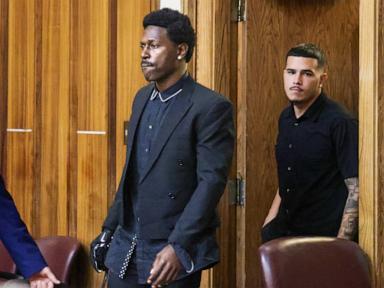
The fluorescent lights of a courtroom do not care how many touchdowns you scored under the stadium glare. They hum at a flat, indifferent frequency, illuminating scuffed linoleum, oak benches worn smooth by decades of anxious palms, and the quiet shuffle of paper that turns a public spectacle into a mundane administrative line item.
When a judge recently accepted a guilty plea from former NFL star Antonio Brown—reducing a heavier charge to a lesser offense and handing down a sentence of probation—the news tickers blinked once and moved on. Another headline. Another plea deal. Another athlete trading the roar of eighty thousand screaming fans for the hushed, procedural murmur of a defense attorney leaning toward a microphone. For an alternative look, consider: this related article.
We consume these stories like fast food. We glance at the wire report, form an instant opinion based on whether we loved or loathed the player on Sundays, and scroll to the next distraction.
Yet behind that sterile legal summary lies a story far more complicated, unsettling, and human than a thirty-word news brief can ever capture. To understand what actually happens when a fallen sports icon steps up to a podium to accept probation, you have to look past the box scores and the mugshots. You have to look at the invisible machinery of the justice system, the terrifying weight of a mind unmoored from the only structure it ever knew, and the quiet, desperate negotiations that happen in hallways long before a gavel ever strikes wood. Further insight on the subject has been published by Bleacher Report.
The Architecture of a Plea
Most people picture the courtroom as a theater of absolute truth. We have been conditioned by television dramas to expect dramatic cross-examinations, last-minute witnesses bursting through double doors, and juries weeping as they deliver a verdict.
Reality is quieter. Reality is a spreadsheet.
Over ninety percent of criminal convictions in the United States never see a jury box. They are resolved through plea bargains—calculated compromises struck between prosecutors drowning in caseloads and defense attorneys trying to keep their clients out of concrete cells. When a judge accepts a guilty plea to a reduced charge, it is rarely a simple story of someone "getting off easy" or "taking full responsibility." It is an admission of mutual exhaustion and risk calculation.
Consider what happens in the months leading up to that moment.
Let us step into a hypothetical scenario to see the mechanics clearly, though the pressures are entirely real. Picture a veteran prosecutor sitting at a desk stacked six inches high with manila folders. On one side of the desk is a high-profile case involving a former celebrity—a case with messy witness recollections, conflicting text messages, and the guaranteed circus of media cameras camped outside the courthouse steps. Taking that case to trial means weeks of preparation, thousands of taxpayer dollars, and the genuine risk that a star-struck or skeptical juror refuses to convict on the top charge.
Across the table sits a defense attorney representing a client whose public life has already imploded. The client has lost endorsements, burned through millions, and alienated former teammates. A felony conviction on the original charge could mean prison time—a terrifying prospect for someone whose mental state is already visibly fraying.
So they trade.
The prosecutor drops the severe charge to a lesser misdemeanor or reduced felony, guaranteeing a conviction on the record without the gamble of a trial. The defense accepts probation—a leash that keeps the defendant out of prison, provided they follow every single rule laid down by the court.
When Antonio Brown stood before the judge and entered that plea, that invisible bargain became official. To the casual observer, probation looks like a slap on the wrist. A pass. A celebrity privilege.
It is anything but.
The Invisible Leash of Probation
I once spent a year sitting in the waiting rooms of municipal probation offices while researching how former athletes transition out of professional sports. If you want to understand the true weight of a probationary sentence, spend a Tuesday morning on a plastic chair next to twenty people waiting to pee into a cup while an officer stands outside the door.
Probation is not freedom. It is suspended captivity.
When a judge hands down probation instead of jail time, the court is essentially handing the defendant a loaded weapon pointed at their own future and saying, Don't pull the trigger. Every aspect of your daily life suddenly belongs to the state. You cannot move apartments without permission. You cannot cross county lines to visit a sick relative without a signed travel permit. You must submit to random drug screenings, mandatory counseling sessions, community service hours, and check-ins with an officer whose caseload is so bloated they barely remember your middle name.
Miss one appointment because your car battery died? Violation.
Fail to pay a court fee on time? Violation.
Get into an argument in a parking lot where the police are called, even if you threw no punches? Violation.
And when you violate probation, there is no jury trial waiting for you. There is no presumption of innocence. You go straight back in front of the same judge who gave you a break, and that judge can impose the maximum sentence you avoided the first time around.
For a person with steady habits, a calm temperament, and a nine-to-five routine, surviving probation requires vigilance. For a former NFL wide receiver whose entire adult identity was forged in controlled violence, instant gratification, and erratic impulses, probation is a minefield.
The Crash After the Roar
To understand how a player once considered among the greatest route-runners in football history ends up negotiating reduced charges in a courtroom, you have to understand the specific, brutal vertigo of retirement from the league.
Think about what an elite NFL player experiences every week for a decade.
From the age of twelve until thirty-two, your entire existence is choreographed down to the minute. Someone tells you when to wake up, what to eat, when to lift weights, when to tape your ankles, and exactly where to stand on a patch of green turf while sixty thousand people chant your name. Your brain is flooded every Sunday with a cocktail of adrenaline, cortisol, and dopamine so potent that normal human life feels grayscale by comparison.
Then, one day, the phone stops ringing.
Suddenly, there are no film sessions. No trainers. No cheering crowds. Just silence, a rapidly shrinking bank account, and a brain that has absorbed thousands of sub-concussive hits over twenty years.
We are only beginning to grasp what happens inside the skull of a player who has spent two decades colliding with two-hundred-and-fifty-pound linebackers. Neurologists compare the cumulative trauma of football to shaking a snow globe over and over until the flakes never quite settle back to the bottom. Impulse control erodes. Paranoia creeps into the corners of ordinary conversations. Small slights feel like existential threats.
I remember talking to a former defensive back who told me that the hardest part of leaving the league wasn't the knee pain—it was going to the grocery store. "You stand in the aisle staring at thirty kinds of cereal," he said, his hands gripping his coffee mug until his knuckles turned white, "and you feel this rage rising up in your chest because nobody is telling you what the play is. You feel completely lost, and your first instinct is to hit somebody just to make the noise stop."
When we watch former stars spiral through bizarre social media outbursts, broken business deals, and erratic confrontations with delivery drivers or neighbors, it is easy to laugh or condemn. It makes for great clickbait. We point at the wreckage and ask how someone with millions of dollars and generational talent could throw it all away.
We rarely ask what it feels like to live inside a mind whose brakes have been worn down to bare metal.
Why Judges Choose Rehabilitation Over Ruin
This brings us back to that quiet moment in the courtroom when the judge accepted the plea.
Judges are not naive. They read the news. They see the erratic behavior, the past incidents, the pattern of burned bridges. When a judge agrees to a reduced charge and probation for a high-profile defendant, critics immediately cry foul, pointing to a two-tiered justice system where fame buys leniency.
Sometimes, that criticism is dead-on. Wealth buys elite lawyers who know how to delay proceedings, file motions that exhaust prosecutors, and package a client's remorse in glossy psychological evaluations. To pretend money doesn't tilt the scales in an American courtroom would be dishonest.
Yet there is another layer to judicial decision-making that rarely makes the evening news.
Judges see the revolving door of incarceration up close every single day. They know that locking a volatile, brain-injured, or mentally struggling individual in a state prison cell does not fix the underlying wiring. Prison strips away whatever fragile coping mechanisms a person has left and drops them back onto the street years later angrier, broker, and more disconnected from reality than before.
Probation, when structured properly, allows the court to mandate intervention. It forces anger management. It requires mental health evaluations. It creates an external scaffolding of accountability for someone whose internal scaffolding has collapsed.
By accepting the plea to a reduced charge, the judge wasn't declaring that the behavior didn't matter. The court was making a calculated bet: that supervision, structure, and the looming threat of incarceration might accomplish what a prison cell never could.
The Long Shadow of the Record
Even with a reduced charge, the consequences do not vanish when the defendant walks out the courthouse doors into the sunlight.
A guilty plea—even to a lesser offense—leaves a permanent scar on a public life. For a former athlete trying to reinvent themselves after football, a criminal record closes doors quietly and permanently. Corporate sponsors vanish. Broadcast networks quietly delete phone numbers. Youth camps and charity boards distance themselves without ever sending a formal letter.
And then there is the court of public opinion, which never grants probation and never expunges a record.
In the digital era, every mugshot, every courtroom sketch, and every headline about a plea deal lives forever on the first page of a search engine. Years from now, when someone types Antonio Brown's name into a search bar, the algorithmic memory will serve up his greatest catches alongside his lowest moments in equal measure. There is no statute of limitations on internet notoriety.
What makes this tragedy so distinctly modern is that the very traits that made him electric on a football field—the fearless audacity, the refusal to play by conventional rules, the relentless intensity that made him impossible to cover in single coverage—became liabilities the moment he stepped off the grass.
In sports, we worship chaos when it wears a helmet and scores touchdowns. We build statues to men who refuse to back down, who play on the edge of control, who treat every interaction like a fourth-quarter drive with ten seconds left on the clock.
Then the game ends, the whistle blows, and we expect them to turn into polite, predictable citizens overnight.
What Comes After the Gavel
If you look closely at the trajectory of fallen athletes who manage to survive their post-career freefall, the turning point almost never happens in a courtroom.
A judge can order probation. A prosecutor can reduce a charge. A defense lawyer can negotiate a second chance. None of those people can force a human being to sit quietly in a room, confront the wreckage of their own choices, and rebuild a life without the applause of a stadium.
That work happens in the dark, far away from cameras. It happens in therapy offices where nobody cares about your yards-per-catch average. It happens when you apologize to people you hurt without posting a screenshot of the text message online. It happens on ordinary Tuesday afternoons when frustration rises in your throat, your old instincts scream at you to lash out, and you choose—for once—to walk away instead.
Most of us will never know what it feels like to catch a winning touchdown pass in front of seventy thousand screaming fans, nor will we know the crushing emptiness of waking up the morning after the cheering stops forever.
Yet we all know what it feels like to stand at the edge of our own worst impulses, hoping someone gives us one more chance to get it right before the door locks behind us.
Outside the courthouse, the reporters pack up their tripods and move on to the next scandal. Inside, the ink on the probation order dries, quiet and unyielding, waiting to see who the man will become when nobody is watching.



