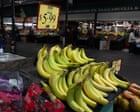
Cold.
That is the single word that turns a sun-soaked tropical staple into a grocery-aisle scarcity thousands of kilometers away. When cool weather rolls across far north Queensland—where the vast majority of Australia's bananas are grown—nothing explodes overnight. No dramatic headline flashes across the sky. Yet weeks later, parents stand in front of nearly empty fruit stands wondering how something as ordinary as a yellow banana suddenly became a negotiation at breakfast. If you liked this piece, you might want to check out: this related article.
I know the weight of that morning negotiation in my own kitchen. Years ago, when my kids were small, a banana wasn't just potassium and convenient packaging. It was a truce. A six-year-old who refused dry toast on Tuesdays would often accept half a banana peeled neatly into a container before rushing out the door. When prices spiked or bunches looked thin and green at the store, that small morning ritual frayed. You open the fridge, stare at a half-empty fruit bowl, and realize how much quiet stability a two-dollar piece of fruit can hold for a tired parent packing school lunches at seven in the morning.
This is a hypothetical scenario to ground the human side of the story, clearly labeled as such: picture Claire, a mother of two in Melbourne who works part-time at a local clinic and leaves the house before eight. Every weekday morning, Claire packs two plastic lunchboxes while the kettle clicks off. Her youngest, Leo, is a selective eater who dislikes mixed snacks that touch each other; a banana gives him a predictable, mess-free anchor between morning class and afternoon sports. Her older daughter, Maya, grabs one on her way out to track practice because it fits into a side pocket without bruising a notebook. When cool weather in Queensland slows fruit development months earlier, Claire doesn't read a meteorological chart at breakfast—she sees fewer bright yellow bunches on the shelf, higher sticker prices per kilogram, and a smaller margin for error when lunches are already tight. For another perspective on this development, see the latest update from Al Jazeera.
Why does a chill in Queensland ripple all the way down to supermarket shelves and school lunchboxes?
Bananas are tropical plants at heart, despite their giant herb-like stature. Unlike apples or pears that bank on winter dormancy and spring blossoms, a banana plant thrives on warm temperatures, steady humidity, and consistent sunlight. When temperatures dip lower than usual across Queensland's growing regions—such as the Atherton Tablelands or coastal pockets near Innisfail and Tully—the plant's biological clock slows down. Growth rates drop. Bunches take longer to fill out, mature, and reach harvest weight. Supply doesn't vanish in a single day; it stretches out and tightens like a rope pulled slowly across a pulley.
To understand the delay, use a simple metaphor: think of a banana crop like a slow-moving freight train rather than a light switch. Cold weather doesn't cut the power immediately. It applies the brakes gently on a steep grade. The train is still moving, still carrying cargo, yet everything arriving at the station down the line shows up later and in thinner numbers than scheduled.
That lag confuses shoppers. A cool snap in Queensland might feel distant or abstract when you're standing under fluorescent supermarket lights in another state. People often ask why a banana shortage happens weeks after a cold spell rather than the exact day the thermometer drops. The answer lies in biology and logistics combined. A bunch of bananas already hanging on the plant when temperatures cool has to finish filling out, be harvested, de-handed, washed, transported, ripened in controlled rooms, and distributed to retail stores. Each stage takes time. When growth slows on the farm, the gap appears later in the supply chain—often right when families are leaning hardest on quick, portable school snacks.
What Cool Weather Actually Does to a Banana Crop
Stepping onto a banana farm after a cool spell feels different from walking through a thriving tropical grove. Instead of rapid, lush surge growth, the rhythm is quieter and more measured. Growers watch bunch development closely, tracking how many weeks a stem needs before the fingers plump up to market standard.
Cooler nights and lower average temperatures slow photosynthesis and cell expansion in the developing fruit. Smaller or slower-filling fruit means growers have less volume ready to pick on their usual weekly cycle. At the same time, farm operating costs rarely pause when yields dip. Weeding, pest and disease monitoring, irrigation, and labor continue regardless of whether the harvest is bumper or lean.
If you've ever wondered how a banana shortage affects prices at the checkout counter, the mechanism is straightforward even when it feels frustrating. Supermarkets and wholesalers price fresh produce around supply and demand. When fewer quality bunches leave Queensland farms, competition for available stock rises, and retail prices per kilo often climb. Even when shelves aren't completely bare, shoppers notice smaller bunches, fewer ripe options ready to eat today, or steep price jumps compared with normal weeks.
Let's be honest about the uncertainty here, because guessing crop timelines can make anyone skeptical. Weather forecasts shift, microclimates vary from one valley to the next, and warm sunny weeks following a cool spell can sometimes help crops recover faster than expected. No one can promise an exact week when every shelf will look completely normal again, and pretending otherwise would be dishonest. What growers and supply chains know for certain is that weather volatility in a concentrated growing region creates real pressure points.
Inside the Lunchbox Squeeze
For families, a tight banana supply isn't a macroeconomics lecture. It is an immediate lunchbox problem.
Consider what makes a banana uniquely suited to school lunches. It comes in its own biodegradable wrapper, requires no utensils, doesn't leak juice onto a spelling workbook, and pairs easily with yogurt, sandwiches, or nut-free seed crackers. When bananas get scarce or expensive, parents have to improvise under time pressure.
Back in our hypothetical scenario with Claire, a shortage turns a five-second routine into a chain of small compromises. One morning the bananas at the grocer are rock-hard and green—useless for Leo before Thursday. The next day, yellow ones cost noticeably more, forcing Claire to choose between buying two bananas for the kids or picking up apples and muesli bars instead. Leo pushes his lunchbox back across the table at afternoon pickup because the sliced apple browned slightly by noon, and his routine shifted without warning.
It is easy to dismiss lunchbox complaints as minor inconveniences compared with major global crises. Yet daily life is built out of minor routines. Parents juggle work deadlines, rising household bills, food allergies, and picky appetites all at once. When a dependable staple becomes scarce or pricey, it adds one more small friction point to an already crowded morning.
Another common question pops up around whether imported bananas can simply fill the gap when Queensland has a cool spell. Under Australia's biosecurity rules, fresh bananas are not imported to protect local farms from pests and diseases that could devastate crops. That biosecurity shield is vital for long-term agricultural health, yet it also means domestic supply depends heavily on local growing conditions in Queensland and smaller northern pockets. When weather there slows production, there is no overseas surplus waiting on standby to flood the aisle overnight.
Navigating Tight Supply Without Losing Your Mind
When banana supply tightens after cool weather, you don't need a complicated overhaul to get through the crunch. You just need a few practical adjustments that respect both your budget and your morning sanity.
Start by reading ripeness like a schedule rather than a gamble. Green bananas are not a lost cause if you have a few days before school lunches need them; keep them at room temperature away from direct drafts so they ripen steadily, and only move ripe ones to the fridge if you want to slow further ripening. If you find a well-priced bunch that turns ripe all at once, peel, slice, and freeze them in bags for smoothies, banana bread, or quick baked oats—turning surplus ripeness into future breakfasts instead of food waste.
Rotate lunchbox staples intentionally instead of treating every day like a crisis. Pair mandarin segments, grapes halved for younger kids, pear slices brushed with a touch of citrus juice, or popcorn and cheese cubes with familiar favorites so kids aren't hit with a total surprise all at once. Involving kids in picking one backup snack at the store often lowers pushback when their usual fruit isn't in the basket.
Watch unit prices rather than sticker shock on a single bunch. A banana sold by weight can look surprisingly pricey when small bunches are scarce, whereas buying slightly firmer fruit or mixing a couple of bananas with other seasonal fruit can keep weekly grocery spending steadier.
Why This Small Fruit Tells a Bigger Story
Stepping back from the supermarket aisle, a banana shortage after cool weather in Queensland reveals something quiet and profound about modern food systems. Most of the time, fresh food feels effortless. You walk into a store in any season, pick up what you need, and walk out. That ease hides how tightly coupled our daily habits are to weather, soil, and biological time.
A single cool spell doesn't break the system, nor does it mean bananas are disappearing forever. Warm weather returns, plants push new growth, and eventually bunches fill out again. Still, those weeks of scarcity remind us how fragile convenience can be—and how much care goes into getting a simple piece of fruit from a tropical leaf into a child's hand at lunchtime.
At a school bench somewhere this week, a lunchbox lid snaps open, revealing a slightly bruised apple instead of a yellow peel, while far to the north warm sunlight filters back through broad green leaves waiting for the next harvest to catch up.