Two seconds.
In broadcast journalism, two seconds is barely enough time for a news anchor to draw a breath between sentences, yet in the sterile fluorescent light of a federal courtroom, two seconds of edited video can become the hinge upon which an international media crisis turns.
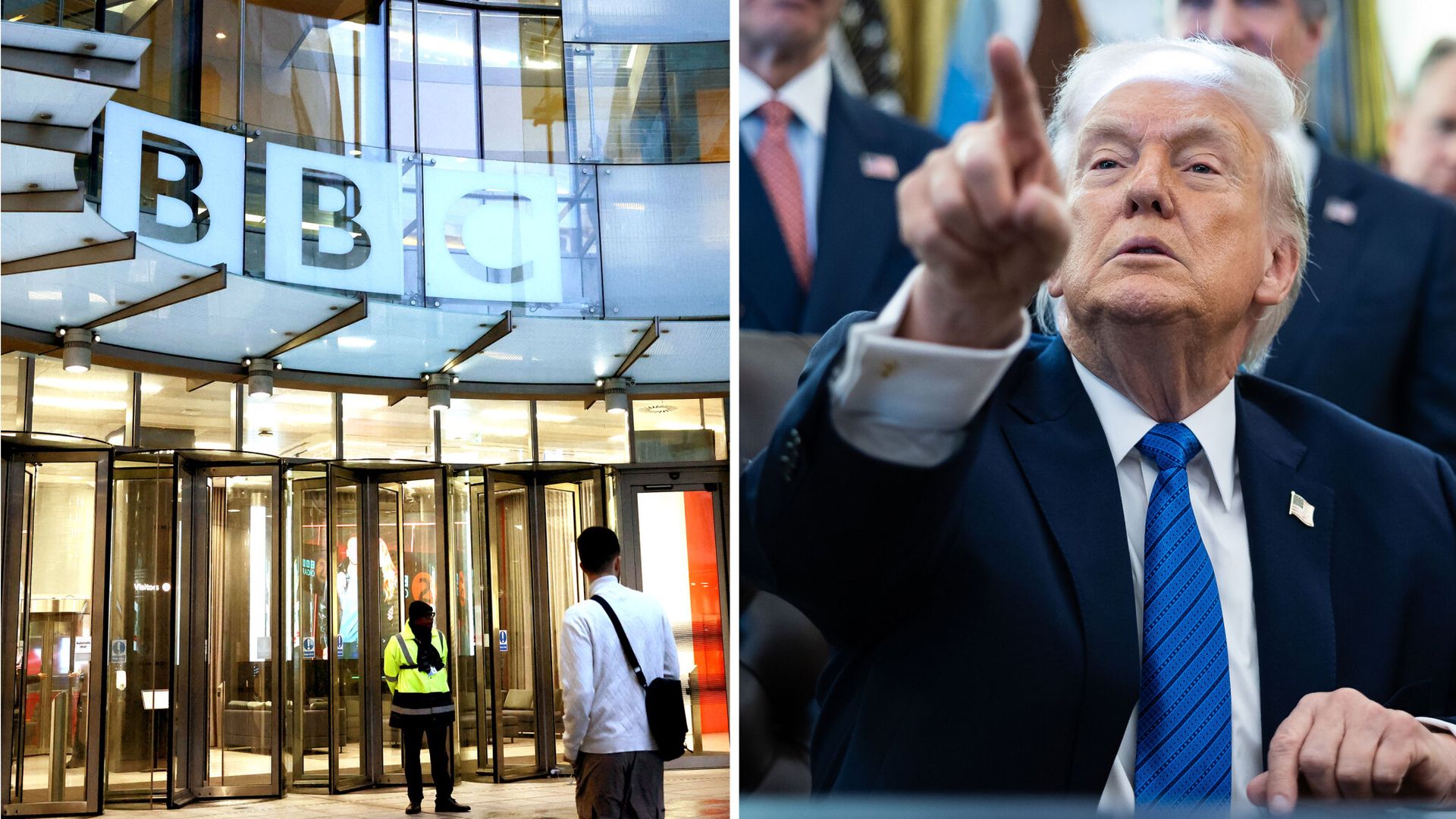
When a federal judge ruled that Donald Trump’s defamation lawsuit against the British Broadcasting Corporation could proceed past the initial motions to dismiss, the legal community barely blinked, treating it as just another skirmish in a decade-long war between a combative politician and the press.
They missed the real story.
Beneath the procedural legalese and the familiar political theater lies a quiet, terrifying question that keeps every editor from London to Des Moines awake at three in the morning: What happens when the border between a local libel court and a global newsroom disappears?
The Anatomy of an Edit
To understand why this ruling matters, picture a hypothetical young video editor—let’s call her Clara—sitting in a windowless edit bay in London at 11:30 PM on a Tuesday. She has forty-five minutes to cut a ninety-second package for an international broadcast, compressing a sprawling, seventy-minute political rally into a tight sequence that fits cleanly between a segment on interest rates and the weather forecast.
Every journalist who has ever worked against a hard deadline knows the physical sensation of that room. The hum of the servers. The cold coffee in a paper cup. The relentless tick of the red digital clock above the monitor.
In the real-world dispute at the heart of Trump’s lawsuit against the BBC, the friction stems from how the broadcaster edited and presented remarks surrounding the events of January 6, 2021, alongside commentary aired on its flagship programs. Trump’s legal team argued that the selective splicing and framing of his words stripped away crucial context—specifically his call for supporters to "peacefully and patriotically make your voices heard"—leaving viewers with the false and defamatory impression that he had directly incited violence.
The BBC’s lawyers countered with the classic defenses of modern journalism: editorial discretion, fair reportage of a matter of immense public concern, and the jurisdictional argument that a British public broadcaster operating primarily out of London should not be dragged into an American courtroom over broadcasts aimed largely at a United Kingdom audience.
The judge disagreed.
By allowing the lawsuit to move forward, the court did not declare Trump the victor, nor did it find the BBC guilty of defamation. In civil litigation, surviving a motion to dismiss simply means the plaintiff has cleared the first, lowest hurdle—alleging facts that, if proven true later in the process, could legally support a claim.
Yet in the high-stakes world of media law, surviving that first hurdle changes everything.
The Invisible Weapon Called Discovery
If you have never been sued, it is easy to assume that a lawsuit is won or lost on the day a jury delivers its verdict. Anyone who has spent time inside a newsroom during litigation knows that the real punishment happens months, sometimes years, before anyone steps near a witness stand.
It is called discovery.
Once a judge rules that a defamation lawsuit can go ahead, the plaintiff’s attorneys gain the legal power to pry open the doors of the newsroom. They can demand every Slack message sent between producers at midnight. They can subpoena rough cuts of video that were never meant to air, internal emails debating headline phrasing, and notes scribbled on legal pads during editorial meetings.
Consider what happens next in our hypothetical edit bay with Clara. Suddenly, a frantic split-second decision made under deadline pressure is frozen in amber, projected onto a courtroom screen, and dissected frame by frame by hostile lawyers looking for proof of "actual malice."
Under the landmark 1964 Supreme Court precedent New York Times Co. v. Sullivan, a public figure like Donald Trump cannot win a defamation case in the United States merely by proving that a news organization got a fact wrong or edited a clip unfairly. He must prove that the journalists acted with actual malice—meaning they published the statement knowing it was false, or with reckless disregard for the truth.
It is an extraordinarily high bar, deliberately designed by American courts to give free speech the "breathing space" it needs to survive. Journalists make honest mistakes; without that breathing space, fear of bankruptcy would silence the press entirely.
But proving or disproving actual malice requires looking inside the minds of the reporters and editors. And to look inside their minds, a judge has to let the lawyers read their emails.
A Borderless Battlefield
For decades, British broadcasters like the BBC operated under a comforting geographic assumption. While the United Kingdom actually has much stricter plaintiff-friendly libel laws than the United States, British outlets rarely worried about being sued in American state or federal courts unless they maintained massive commercial operations in the specific jurisdiction where the suit was filed.
The internet erased that moat.
Today, a clip aired on BBC One in Manchester is uploaded to YouTube, embedded in a Substack newsletter in New York, shared on X by a user in Miami, and watched by millions of Americans on their phones before breakfast. When Trump’s attorneys filed suit in Florida, they pointed directly to the global reach of modern digital distribution, arguing that the reputational harm occurred right there in the Sunshine State, where Trump resides and where millions of voters consume international news.
When the judge refused to throw the case out on jurisdictional grounds, a quiet tremor ran through international media corridors.
Think of international libel law like an old coastal seawall built for predictable tides. For generations, editors knew exactly how high the water could rise in their home countries. Now, a storm surge from across the Atlantic can breach the wall at any moment, pulling a London producer into a Miami deposition room.
This is not an isolated strike. Across recent years, Trump has pursued aggressive legal action against major American networks—including ABC News, CBS, and CNN—challenging everything from anchor phrasing to the editing of 60 Minutes interviews. Critics and press freedom advocates argue that these lawsuits represent a deliberate strategy to bleed media organizations of time, money, and editorial courage, turning the courts into an instrument of political pressure. Supporters and Trump’s legal team counter that legacy broadcasters have spent years hiding behind editorial privilege while distorting his words, and that taking them to court is the only way to enforce basic accountability.
Both arguments reveal a profound shift in how power and information collide.
The Chilling Effect Nobody Sees
I still remember the first time a veteran editor pulled me aside to explain why a thoroughly reported, factually accurate paragraph was being cut from a story just before publication. "We're right," he told me, rubbing his temples, "and we'd probably win in court. But winning would cost us four hundred thousand dollars we don't have."
That moment stays with you. It changes the way you write the next sentence, and the sentence after that.
Publicly, media executives project ironclad confidence when a judge rules that a defamation lawsuit can proceed. They issue crisp statements affirming their commitment to fearless journalism and expressing certainty that they will prevail on the merits.
Privately, the calculus shifts immediately.
Legal bills mount by the hundreds of thousands of dollars every month during discovery. Insurance premiums for media liability skyrocket. And in edit bays across the world, producers begin second-guessing themselves—not because they are trying to be fairer, but because they are trying to avoid creating an email trail that could look suspicious out of context three years later.
The danger is rarely dramatic censorship. Nobody walks into a newsroom and orders reporters to stop covering a president. Instead, the censorship is incremental, invisible, and self-imposed. An editor chooses a safer, blander adjective. A producer leaves out a sharp, illuminating clip because it requires too much explanation. A broadcaster decides not to air an investigative segment on a litigious billionaire because the legal department warns that surviving a motion to dismiss will wipe out the division’s annual budget.
What Happens Now
With the motion to dismiss behind them, Trump’s legal team and the BBC enter the long, grueling middle act of American civil litigation.
First comes the battle over the scope of discovery. The BBC’s lawyers will almost certainly fight to narrow what documents they must hand over, invoking journalistic privilege and international comity to protect internal editorial deliberations in London from American subpoenas.
Second, the broadcaster may pursue an interlocutory appeal, asking a higher appellate court to step in immediately and review whether the lower court properly asserted jurisdiction over a foreign public broadcaster funded by British television license fees.
Third, if the case survives those hurdles, both sides will eventually arrive at summary judgment—the stage where the BBC will argue that even after reading every email and watching every raw tape, no reasonable jury could find the "actual malice" required by the First Amendment.
And hovering over every single one of those stages is the quiet pressure to settle. Even giant media institutions often calculate that writing a check is cheaper and less painful than enduring years of public discovery and the unpredictable gamble of a jury trial.
We like to imagine that the truth is loud, self-evident, and indestructible—that in a free society, the facts naturally rise to the top while falsehoods sink. The reality is far more fragile. Journalism is made by tired human beings working against ticking clocks, trying to compress a chaotic world into ninety seconds of clarity.
Somewhere in London tonight, a red digital clock is counting down the final seconds before a broadcast goes live, and an editor’s finger is hovering over a keyboard, wondering not just whether a cut is true, but whether she can afford to prove it in a courtroom four thousand miles away.