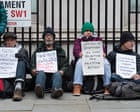
The lukewarm coffee in the polystyrene cup tasted like burnt cardboard, and the fluorescent lights of the county headquarters hummed with an aggressive, mocking buzz. It was 2:14 AM on the Wednesday after Election Day. Around a folding table covered in crumpled precinct printouts, four local organizers stared at a map of their suburban district that had turned stubbornly, undeniably blue.
Nobody yelled. Not yet. The yelling would come forty-eight hours later on cable news panels and closed-door conference calls in Washington, D.C. In that small room in the Midwest, there was only the heavy, suffocating silence that follows a political ambush.
When a major political party suffers a bruising midterm cycle—falling short of a predicted wave, losing winnable Senate seats, and watching narrow House majorities evaporate—the post-mortem rarely looks like a clinical medical examination. It looks like a bar fight. Within days of disappointing midterm results, the Republican Party entered a familiar, painful cycle of public recrimination, finger-pointing, and ideological trench warfare.
To understand why Republicans turn on each other with such ferocity after a midterm defeat, you have to look past the shouting heads on television and examine the human machinery underneath. Political parties are not monoliths. They are fragile marriages of convenience between people who often dislike one another intensely, bound together only by the shared promise of winning. When the winning stops, the marriage falls apart in the front yard.
The Anatomy of a Blame Game
Consider a hypothetical strategist—let’s call him Marcus—who has spent twenty years running House campaigns across the Rust Belt. Marcus lives out of rolling suitcases, eats cold pizza in strip-mall offices, and measures his self-worth in voter turnout percentages. When his candidates lose, Marcus does not see an abstract ideological shift. He sees wasted months away from his kids and donors who will no longer return his phone calls.
For operatives like Marcus, the root cause of a midterm disaster is painfully obvious: candidate quality.
In modern American politics, primary elections reward the loudest voice in the room, while general elections reward the person who can convince an exhausted, undecided suburban parent to trust them with the economy. Historically, when a party nominates candidates who spend the autumn relitigating past grievances, flirting with fringe theories, or alienating moderate voters, the math simply breaks. In swing districts from Pennsylvania to Arizona, independent voters look at the ballot, sigh, and pull the lever for the other side—or worse, stay home entirely.
Now put Marcus in a room with Elena, a hypothetical grassroots activist from a rural county who spent every Saturday since April knocking on doors in the rain. Elena doesn't care about consultant spreadsheets or suburban focus groups. She cares about conviction. When she looks at the exact same election map, she sees a completely different failure.
To Elena, the party lost because its national leadership lacked the spine to fight hard enough. She points to campaign funding that dried up in October, establishment figures who distanced themselves from populist firebrands, and a messaging strategy that felt timid and focus-grouped to death. Why, she asks, would base voters turn out in historic numbers for a party that seems embarrassed by its own voters?
Neither Marcus nor Elena is lying. Both are telling the truth as they experienced it on the ground. And because both perspectives contain a kernel of reality, neither side is willing to back down.
When the Money Stops Flowing
Political infighting isn't merely a clash of egos; it is a battle over scarce resources. Power in Washington operates much like oxygen in a sealed room—when there is plenty of it, everyone breathes easily and speaks politely. When the supply suddenly drops, panic sets in.
In the immediate aftermath of a disappointing midterm, three distinct fault lines crack open across the Republican coalition:
- The Leadership Revolt: The most visible casualty of any midterm slump is almost always the party brass. Rank-and-file lawmakers, terrified of facing angry constituents back home, demand new leadership in the House and Senate. Challengers emerge from the wings, using procedural votes and speaker elections as public stages to extract concessions, committee assignments, and ideological purity pledges.
- The Populist versus Establishment Divide: This is the enduring civil war of twenty-first-century conservatism. On one side sit the traditionalists—chamber-of-commerce conservatives focused on deregulation, tax cuts, and institutional norms. On the other sit the nationalist populists, who view those very institutions as corrupt and demand a combative, culture-war-first posture. A midterm loss gives each faction ammunition to declare the other's playbook dead on arrival.
- The Donor Freeze: Quietly, away from the cameras, mega-donors close their checkbooks. Wealthy backers who poured tens of millions of dollars into super PACs demand to know why their return on investment yielded minority status or a razor-thin, ungovernable majority. When the money pauses, consultants turn on candidates, candidates turn on party committees, and loyalty evaporates overnight.
Think of a political coalition like an old wooden bridge spanning a deep gorge. During good weather, heavy trucks roll across it without anyone noticing the groaning timbers. A bad election is an early winter freeze. Water seeps into the microscopic cracks between the planks, expands, and splits the wood from the inside out. The bridge doesn't collapse because of a single boulder falling from the sky; it fractures because the stress finds every pre-existing weakness at once.
The Ghosts of Midterms Past
If this feels like a uniquely modern meltdown, history offers a sobering corrective. Intra-party cannibalism is an American political tradition as old as the republic itself.
In 1998, Republicans expected to make massive gains during the impeachment scandal of President Bill Clinton. Instead, they lost seats in the House—a rare historical setback for the party out of the White House. Within days, Speaker Newt Gingrich, the architect of the 1994 Republican Revolution, was forced out of his leadership post by his own furious conference. The party spent months tearing itself apart over whether it had leaned too heavily into social conservatism at the expense of kitchen-table economics.
A decade later, in 2006, another midterm wipeout triggered an identity crisis that eventually gave birth to the Tea Party movement, which systematically primaried and defeated dozens of veteran Republican lawmakers. Even the Democratic Party is hardly immune; after their own devastating midterm losses in 2010 and 2014, progressive and moderate Democrats waged bitter public wars over whether the party had abandoned working-class voters or failed to inspire its core base.
I remember standing in the hallway of a state capitol building years ago after an off-year election that went sideways for the party in power. Two state senators—men who had co-sponsored bills together and laughed over drinks six months earlier—walked past each other without making eye contact. One whispered to an aide that the other was a coward who ran away from the party platform. Ten feet away, the second senator told a reporter that his colleague was a delusional zealot dragging the whole ticket off a cliff.
What struck me wasn't the anger. It was the fear. Behind every harsh accusation on cable television sits a politician staring at their own mortality, wondering if the shifting demographic tides of their district have just rendered their career obsolete.
The Invisible Stakes of a Divided House
It is easy for casual observers to watch these political knife fights with a bowl of popcorn, treating them like reality television. Yet the consequences of a fractured party reach far beyond Washington's gossip mill.
When a major party turns inward, governance grinds to a halt. A slim majority fractured by internal rebellions cannot easily pass budgets, confirm judges, or negotiate complex legislation on healthcare, immigration, or national security. Every routine procedural vote becomes a hostage situation. The energy that should go toward crafting policy solutions for families struggling with inflation or housing costs gets burned up in internal loyalty tests.
Worse still is what happens to the voters themselves. When ordinary citizens watch the leaders they trusted spend months attacking one another rather than addressing their daily struggles, cynicism curdles into permanent disengagement. People stop believing that politics can solve real problems. They begin to view voting not as a civic duty, but as a rigged game played by people who care more about their own television ratings than the price of groceries.
The structural trap of modern midterms makes this cycle brutally hard to escape. Primary voters—who make up a tiny, hyper-engaged fraction of the electorate—tend to punish compromise and reward ideological combat. General election voters—the broader, less ideological majority—tend to punish extremism and reward competence. A candidate forced to survive a brutal primary often emerges with scars and soundbites that make winning the general election nearly impossible. Until parties figure out how to bridge that chasm, every disappointing November will be followed by a bloody December.
The Long Road Out of the Wreckage
So how does a fractured party actually put itself back together? Rarely through grand, sweeping ideological surrender. Parties do not heal because one faction suddenly admits it was wrong all along.
Instead, recovery usually happens through quiet, unglamorous pragmatism. It starts when local party chairs stop obsessing over national cable news narratives and focus relentlessly on voter registration, mail-in ballot mechanics, and ground-game logistics—the boring infrastructure that actually wins close races. It requires recruiting candidates who look and sound like the communities they hope to represent, people with genuine roots outside the political bubble who know how to talk about the economy, schools, and public safety without sounding like they are reading off a partisan cue card.
Most of all, it demands a truce—not an agreement on every philosophical point, which is impossible in a nation of over three hundred million people, but a shared recognition that a purity test yielding forty-eight percent of the vote is simply a slower way of losing.
Back in that county headquarters at two in the morning, the four organizers eventually stood up from the folding table. Nobody had solved the ideological future of American conservatism. Nobody had drafted a manifesto. One of them simply picked up a trash bag, began tossing the empty pizza boxes and lukewarm coffee cups inside, and turned off the fluorescent lights on the way out the door, leaving the campaign signs stacked neatly against the wall for the next fight.