The fluorescent light above the kitchen sink hums at a frequency that only seems audible at 11:15 on a Monday night.
Spread across the laminate counter are three things: a blue plastic ballpoint pen with a chewed cap, a stack of glossy mailers featuring candidates smiling beside golden retrievers, and a sample ballot printed on newsprint so thin you can see the grocery circular bleeding through from underneath.
Meet Elena. She is a hypothetical composite, though if you have ever stood in a cramped elementary school gymnasium on a Tuesday in November, holding a paper privacy sleeve and wondering what a county soil and water conservation supervisor actually does, you know her intimately. Elena is thirty-eight, manages logistics for a regional freight company, and has spent the last forty-eight hours trying to decide if she is even going to bother driving to the precinct tomorrow morning.
She is tired. The campaign commercials have turned her local evening news into an unbroken loop of ominous minor-key piano chords and grainy, desaturated footage of opponents looking vaguely dishonest. She feels lied to by both sides, exhausted by the noise, and deeply suspicious that her single mark on a piece of cardstock will vanish into a machine without altering the price of eggs, the potholes on 4th Street, or the anxiety humming beneath her ribs.
Stop.
Look closely at that hesitation. Because the single greatest illusion in modern democracy is the idea that the presidential race is the main event, and the midterm election is merely the undercard.
We have that completely backward.
When voters make their final decisions in midterm elections, they are not merely handing out mid-course performance reviews to the person sitting in the Oval Office. They are deciding who controls the levers that actually touch their skin. Presidents command armies and sign sweeping treaties, yes, yet it is the congressional representatives, state legislators, governors, and municipal judges chosen in off-year cycles who determine whether a rural hospital keeps its maternity ward open, how your property taxes are assessed, what gets taught in your child's third-grade classroom, and whether the grid holds during a February freeze.
I learned this the hard way four years ago, standing in a flooded basement at three in the morning with water lapping at my ankles. A municipal bond measure—buried near the bottom of a midterm ballot I had barely skimmed—had failed by fewer than four hundred votes two autumns prior. That bond was meant to upgrade the neighborhood storm drains. Every time I hear pundits dismiss low-turnout elections as "off-year" contests, I still smell wet drywall and stagnant creek water.
The Gravity of the Off-Year
To understand what happens in the final forty-eight hours before the polls close, you have to strip away the cable news punditry and look at the cold mechanics of human behavior.
Historically, midterm elections suffer from a massive participation drop-off. While presidential contests routinely pull upwards of sixty percent of eligible citizens to the booths, midterm turnout has spent much of the last century hovering closer to forty percent—though recent cycles in 2018 and 2022 shattered modern records, surging past forty-six and fifty percent as political polarization turned every local race into a proxy war. Even in those historic surges, however, roughly half the country stayed home.
Why? Because decision fatigue is real.
Behavioral economists call it ego depletion. Think of your capacity to make hard choices like a smartphone battery. You wake up at a hundred percent. By the time you have decided what to feed your kids, navigated morning traffic, answered forty-seven emails, weighed a deductible on a dental bill, and figured out what to thaw for dinner, your battery is blinking red at four percent. Now, hand that exhausted brain a two-page ballot filled with twenty-six races, four constitutional amendments written in impenetrable legalese, and two competing claims about who caused inflation.
The brain wants to hit the snooze button. It wants a shortcut.
And political strategists know this. In the final days before an election, campaigns stop trying to educate you and start trying to trigger your amygdala. They know that late-deciding voters—the roughly seven to twelve percent of the electorate who genuinely have not locked in their choices by the final weekend—rarely make their picks by reading forty-page policy white papers. Instead, those final decisions are forged in the crucible of immediate, tangible friction.
What Actually Tips the Scale at the Eleventh Hour
Let us return to Elena at her kitchen table. How does someone move from paralysis to action when every message screams urgency?
If we trace the anatomy of late-stage voter decision-making, three invisible forces usually collide in those final hours.
First is the wallet-versus-values tension. Political scientists have observed for decades that voters often hold competing priorities inside their own heads. You might care deeply about environmental regulation or reproductive rights, yet wince every time you swipe your debit card at the gas pump. In the final days of a midterm, when the abstraction of campaign season suddenly becomes concrete, voters perform a quiet, internal triage. They ask themselves: Which threat feels closer to my front door right now?
Historically, the party holding the White House almost always loses seats in the House of Representatives during a midterm. Since the Civil War, the president’s party has lost ground in all but three midterm cycles—1934, 1998, and 2002. This is not a coincidence; it is a psychological thermostat. When things feel unsettled, voters instinctively reach for the brakes. Even citizens who voted for the president two years earlier often use their midterm ballot to install a counterweight, hoping divided government will force compromise—or at least stop either side from moving too fast.
Second is the down-ballot blind spot. Most voters walk into the booth knowing precisely whom they support at the top of the ticket—for Senate, House, or Governor. Then their eyes drop down the page, and they hit a wall of unfamiliar names. County auditor. District court judge. State board of education.
Here is where the danger of skipping the homework becomes acute. In many states, judicial races and local school boards are officially nonpartisan, meaning there is no "D" or "R" next to the candidate’s name to serve as a mental shorthand. Confronted with two unfamiliar names, thousands of voters either leave the line blank—a phenomenon known as ballot roll-off—or pick whichever name sounds vaguely familiar from a yard sign they passed near the highway. Yet those down-ballot seats are precisely where the most immediate power resides. A state supreme court justice decides voting maps and civil rights protections for a decade; a school board member decides which books stay on the shelves and how teachers are paid.
Third is the social whisper network. For all the billions of dollars spent on targeted digital ads and television spots, research consistently shows that the single most persuasive political force in the final seventy-two hours is a text message from a friend or a brief, unscripted conversation at a kid’s soccer practice.
Why? Because our trust in institutions has cratered, while our trust in the people we actually know remains stubbornly intact. When Elena texts her sister on Tuesday morning—"Hey, did you look into Proposition 4? The wording makes no sense"—and her sister replies with a three-sentence breakdown of what the tax actually funds, that single exchange carries more weight than fifty thousand dollars of slick media production.
The Architecture of a Clear Decision
I will admit something to you: even after years of covering politics and dissecting public policy, I still feel a spike of low-grade dread every October when my sample ballot arrives in the mail. The language on ballot initiatives seems deliberately engineered to induce migraines, often employing double negatives where voting "Yes" actually means repealing something, and voting "No" means keeping it. It is okay to feel overwhelmed by the sheer volume of choices. Confusion is not a sign of civic failure; it is the natural reaction to an overly complex system.
The trick is not to become an overnight constitutional scholar. The trick is to build a simple, repeatable filter so you can walk into that booth—or sit at your dining table with a mail-in ballot—with quiet certainty instead of anxious guesswork.
Think of evaluating a ballot like inspecting a house before you buy it. You do not need to know how to wire a breaker box yourself, yet you must know where to look for cracks in the foundation.
1. Follow the Money, Not the Slogans
Campaign ads are theater; campaign finance disclosures are receipts. When you are torn between two candidates or baffled by a ballot measure, ignore the emotional music in their commercials and look at who is funding them. Every state has an online campaign finance portal, and nonpartisan aggregators like OpenSecrets track federal races down to the industry level. If a candidate claims to be a fierce champion for working families, yet ninety percent of their war chest comes from corporate political action committees that lobbied against minimum wage increases or overtime protections, believe the ledger, not the commercial.
2. Audit the Incumbent’s Track Record Against Your Reality
When an incumbent asks for two more years, treat it like a job performance review. Do not ask what they promised to do; ask what they actually sponsored, voted on, or funded while in office. Websites like Congress.gov or your state legislature’s bill tracker show every roll-call vote in plain text. Did they vote for the infrastructure funding they are currently taking credit for at ribbon-cutting ceremonies, or did they vote against it and show up for the photo op anyway? That discrepancy alone tells you everything you need to know about a candidate’s character.
3. Use Local Journalism as Your Compass
National cable networks treat every race like a sporting event—who is up, who is down, who delivered the best zinger. They will never tell you whether your local water district board is competent. For the bottom half of your ballot, seek out your local newspaper’s editorial board questionnaires, your regional League of Women Voters guide, or Ballotpedia. These nonpartisan resources force candidates to answer identical, specific questions in writing without a speechwriter polishing their soundbites. Reading two candidates’ unedited paragraphs side by side exposes competence—or the glaring lack of it—within sixty seconds.
4. Demystify the Ballot Measures with One Simple Question
When you hit a constitutional amendment or local referendum wrapped in dense legal jargon, stop reading the title and look for the fiscal impact statement usually printed right below it. Ask one question: Who pays, and who benefits? If a measure promises massive improvements without identifying a dedicated funding source, it is likely a shell game that will force cuts to schools or emergency services later. Conversely, if it proposes a small property tax increase, calculate what that percentage actually costs on your specific home value. Often, a bond measure that sounds terrifying in an attack ad translates to less than four dollars a month—the price of a single cup of coffee—for upgraded fire trucks or repaired bridges.
The Weight of the Margin
It is remarkably easy to talk yourself out of voting by doing the math wrong. You look at millions of residents in your state, compare that ocean to your single drop, and conclude that your absence will never register.
That math only works until you look at how midterm elections are actually won and lost.
Because turnout drops so sharply in non-presidential years, the margins shrink dramatically. State legislative seats—the bodies that draw congressional districts and pass the laws governing daily life—are routinely decided by a few hundred votes. In 2017, control of the entire Virginia House of Delegates came down to a single race that ended in an exact tie out of more than twenty-three thousand ballots cast, ultimately decided by pulling a name out of a ceramic bowl. In 2022, multiple congressional races and statewide attorney general contests were decided by margins thinner than the seating capacity of a high school football stadium.
When half the electorate stays home, every person who shows up effectively casts two votes. Your voice does not get drowned out in a midterm; it gets amplified by the silence of everyone who decided their Tuesday morning was too busy.
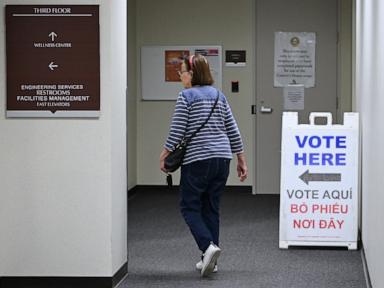
On Tuesday at 7:15 AM, Elena stands in line at the Oak Ridge Elementary School multipurpose room, tucked between a retired postal worker wearing a faded Navy cap and a twenty-two-year-old barista scrolling through notes on her phone.
The room smells like floor wax and damp wool coats. There are no swelling orchestral scores here. No pundits shouting over split screens. Just the quiet, rhythmic shhh-thunk of cardstock sliding into the optical scanner at the front of the room.
Elena unfolds her ballot inside the cardboard booth, uncaps her pen, and begins to work her way down the page. She skips past the noise she heard on television last night. She remembers the storm drains, the school board budget, the ledger she checked at midnight, and the quiet arithmetic of what happens when good people cede the room to the loudest voices.
She fills in the first oval cleanly, presses the ink firmly into the paper, and moves down to the next line.