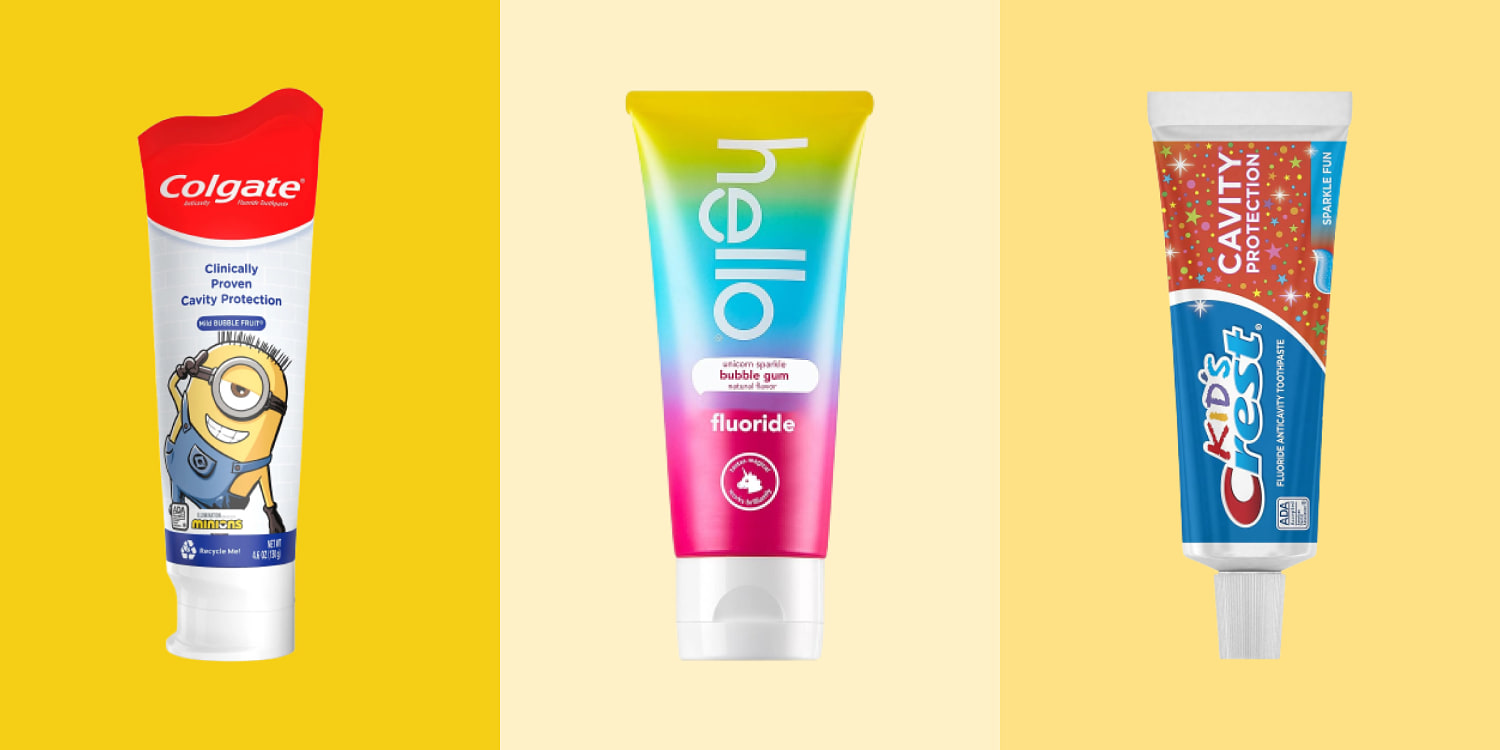
Selecting pediatric oral hygiene products requires balancing a complex trade-off between dental caries prevention and the systemic risk of fluorosis. The selection process is not a matter of subjective preference or appealing flavors; it is a biochemical optimization problem based on a child's age, weight, neuromuscular development, and localized water fluoridation levels. This analysis establishes a rigorous, data-driven framework for selecting pediatric toothpaste by deconstructing active ingredients, abrasive matrices, and developmental variables.
The Core Trade-Off Caries Prevention vs Fluorosis Risk
The primary challenge in pediatric cariology stems from a biological conflict: the topical mechanism required to arrest enamel demineralization vs the systemic toxicity that occurs when active ingredients are ingested during critical windows of amelogenesis.
                           [Ingested Fluoride]
                                   │
                                   ▼
                       Systemic Ameloblast Toxicity
                                   │
                                   ▼
                           [Dental Fluorosis]
                                   ▲
                                   │
    Biochemical Balance Point: ─────── (0.05 to 0.07 mg/kg/day)
                                   │
                                   ▼
                       Topical Enamel Remineralization
                                   ▲
                                   │
                        Hydroxapatite Conversion
                                   │
                                   ▼
                          [Caries Prevention]
To optimize this balance, you must map selection criteria against two precise biological metrics:
- The Remineralization Threshold: The minimum concentration of ionic fluoride or alternative biomaterials required to shift the equilibrium of oral fluid from demineralization to remineralization.
- The Tolerable Upper Intake Level (UL): The maximum systemic ingestion threshold of fluoride, established at 0.10 mg/kg of body weight per day for children under eight years old, above which the risk of cosmetic and structural enamel defects increases significantly. The optimal target for daily intake is 0.05 to 0.07 mg/kg/day.
Because children under the age of three lack the neuromuscular coordination required to consistently expectorate, they routinely swallow between 60% and 100% of the toothpaste applied to the brush. A standard 0.25-gram application of 1,000 parts per million (ppm) fluoride toothpaste contains 0.25 mg of fluoride. If a 10 kg child swallows this entire amount twice daily, the ingested dose reaches 0.05 mg/kg/day from toothpaste alone, exhausting the safe daily allowance before accounting for dietary intake.
Taxonomy of Active Ingredients and Remineralization Chemistry
Evaluating pediatric toothpaste formulas requires analyzing the molecular mechanisms of their active compounds.
Sodium Fluoride (NaF) vs Sodium Monofluorophosphate ($Na_2FPO_3$)
Sodium fluoride dissociates immediately upon contact with saliva, releasing highly reactive free fluoride ions ($F^-$). These ions accelerate the reaction with calcium and phosphate ions in the oral fluid to form fluorapatite ($Ca_5(PO_4)_3F$), which is significantly more resistant to acid attacks than native hydroxyapatite ($Ca_5(PO_4)_3OH$).
$$Ca_5(PO_4)_3OH + F^- \rightarrow Ca_5(PO_4)_3F + OH^-$$
Conversely, sodium monofluorophosphate ($SMFP$) features covalently bound fluoride. This molecule requires enzymatic hydrolysis by salivary acid phosphatases to cleave the phosphate-fluorine bond and release the active ion.
This creates a functional bottleneck:
- The NaF Advantage: Rapid availability makes NaF superior for brief brushing cycles, though it demands immediate expectoration control.
- The SMFP Advantage: Delayed release lowers the peak concentration of free ions in the mouth, offering a minor safety buffer if early ingestion occurs.
Nano-Hydroxyapatite (n-HAp)
Nano-hydroxyapatite serves as a biocompatible, non-fluoride alternative that operates via a synthetic scaling mechanism. At crystalline dimensions of 20 to 50 nanometers, n-HAp particles match the morphology of natural enamel prisms. They bind directly to demineralized enamel zones, filling micro-voids and acting as a local calcium and phosphate reservoir.
Because n-HAp is chemically identical to natural bone and tooth structure, systemic ingestion poses zero toxicity risk. However, its deployment is limited by a clear market constraint: clinical data validating its long-term efficacy in high-risk populations remains less extensive than the decades of longitudinal data supporting fluoride.
Tribology and Abrasive Matrix Optimization
Toothpaste functionality relies on a physical suspension designed to mechanically shear away the salivary pellicle, oral biofilm, and extrinsic stains. This abrasive action is quantified via the Relative Dentin Abrasivity (RDA) scale.
For pediatric applications, the RDA must be tightly regulated to match the structural density of primary dentin, which is significantly thinner and softer than permanent dentin.
| RDA Range | Classification | Target Pediatric Cohort | Primary Abrasive Agents |
|---|---|---|---|
| 0 – 49 | Low Abrasivity | Neonatal to 36 Months | Hydrated Silica (Low concentration), Cellulose Gum Matrices |
| 50 – 70 | Moderate Abrasivity | Mixed Dentition (Ages 6+) | Calcium Carbonate, Hydrated Silica Blend |
| 71+ | High Abrasivity | Contraindicated for Pediatrics | Sodium Bicarbonate (Coarse), Aluminum Oxide |
High abrasivity introduces structural vulnerability. When primary teeth are subjected to an RDA exceeding 70, the mechanical friction strips away the microscopic outer layer of prismless enamel. This accelerates structural wear and increases surface roughness, which inadvertently creates micro-niches that encourage future bacterial adhesion.
Diagnostic Matrix by Age and Developmental Cohort
A standardized, one-size-fits-all approach to pediatric oral hygiene fails because it ignores rapid physiological changes. The following protocols isolate variables by age bracket to optimize therapeutic outcomes while minimizing systemic risk.
Cohort 1: Neonatal to 24 Months (Pre-Eruption to Early Primary Dentition)
- Objective: Biofilm disruption and introducing a clean oral environment without altering systemic chemistry.
- Fluoride Concentration: 0 ppm (or a minute "smear" of 1,000 ppm only if a clinical assessment confirms high caries risk).
- Volumetric Dosage: A minimal smear, equivalent to a single grain of rice (approximately 0.1 grams of paste).
- Biochemical Strategy: At this stage, the swallowing reflex is involuntary. Use a non-fluoride paste or plain water unless the local water supply contains less than 0.3 ppm of fluoride and the parents present a history of active decay. Priority lies in establishing mechanical plaque removal using an ultra-low RDA matrix.
Cohort 2: 24 Months to 6 Years (Established Primary Dentition)
- Objective: Hardening primary enamel while managing incomplete expectoration control.
- Fluoride Concentration: 1,000 ppm to 1,100 ppm.
- Volumetric Dosage: A pea-sized allocation (approximately 0.25 grams of paste).
- Biochemical Strategy: This period marks the peak vulnerability window for fluorosis of the permanent anterior teeth, particularly the central incisors. Parental administration is mandatory. The paste must be pressed into the bristles rather than sitting on top, preventing the child from licking the concentrated dose off the brush. Brushing must be followed by wiping the excess foam from the oral cavity if the child cannot rinse and spit reliably.
Cohort 3: Ages 6 and Above (Mixed Dentition Phase)
- Objective: Maximum topical protection for newly erupting permanent first molars.
- Fluoride Concentration: 1,350 ppm to 1,450 ppm.
- Volumetric Dosage: Full ribbon across the brush head.
- Biochemical Strategy: The permanent tooth buds have largely completed their calcification phases, drastically reducing the risk of systemic fluorosis. The primary goal shifts to maximizing the local concentration of fluoride ions in saliva during the post-brushing phase. Introduce the "spit, don't rinse" protocol to preserve the salivary fluoride reservoir, keeping ionic concentrations above the critical demineralization threshold for hours after brushing.
Critical Ingredient Screening Eliminating Additives
Formulation design requires checking the inactive ingredient list to eliminate compounds that cause mucosal irritation, allergic reactions, or behavioral non-compliance.
Sodium Lauryl Sulfate (SLS)
SLS is an anionic surfactant used to generate foam and lower surface tension, aiding in flavor distribution. In pediatric populations, SLS alters the structural integrity of the oral mucosa by denaturing the protective mucin layer. This exposure correlates with a higher incidence of recurrent aphthous ulcers (canker sores) and can cause painful desquamation in sensitive children. Select surfactant matrices utilizing cocoamidopropyl betaine or alkyl polyglucosides instead, which provide stable foaming action without cellular toxicity.
Artificial Colorants and Preservatives
Synthetic dyes (such as Blue 1 or Red 40) provide purely cosmetic value while introducing potential allergen exposure. Similarly, broad-spectrum preservatives like parabens (methylparaben, propylparaben) should be replaced with safer alternatives like potassium sorbate or sodium benzoate to prevent bacterial contamination without introducing endocrine-disrupting risks.
Flavor Profiles and the Compliance Trap
While flavor agents (such as sorbitol, xylitol, and natural fruit extracts) are necessary to overcome a child's sensory aversion, they create an ingestion hazard. Highly sweetened paste can trigger a cephalic phase insulin response or prompt children to treat the product as a confection. Xylitol is the preferred sweetening agent because it acts as a non-cariogenic sugar alcohol that actively inhibits Streptococcus mutans by disrupting its intracellular energy production.
Strategic Action Plan for Formula Evaluation
To implement these findings, audit potential pediatric toothpaste selections against this sequential verification protocol:
- Verify Water Fluoridation Metrics: Quantify the local municipal water fluoride ppm. If the level matches or exceeds 0.7 ppm, choose non-fluoride options for children under two years old, and strictly limit the dosage to a minimal smear for older cohorts.
- Calculate the Daily Fluoride Exposure Mass: Run the mathematical equation:
$$\text{Daily Intake} = \text{Brushing Frequency} \times \text{Mass of Applied Paste} \times \text{Fluoride Concentration} \times \text{Ingestion %}$$
Verify that the total does not exceed 0.07 mg/kg of the child’s body weight.
3. Audit the Surfactant Base: Reject any formulation containing Sodium Lauryl Sulfate to protect the oral mucosa.
4. Enforce Post-Brushing Behavior: Transition the child from rinsing with water to spitting out excess foam exclusively by age six. This adjustment optimizes salivary retention of active remineralizing agents.