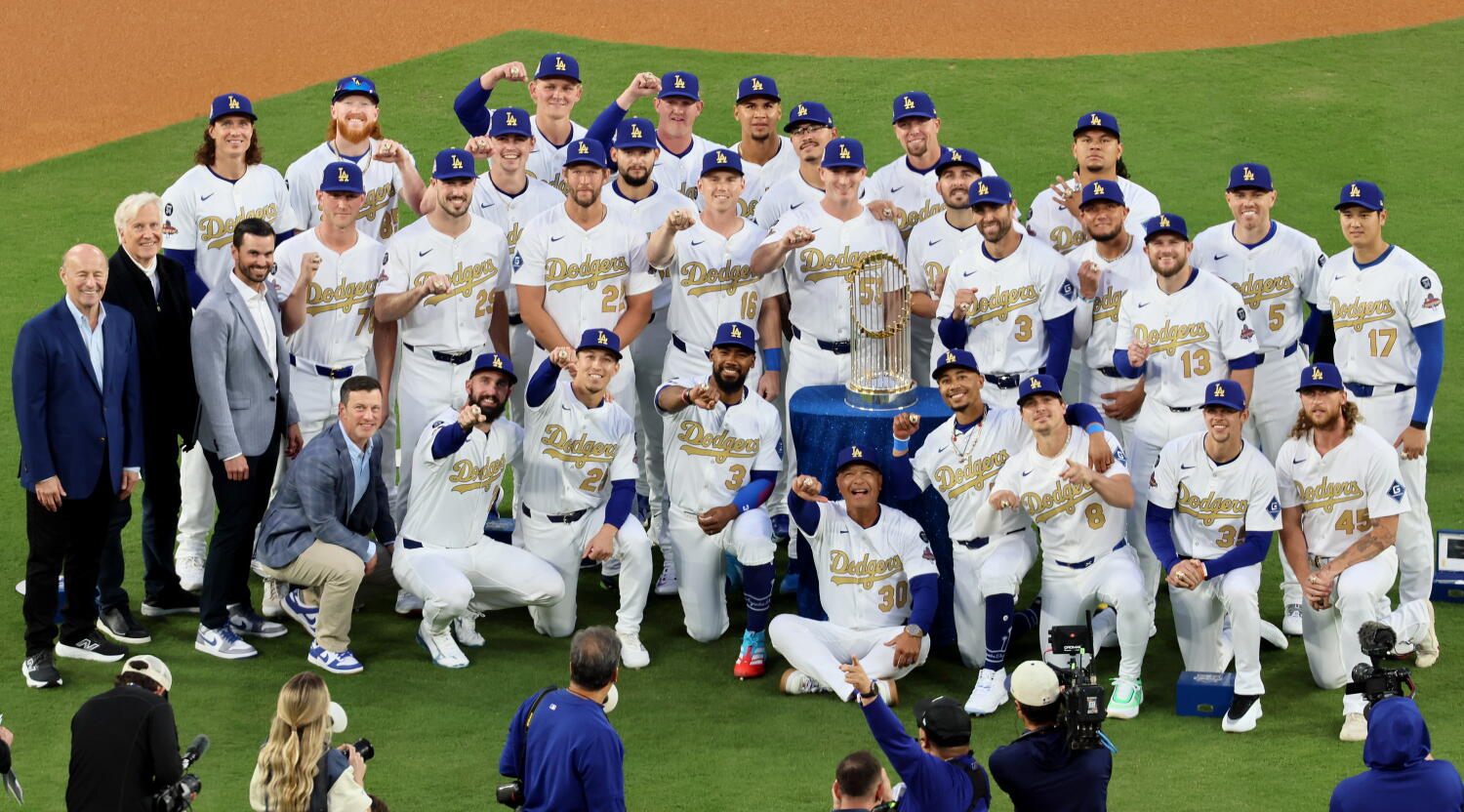
Evaluating whether a professional sports franchise is experiencing a definitive historical apex requires moving past emotional nostalgia and examining operational inputs, capital deployment, and systemic execution. Traditional commentary often reduces periods of sustained success to simple win-loss records or star power, missing the underlying mechanical engines that drive organizational supremacy. To determine if the current Los Angeles Dodgers enterprise represents a true golden era, one must analyze the interaction between ownership commitment, revenue generation, talent acquisition efficiency, and developmental infrastructure.
The Capital Allocation Model
The foundation of any modern sports dynasty rests upon balance sheet strength and the willingness to allocate capital aggressively. Historically, baseball franchises operated under cyclical constraints dictated by local market revenues and conservative ownership budgets. The current organizational framework in Los Angeles subverts this constraint through a diversified revenue model and a corporate ownership structure willing to absorb deferred financial liabilities to maximize current roster talent.
The structural advantage is not merely about spending raw capital; it is about the efficiency of that capital allocation. By structuring contracts with significant deferrals, the front office optimizes present-day luxury tax calculations while maintaining supreme liquidity. This financial maneuverability allows the franchise to pursue generational global talents—such as Shohei Ohtani and Yoshinobu Yamamoto—without completely crippling future roster flexibility.
[Revenue Inflows]
       │
       ▼
[Deferred Capital Structuring] ──► [Luxury Tax Optimization]
       │
       ▼
[Elite Global Talent Acquisition] ──► [On-Field Hegemony]
This dynamic creates a compounding loop. Success on the field drives merchandising, international broadcast rights, ticket demand, and corporate sponsorships, which in turn feeds capital back into the player procurement cycle. Unlike historical dynasties that relied on transient ownership whims, this model is institutionalized.
The Developmental Pipeline and Depth Architecture
A payroll strategy focused entirely on external acquisitions is inherently fragile. The second pillar of this era’s architecture is the symbiotic relationship between high-end spending and an elite internal player development machine.
The organization consistently produces homegrown contributors or revitalizes distressed assets through data-driven pitching infrastructure and biomechanical optimization. When high-priced acquisitions face injuries or regression, the minor league pipeline supplies cost-controlled depth. This duality mitigates variance—the inherent statistical noise of a 162-game baseball season.
- Data Integration: Leveraging computer vision and proprietary tracking metrics to identify undervalued pitching mechanics across minor league systems.
- Roster Churning: Utilizing the waiver wire and minor-league options to continuously upgrade the 26th through 40th spots on the organizational depth chart.
- International Scouting Horizons: Maintaining aggressive physical and analytical footprints in Asian and Latin American amateur markets.
This operational redundancy ensures that the team does not merely survive injuries; it weaponizes depth to outlast opponents over a grueling six-month schedule.
The Variance Problem and Postseason Volatility
Despite superior regular-season performance metrics, evaluating a golden era introduces a persistent analytical tension: the disconnect between sample size and postseason outcomes. Baseball's inherent design features high variance in short playoff series. A team with a .650 winning percentage over 162 games still loses over 55 times a year, and in a five- or seven-game elimination series, variance frequently overrides structural superiority.
Traditional analysts often point to postseason round exits as evidence of organizational flaws. This is a logical error. A rigorous evaluation separates process from outcome. The front office constructs a roster designed to maximize regular-season probability distribution and secure deep playoff access annually. Whether those teams convert playoff appearances into World Series titles is heavily influenced by short-term stochastic noise—hot streaks, timely injuries, and single-game bullpen execution.
Therefore, defining this era purely by ring counts misses the broader institutional dominance. The true mark of this period is the annualized floor of contention. While past franchise eras featured brilliant peaks followed by prolonged rebuilding valleys, the current model has engineered out the valley phase entirely.
The Risk Matrix of Sustained Supremacy
No strategic framework is immune to environmental shifts. The current hegemony faces distinct structural threats that could erode its competitive moat over the next decade.
| Risk Vector | Mechanism of Impact | Organizational Mitigation Strategy |
|---|---|---|
| Regulatory Shifts | Potential implementation of a hard salary cap or stricter luxury tax penalties. | Transitioning reliance toward elite internal development and cost-controlled pre-arbitration talent. |
| Global Market Saturation | Potential plateauing of international media rights and merchandising growth in Asian markets. | Deepening local engagement vectors and modernizing digital consumption funnels at Dodger Stadium. |
| Aging Roster Curves | Long-term contracts paying declining productivity in the back half of decade-long deals. | Front-loading structural flexibility and utilizing trade markets to offload value before steep regression curves. |
Recognizing these vulnerabilities prevents strategic complacency. The longevity of this era depends on the front office's ability to pivot from heavy veteran acquisition to agile, youth-driven asset accumulation when the regulatory environment shifts.
To maintain operational supremacy, management must continuously audit its minor-league talent acquisition pipelines to prevent the farm system from depleting during aggressive international bidding cycles. The ultimate test of this front office will not be how it spends during peak revenue years, but how efficiently it transitions the roster when the current core ages past its physical prime.
https://www.youtube.com/watch?v=r-FFMJReH0I
This video provides an analytical breakdown of how modern roster construction and global superstar integration have redefined expectations for sustained success in Los Angeles.