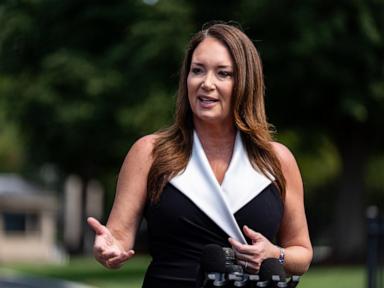
When top diplomats from the United States, India, Japan, and Australia gather in Atlanta on the sidelines of a G20 ministerial, it's easy to dismiss the photo ops as polite diplomatic theater. Yet the Quad Foreign Ministers meeting in Atlanta on October 31, 2026, carried real weight behind the polished talking points. U.S. Secretary of State Marco Rubio framed the gathering around turning shared priorities into tangible benefits for the Indo-Pacific, while India's External Affairs Minister Dr. S. Jaishankar, Australian Foreign Minister Penny Wong, and Japanese Foreign Minister Toshimitsu Motegi compared notes on everything from maritime surveillance to chip supply chains.
If you're wondering why a city known for southern hospitality and busy aviation hubs became a staging ground for Indo-Pacific strategy, the answer comes down to timing and momentum. Atlanta was hosting G20 foreign ministers, giving the four Quad partners a practical way to huddle without burning extra travel days. Even better, it served as the final diplomatic tune-up before the Quad Leaders' Summit in Manila on November 17, 2026.
What Actually Happened at the Quad Foreign Ministers Meeting in Atlanta
Too often, coverage of diplomatic meetings stops at a single catchy line from a host official. Rubio's comment about turning shared priorities into real benefits sounds great on a headline ticker. Honestly, though, diplomacy lives or dies in the follow-through.
The ministers met in Atlanta on October 31, 2026, marking the third Quad ministerial gathering in six months—following earlier sessions in New Delhi and Manila. Having three ministerial meetings inside half a year tells you something important. The group isn't treating the Quad as an occasional side project anymore. They're trying to build a steady drumbeat of coordination across capitals.
According to the U.S. Department of State joint press release, the ministers focused heavily on economic prosperity and security, maritime and transnational security, and humanitarian assistance and emergency response. They also recognized India's role as a first responder in rescue efforts for Nepal, alongside broader Quad backing.
Three takeaways stand out from what came out of Atlanta:
- Speeding up ministerial touchpoints: Three foreign minister meetings in six months created a tighter feedback loop between Washington, New Delhi, Tokyo, and Canberra.
- Setting the table for Manila: Ministers worked through agenda items ahead of the mid-November leaders' summit in the Philippines.
- Focusing on practical bottlenecks: Rather than speaking only in broad geopolitical slogans, the joint readout pointed toward concrete areas like semiconductor chokepoints, undersea cables, and energy resilience.
Turning Shared Priorities into Real Indo-Pacific Benefits
Let's be real. "Shared priorities" is diplomatic shorthand that can mean almost anything if nobody defines the deliverables. Over the past few years, critics have fairly asked whether the Quad produces enough measurable results on the ground compared to its big-picture ambition.
In Atlanta, the ministers tried to anchor that promise in specific tracks. Let's look at the areas where the four countries are pushing hardest.
Maritime Surveillance and Sea Lanes
Sea lanes are the lifeblood of Indo-Pacific trade, energy flows, and regional stability. During this stretch of Quad diplomacy, partners highlighted the Indo-Pacific Maritime Surveillance Collaboration (IPMSC), an effort aimed at strengthening maritime domain awareness and information sharing so regional waters are safer and more transparent.
You don't need a naval background to see why maritime visibility matters. Unregulated fishing, illicit activity at sea, and sudden disruptions in busy shipping corridors hurt coastal economies first. Better coordination across surveillance tools helps countries spot problems earlier instead of reacting blind. By the time leaders met in Manila on November 17, 2026, they were already pointing to the IPMSC and scheduling a joint patrol-aircraft exercise involving P-8 and P-3C aircraft for 2027.
Energy Security and Undersea Cables
Energy shocks and severed communication links have a funny way of reminding governments how fragile modern life is. At the Atlanta gathering, partners pointed to work on Indo-Pacific energy security and regional energy resilience alongside efforts to build secure, redundant, and high-speed undersea data cables.
Think about undersea cables for a second. Most global internet and financial traffic rides along the ocean floor, not satellites. If a cable gets damaged or bottlenecked, businesses, hospitals, and governments feel it right away. Pushing for trusted and resilient cable routes—and sharing best practices to protect them—is the kind of unglamorous infrastructure work that actually makes a difference.
Semiconductors, AI, and Digital Trust
Modern economies run on silicon and code. In their October 31 joint release, the Quad ministers emphasized building secure and resilient supply chains for leading-edge semiconductors and "SI" hardware—noting that in Australia, India, and Japan, "SI" refers to artificial intelligence ("Super Intelligence"). They also pointed to a new effort to spot semiconductor and hardware supply chain chokepoints before they trigger disruptions.
That's a smart shift in mindset. Waiting until a factory stalls or a shipping lane backs up is expensive. Mapping chokepoints early gives companies and policymakers room to diversify before a crisis hits. Ministers also highlighted work on mapping digital identity standards and expanding cybersecurity cooperation, which later fed into the AI and cyber initiatives announced at the Manila summit.
Why Jaishankar's Role in the Quad Is Worth Watching
Whenever S. Jaishankar steps into a Quad room, observers pay close attention to how India balances partnership with strategic autonomy. India isn't a treaty ally of the United States in the traditional Cold War sense, and New Delhi has consistently insisted on making its own foreign policy calls based on national interest.
That makes Jaishankar's participation in Atlanta especially interesting. India brings massive demographic scale, growing manufacturing and digital public infrastructure expertise, and a central geographic position in the Indian Ocean. At the same time, India has its own priorities on border security, trade, energy sourcing, and regional connectivity.
When Jaishankar sits down with Rubio, Wong, and Motegi, the conversation isn't about four countries marching in lockstep on every single global issue. It's about finding practical overlap where cooperation pays off for everyone involved—whether that means disaster relief logistics, maritime domain awareness, or resilient supply chains.
Common Misconceptions About the Quad
Because the Quad gets plenty of hot takes online, a few myths keep popping up. Let's clear them up plainly.
- Myth 1: The Quad is a formal military alliance like NATO. It isn't. There is no mutual defense treaty binding the four members to go to war for one another. Its work spans maritime awareness, disaster response, infrastructure, technology, and regional security cooperation.
- Myth 2: Diplomatic meetings automatically mean instant policy rollouts. Not even close. Ministerial statements set direction and political momentum, while real implementation takes months or years of agency work, funding, and technical alignment.
- Myth 3: Smaller Indo-Pacific nations are sidelined by big-power talks. In practice, Quad partners regularly stress support for ASEAN centrality and regional partners, and initiatives like disaster relief, cable connectivity, and maritime monitoring are aimed at broader regional stability.
It's also fair to keep a healthy dose of skepticism. Grand frameworks often sound cleaner on paper than they look during budget negotiations or supply chain crunch times. Watch how these initiatives move from joint press releases into actual projects, exercises, and commercial partnerships over 2027.
How to Follow What Comes Next Without Getting Lost in Noise
If you want to track this story intelligently—whether for policy research, business risk planning, or plain curiosity—skip the breathless social media threads and look at primary documents and concrete milestones. Read official readouts from the U.S. Department of State and the White House alongside Indian, Japanese, and Australian foreign ministry updates to spot where the wording shifts from "exploring" to "launching". Pay close attention to follow-through on semiconductor supply chain work, undersea cable projects, cyber cooperation, and the planned 2027 maritime patrol-aircraft exercise. That's where you'll see whether shared priorities actually turn into lasting results.
Quad Foreign Ministers Meet in Atlanta, Review Indo-Pacific Priorities
This short video gives a quick visual snapshot of the Atlanta gathering and summarizes the key regional priorities discussed by the four foreign ministers.