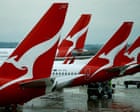
Qantas is retreating. While the national carrier points to shifting travel patterns and the shockwaves of Middle East turmoil as the catalysts for its latest round of domestic flight cuts and fare hikes, the reality is a calculated extraction of profit from a captive market. Australian travelers are waking up to fewer options and higher costs at a time when the "Spirit of Australia" feels increasingly like a luxury commodity rather than a public service. By trimming capacity on key domestic routes, Qantas is prioritizing its balance sheet over regional connectivity, effectively passing the cost of global instability directly to the local commuter.
The math is simple and cold. When fuel prices spike or international demand wavers due to conflict in the Levant, airlines have two choices: absorb the hit or squeeze the passenger. Qantas has chosen the squeeze. This isn't just about a war thousands of miles away; it is about an airline utilizing global chaos to justify a domestic strategy that has been in the works for years. Recently making waves in this space: Brent Crude Oil Hits 125 Dollars as War Fears in Iran Break the Market.
The Geopolitical Smoke Screen
Aviation has always been the first industry to catch a cold when the world sneezes. The current instability in the Middle East has sent Brent crude on a rollercoaster, and for an airline that hasn't fully hedged its bets, that means immediate pain. But blaming "travel patterns" for cutting flights between Sydney, Melbourne, and Brisbane is a stretch that deserves scrutiny.
Domestic travel in Australia doesn't stop because of a conflict in the Northern Hemisphere. People still need to fly for work, for family, and for the basic functioning of a continent-sized economy. What has actually shifted is the airline’s appetite for risk. By framing these cuts as a response to global crisis, Qantas leadership manages to deflect the blame from their own aggressive yield management strategies. Further information regarding the matter are covered by Investopedia.
They are reducing the supply of seats. This creates an artificial scarcity that allows them to push "sale" fares to levels that were once reserved for last-minute business bookings. It is a textbook move in an oligopoly. When your primary competitor, Virgin Australia, is still finding its feet under private equity ownership and Rex is struggling to maintain its regional foothold, Qantas knows it holds the cards.
The Yield Engine and the Empty Seat
To understand the current strategy, you have to look at "yield"—the average fare paid per passenger, per kilometer. In the eyes of a Qantas analyst, an empty seat is a sin, but a half-full plane with high-paying passengers is a miracle.
The airline is moving away from the high-frequency "bus service" model that defined the 2010s. Instead, they are consolidating passengers onto fewer, larger aircraft or simply leaving the slots empty. This forces travelers into a narrower window of time, ensuring every plane that leaves the tarmac is packed to the gills. It’s efficient for the shareholders, but it’s a nightmare for the traveler who now faces a five-hour wait between flights or a $700 one-way ticket for a ninety-minute hop.
The Hidden Cost of Fuel Surcharges
While "fuel surcharge" is a term often buried in the fine print, its impact is front and center. Jet fuel is the single largest variable expense for any carrier. However, the speed at which Qantas has moved to hike fares suggests they are doing more than just covering the increased cost of kerosene. They are baking in a margin for uncertainty.
This is a defensive crouch. By raising the floor on ticket prices now, they protect their margins against future spikes. If fuel prices drop, do fares follow them down at the same speed? History suggests they do not. Once a market accepts $400 as the "new normal" for a domestic flight, that price floor tends to stick.
Regional Australia Left on the Tarmac
The most damaging aspect of this retreat isn't happening in the golden triangle of the east coast. It’s happening in the regional hubs. When Qantas "optimizes" its network, the smaller routes are the first to go under the knife.
For a town like Dubbo, Gladstone, or Broome, a reduction in flight frequency isn't an inconvenience; it’s an economic throttle. These communities rely on the national carrier for medical specialists, business investment, and tourism. When Qantas decides that a route is no longer yielding the necessary returns due to "global shifts," they effectively cut a lifeline.
The irony is that Qantas received billions in taxpayer support during the pandemic. The implicit deal was that the airline would remain the bedrock of Australian connectivity. Instead, we see a pivot toward high-margin international routes and a thinning of the domestic web that built the brand's reputation in the first place.
The Competitor Conundrum
Where is the competition to keep Qantas honest? Virgin Australia is playing a different game, focusing on the "mid-market" and keeping its own costs low. They aren't looking to start a price war they can't win. Meanwhile, the entry of Bonza was a brief, bright spark that was snuffed out by the harsh realities of Australian aviation—high landing fees, limited slot access, and the sheer dominance of the incumbent.
Qantas knows it is essentially untouchable. This leads to a level of corporate arrogance where service cuts can be rebranded as "strategic realignments." They aren't cutting flights because they have to; they are cutting them because they can.
Infrastructure and Slot Hoarding
A major factor that no one talks about is the battle for airport slots. At Sydney Airport, slots are the most valuable currency. There have long been accusations that major airlines "hog" slots by scheduling flights they have no intention of running, only to cancel them at the last minute. This prevents smaller players from entering the market.
While the government has promised to look into slot reform, the progress is glacial. By cutting domestic flights now, Qantas can claim they are responding to "market conditions" while still maintaining their grip on the most lucrative windows of the day. It’s a masterful bit of theater that keeps the gates locked to anyone else.
The Psychological Shift of the Australian Traveler
For decades, Australians viewed domestic flying as a right, not a privilege. The "low-cost revolution" of the early 2000s made it possible for a generation to travel across the country for the price of a nice dinner. That era is over.
We are entering a period of "exclusionary travel." The combination of high inflation, stagnant wages, and Qantas's aggressive pricing is turning the domestic flight back into a luxury. This has a ripple effect on the entire economy. If a family can’t afford to fly to Queensland for the holidays, they stay home. If a consultant can’t afford to fly to a client site, the work doesn't happen.
Qantas’s focus on "travel patterns" is a euphemism for the fact that they are now targeting a wealthier demographic. They are less interested in the budget-conscious traveler and more focused on the corporate flyer and the high-net-worth individual who will pay whatever is asked.
Why the Middle East is a Convenient Scapegoat
Conflict in the Middle East certainly affects global markets, but its direct impact on a flight from Adelaide to Perth is marginal at best. Most of Qantas's fuel is purchased through complex hedging contracts that lock in prices months in advance. The immediate price at the pump isn't what dictates today's ticket price—the airline's perception of the customer's "willingness to pay" does.
By linking domestic pain to a global tragedy, the airline creates a narrative of shared sacrifice. "We're all in this together," the subtext suggests, as the airline reports billion-dollar profits. It is a PR masterclass in shifting the goalposts.
The Engineering of a Fare Hike
When you book a ticket and see the price has jumped 20% overnight, you aren't seeing the result of an algorithm responding to a fuel spike. You are seeing the result of sophisticated software designed to test the limits of your desperation.
These systems, often referred to as Revenue Management Systems (RMS), monitor every click, every search, and every competitor move in real-time. If the system sees that other airlines are also trimming capacity, it triggers a price increase. Qantas is currently leading the dance, and the rest of the industry is more than happy to follow their lead. It’s a silent, legal coordination that ensures the "traveler pays" model remains unchallenged.
The Failure of Regulatory Oversight
The Australian Competition and Consumer Commission (ACCC) has been a "toothless tiger" when it comes to the aviation sector. While they monitor prices and issue reports, they lack the power to actually stop Qantas from gutting its domestic schedule or gouging its customers.
The airline industry in Australia is a protected species. Governments of all stripes are terrified of what would happen if Qantas truly failed, so they allow it to operate with a level of impunity that would be unthinkable in a truly competitive market like the US or Europe.
We see the result: an airline that is "too big to fail" but "too greedy to serve."
The Reality of the Modern Fleet
Part of the "why" behind these cuts is also the aging fleet. Qantas is in the middle of a massive fleet renewal program—Project Sunrise and the replacement of the workhorse 737s. These are multi-billion dollar investments that require a massive amount of cash on hand.
By cutting domestic services and raising fares, Qantas is essentially asking today's passengers to fund the planes of tomorrow. They are squeezing the current operation to pay for the future, all while blaming the Middle East for the discomfort felt by the public. It’s a clever bit of accounting, but it leaves the current passenger base feeling used.
The planes currently flying the domestic routes are tired. Delays are frequent, and the "premium" experience often falls short of the price tag. Yet, because there are fewer flights, you have no choice but to board that 20-year-old aircraft and pay a premium for the privilege.
Breaking the Cycle
The only way this changes is through a fundamental shift in how aviation is regulated in Australia. We need more than just "monitoring." We need:
- Aggressive Slot Reform: Force airlines to use their slots or lose them to new entrants immediately, with no "grace periods" for cancellations.
- Transparent Pricing: Mandate that airlines disclose the actual breakdown of "taxes and fees" so consumers can see exactly how much of their fare is going toward a "fuel surcharge."
- Regional Protection: Tie international flying rights to a minimum level of domestic and regional service. If you want the lucrative London routes, you have to serve the towns that depend on you.
Without these changes, the "Spirit of Australia" will continue to be a brand that looks outward toward global profits while turning its back on the people who built it. The current cuts aren't a temporary response to a crisis; they are a window into the future of Australian travel. A future where the sky is reserved for those with the deepest pockets, and the rest of us are left watching from the ground.
Stop looking at the news in the Middle East for the reason your flight was canceled or your fare doubled. Look at the boardroom in Mascot. That is where the decisions are being made, and they have nothing to do with global peace and everything to do with the next quarterly report.