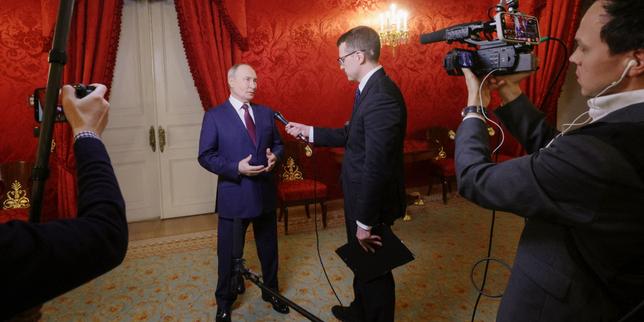
Vladimir Putin says Russia is ready to resume negotiations with Ukraine and the United States toward a final agreement. Do not mistake polite diplomatic phrasing for sudden compromise. Every time the Kremlin signals openness to talks, it is usually testing leverage, dividing Western capitals, or buying time while missiles and drones still fly across the front.
I have watched Kremlin peace overtures cycle through the same routine for years, from early wartime talks in Belarus and Turkey to the Abu Dhabi and Geneva rounds earlier in 2026. Headlines love a breakthrough. Experienced negotiators look at the fine print, the battlefield tempo, and who stands to gain before a single signature hits paper.
What a Final Agreement Actually Means in Moscow
When Putin talks about a final agreement, he rarely means a simple ceasefire along current lines. For Moscow, "final" has long implied locking in territorial gains, reshaping Ukraine's security alignment, and stripping away outside military guarantees that could threaten Russian borders later.
Even when US envoys speak optimistically about progress or possible security arrangements, friction remains sharp on the basics. Moscow continues to push back against Western troop deployments inside Ukraine as part of postwar security guarantees, while European leaders insist on Ukraine's sovereignty, territorial integrity, and right to choose its own security path.
Look at that map of Donbass and Crimea. Those two areas sit at the center of almost every diplomatic standoff because they anchor both land corridors and Black Sea access. Control over territory is only half the fight; the other half is whether Kyiv can keep its power grid, ports, and political independence intact once the shooting stops.
Why Timing Matters More Than Rhetoric
Timing explains almost everything in this phase of the war. Just days ago, Putin met alongside US President Donald Trump and Chinese leader Xi Jinping on the sidelines of APEC in Shenzhen, producing a four-point declaration focused on strategic stability, nuclear risk dialogue, UN reform, and official immunities.
Notice what stayed out of that formal text. Ukraine did not appear in the trilateral declaration itself, even though Putin said the war came up in conversation and Trump told European leaders that Moscow was serious about reaching a peace agreement.
- Diplomatic status: Sitting at a high-profile table with Washington and Beijing projects great-power weight regardless of immediate concessions.
- Pressure on aid: Signals that a deal could be close often feed arguments in Western capitals over whether continued weapons and funding are worth the cost.
- Military momentum: Strikes on infrastructure, drones, and air defenses keep shaping bargaining power even while envoys talk in venues like Oslo, Saint Petersburg, or the United Arab Emirates.
A hypothetical example shows how easy it is to misread a diplomatic opening. Suppose a negotiating team agrees in principle to discuss a winter energy pause and Black Sea grain movement, while simultaneously disputing whether a foreign peacekeeping force can patrol Ukrainian soil. Both sides can call the meeting constructive, yet remain miles apart on what stops the next wave of attacks.
The European Fault Line Under Pressure
Washington, Kyiv, and European capitals do not always move in lockstep on pace or sequence. Some US officials have stressed building a deal alongside Europeans and Ukrainians rather than forcing a unilateral settlement, while Trump has publicly questioned billions in European military aid and argued that the war needs to end.
European leaders, meanwhile, have pushed back hard against any arrangement that rewards forced border changes or leaves Ukraine exposed. They have called for winter energy protection, maritime trade safeguards, and tighter economic pressure on Russian energy revenues, illicit finance, and defense production.
Moscow knows how to play those tensions. Suggesting that talks could happen in Moscow or testing where European allies stand on security guarantees lets the Kremlin probe for cracks before making hard concessions.
What to Watch Before Calling It a Breakthrough
Real negotiations with Ukraine and the United States will be judged by verifiable mechanics, not optimistic soundbites. Earlier rounds in 2026 showed how quickly momentum can stall when talks move from broad principles to hard trade-offs over territory, nuclear site control like Zaporizhzhia, or prisoner exchanges.
Watch three concrete markers over the coming weeks:
- Verifiable de-escalation: Look for enforceable pauses on power grid and Black Sea strikes rather than temporary pauses between larger barrages.
- Credible security backing: Any durable settlement requires clear commitments that deter future aggression without trapping Ukraine in a permanent buffer zone.
- Aligned bargaining tables: Watch whether Kyiv and European partners sit firmly inside the room when core terms are drafted, or get handed a fait accompli after the fact.
A willingness to talk is not the same thing as a willingness to stop. Until Moscow's terms on borders, sovereignty, and security guarantees narrow enough to survive contact with Ukrainian and European red lines, every promise of a final deal deserves cold scrutiny.