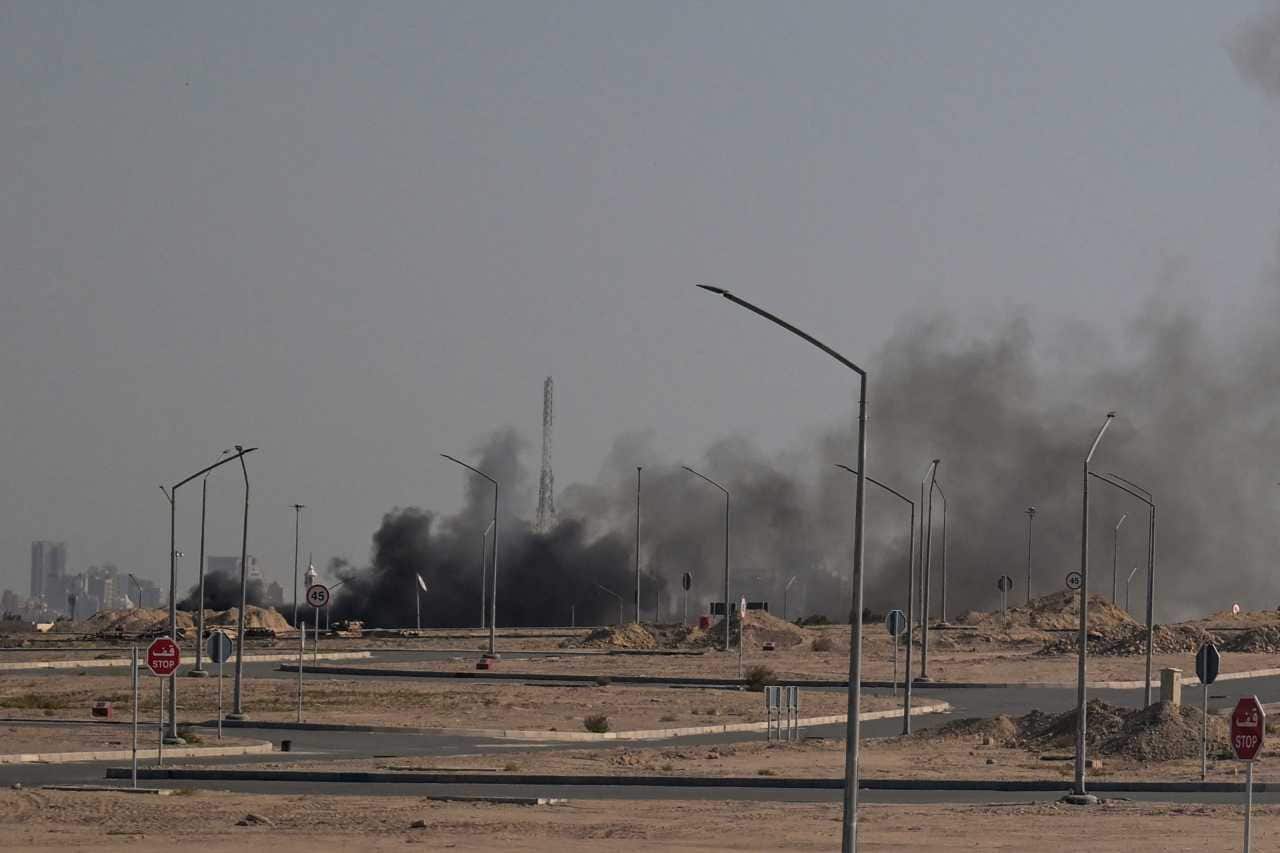
Vladimir Putin wanted this week to be a celebration of Russian economic resilience. Instead, the billionaires, foreign diplomats, and corporate executives arriving in St. Petersburg for the annual International Economic Forum (SPIEF) were greeted by massive plumes of black smoke rising into the morning sky.
A coordinated Ukrainian drone strike slammed into the St. Petersburg Oil Terminal and the nearby Kronstadt naval base early Wednesday morning. It happened just hours before the opening ceremonies of the event often called the "Russian Davos." The optics couldn't be worse for the Kremlin. For years, the wealthy elite in Russia's second-largest city could pretend the war was a distant problem happening thousands of miles away. That illusion is officially dead.
Ukraine didn't just stumble into this timing. This was a calculated, high-stakes message sent directly to Putin and the international guests he's trying to court.
The Mirage of Pragmatic Dialogue Under a Smoking Skyline
The Kremlin planned this year's forum around the theme "Pragmatic Dialogue: the Path to a Stable Future." The goal was to prove that Western sanctions haven't isolated Russia. Officials boasted about hosting 20,000 guests from 130 countries, leaning heavily on delegations from the Global South. Saudi Arabia is this year's guest of honor, sending a massive 200-person delegation led by Energy Minister Abdulaziz bin Salman Al Saud.
But as those delegates checked into their luxury hotels and headed toward the Expoforum Convention and Exhibition Center, the air smelled like burning fuel oil.
Ukrainian long-range drones traveled more than 600 miles to hit their targets. The primary strike ignited a massive blaze at the Petersburg Oil Terminal, a critical transshipment hub for Russia's Baltic energy exports. Simultaneously, drones targeted the Kronstadt naval base, where Russia’s Baltic Fleet is stationed. Robert Brovdi, commander of Ukraine's Unmanned Systems Forces, released black-and-white footage showing a drone slamming directly into the Boikiy, a Russian guided-missile corvette sitting in dry dock. The warship quickly caught fire.
To make matters more chaotic for the arriving dignitaries, Russian authorities scrambled to jam communications and protect airspace. Mobile internet services were cut off across several districts to stop residents from filming the fires. Pulkovo Airport shut down entirely for several hours overnight, delaying or canceling over 30 flights carrying forum attendees.
If Putin wanted to show the world a stable, prosperous superpower, Ukraine gave them a front-row seat to a combat zone.
Inside the Fragmented Guest List
Take a close look at who is actually attending SPIEF this year, and you see how much Russia's global standing has fractured. Before the 2022 invasion, this event was packed with Fortune 500 CEOs, European heads of state, and American investment bankers. Today, the crowd looks entirely different.
Alongside the Saudi energy delegation, Putin will share the stage on Friday with the presidents of Uzbekistan and Tanzania, as well as Chinese Vice President Han Zheng. A high-level delegation from North Korea is also roaming the halls.
There is a bizarre American presence making waves. The Kremlin heavily publicized the arrival of an "official" U.S. delegation, which turned out to be led by Rodney Mims Cook Jr., the chairman of the U.S. Commission of Fine Arts. Cook is best known lately for overseeing Donald Trump's ballroom extension at the White House. While Moscow tried to spin his presence as a sign of thawing diplomatic relations, Robert Agee, the president of the American Chamber of Commerce in Russia, quickly downplayed the hype, pointing out that Cook isn't leading any sort of official state delegation. He's mostly there to participate in a minor panel titled "Russia-US: A Cultural Dialogue."
The fact that the Kremlin has to hype up an arts commissioner and minor delegations to prove it isn't isolated tells you everything you need to know about the current state of Russian diplomacy.
The Strategy Behind Ukraine's Aerial Sanctions
This wasn't a random act of aggression. President Volodymyr Zelensky explicitly called these deep-theater operations "long-range sanctions." They serve two very practical purposes.
First, they hit Russia where it hurts most: the treasury. St. Petersburg is the gateway for Russia's western oil trade. By hitting these terminals, Ukraine directly disrupts the logistics supplying the Kremlin's war machine. Brovdi revealed that Ukrainian forces have successfully targeted 20 Russian oil terminals in just the past 33 days. A similar wave of strikes back in March cost the Russian state an estimated $970 million in lost revenue. While high global oil prices have softened the blow for Moscow, the cumulative damage to refineries, storage hubs, and ports is creating noticeable logistical bottlenecks inside the country.
Second, the psychological impact is massive. Just one day prior to this attack, Russia launched a brutal, large-scale missile and drone barrage against Kyiv and other Ukrainian cities, killing 23 civilians and wounding over 100. By striking back at St. Petersburg, Ukraine proves it can bypass Russia's vaunted air defense networks at will, even when those systems are supposedly on high alert for a major presidential event.
NATO Secretary General Mark Rutte, standing alongside Zelensky in Kyiv on Wednesday, openly defended the strikes. Rutte noted that Russia remains the sole aggressor and that Ukraine has every right to defend itself by dismantling military and energy assets on Russian soil. He even mocked Putin's growing paranoia, pointing out how the Russian leader had to cut his prized May 9 Victory Day parade short out of fear of Ukrainian drones.
What This Means for the Elite Moving Forward
For the oligarchs and state officials sitting in the air-conditioned halls of the Expoforum, the message is unavoidable. You cannot support a war of attrition abroad while expecting total safety and luxury at home. St. Petersburg Governor Alexander Beglov tried to reassure the public by claiming the city had "taken new challenges into full consideration" with enhanced air defenses. The smoke rising ten miles from the convention center proved those defenses are highly penetrable.
Kremlin spokesman Dmitry Peskov promised that Russia would respond "systematically" to these attacks, repeating the tired line that the military operation is being conducted precisely to prevent such strikes. But after years of fighting, those promises ring hollow to locals who spent the night listening to anti-aircraft fire and watching their mobile internet go dark.
If you are tracking the economic or geopolitical trajectory of this conflict, don't look at the rosy growth statistics Russian officials are throwing around on the forum floor. Look at the shipping schedules at the St. Petersburg Oil Terminal, the repair timelines for the Baltic Fleet's damaged corvettes, and the soaring costs of domestic air defense. Ukraine has successfully brought the war to Putin's doorstep, and no amount of corporate showmanship can hide the smoke.