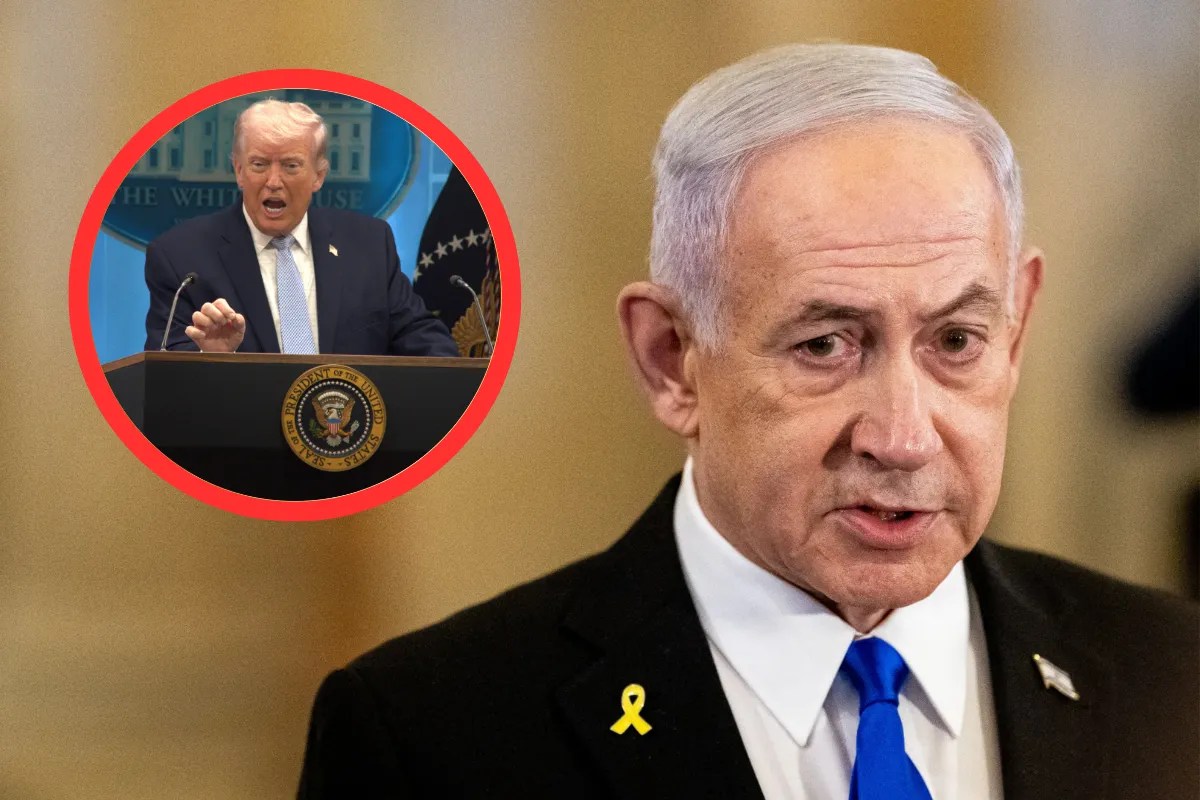
The sirens in Tel Aviv do not sound like a political debate. They wail with a mechanical, throat-tearing urgency that forces a mother to grab her child, abandon a half-cooked dinner, and run toward concrete shelters. Thousands of miles away, in the marble corridors of Washington, that same terror is translated into spreadsheets, defense budgets, and late-night press briefings.
Geopolitics often feels like a grand chessboard played by giants. We read the headlines about Iran, Israel, and the United States as if they are abstract entities. But behind every missile launch and every veto at the United Nations lies a fragile web of human egos, desperate calculations, and the terrifying reality that a single man’s pride can alter the fate of millions. Also making waves recently: Inside the Iran Nuclear Crisis Nobody is Talking About.
Recently, the standard news cycle hummed with a predictable rhythm. Articles analyzed troop movements. Pundits debated economic sanctions. Then, Donald Trump spoke, and the thin veneer of diplomatic decorum shattered completely.
The Illusion of Autonomy
Imagine standing at the wheel of a massive ship during a storm. You turn the rudder, you shout orders, and the crew scrambles. To the outside world, you are the captain. But someone else owns the fuel, someone else built the engine, and someone else is whispering in your ear that if you steer off course, they will cut the power. Further details into this topic are explored by Associated Press.
Benjamin Netanyahu often cuts the figure of an absolute sovereign. He speaks with the gravelly defiance of a leader beholden to no one but his nation’s survival. Yet, the geopolitical reality is far more transactional.
When Donald Trump claimed that Netanyahu has no real choices left because "all decisions go through me," he wasn't just boasting in his characteristic style. He was pulling back the curtain on a brutal truth that small nations facing existential threats understand all too well: dependence is a heavy cage.
Consider the sheer mechanics of modern warfare. Israel possesses one of the most advanced military forces on earth, but that force runs on an umbilical cord connected directly to American factories and American taxpayers. The Iron Dome, which intercepts rockets screaming out of the Gazan or Lebanese sky, relies on interceptor missiles that cost tens of thousands of dollars each. They are not forged in Jerusalem. They are shipped from places like Arizona and Pennsylvania.
When the sky turns red with incoming fire, a leader does not have the luxury of ideological purity. They have to pick up the phone.
The Weight of the Phone Call
Late-night calls between world leaders are rarely the polite exchanges seen in press releases. They are sweaty, tense, and transactional.
Think about a hypothetical commander sitting in a bunker beneath Tel Aviv. The radar screens are blinking red. Intelligence suggests an imminent ballistic strike from Iran. The commander knows exactly what needs to be done to neutralize the threat. But before the order can be given, the political leadership must weigh the invisible stakes.
What will Washington say?
If the White House disapproves, the supply chain slows down. The satellite data dries up. The diplomatic shield at the UN thins out. This is the leverage Trump spoke of with such blunt force. It is the leverage of the provider. By stating that Netanyahu has "no choice," Trump bypassed the polite fictions of international diplomacy and exposed the raw muscle memory of American hegemony.
Iran views this dynamic through a lens of deep, historical cynicism. To the leadership in Tehran, Israel is not an independent actor but the "Little Satan," an extension of American power in the region. When American leaders openly declare ownership over Israeli decision-making, it validates Tehran’s internal propaganda. It hardens their resolve. It turns a regional conflict into a direct proxy war between a fading superpower and a rising regional bloc.
The human cost of this rhetorical posturing is felt by ordinary people who have no say in these high-stakes games. In Tehran, a university student looks at the sky and wonders if an American-made bomb will drop on her campus because of a calculation made in Mar-a-Lago. In Haifa, a shopkeeper wonders if his life is just a pawn in an American election cycle.
Algorithms and Escalation
We live in an era where warfare is no longer just about iron and gunpowder. It is dictated by data.
The modern battlefield is mapped by artificial intelligence, tracked by drones, and predicted by algorithms. The speed of escalation is no longer human. When a cyberattack disables an Iranian nuclear facility, or an Iranian drone swarms a commercial vessel in the Strait of Hormuz, the response time is measured in milliseconds.
This technological acceleration leaves very little room for human diplomacy. When world leaders use reckless language, asserting total control or backed-into-a-corner ultimatums, they feed panic into an already volatile system.
Look at how information travels now. A statement made on a campaign trail in the United States is instantly translated, analyzed by intelligence agencies in Moscow and Beijing, and beamed directly to the smartphones of soldiers on the border of Lebanon within minutes.
Words are ammunition.
When a former and potential future American president signals that he is the ultimate decision-maker for a foreign democracy, it creates a dangerous predictability vacuum. Allies don't know who to trust. Adversaries don't know where the real red lines are drawn.
The Cornered Leader
There is a psychological phenomenon known to anyone who has ever studied conflict: a cornered animal is the most dangerous entity in the forest.
By publicly stripping Netanyahu of his agency, the rhetoric from Washington pushes the Israeli leadership into a dangerous psychological space. If a leader is told publicly that they have no choice and that they are merely following orders, their natural instinct is to prove their independence. They might take a risk they otherwise wouldn't. They might launch an operation just to show the world—and their own voters—that they are the ones holding the pen of history.
This is how miscalculations happen. Not through grand strategies planned over years, but through the fragile egos of powerful men trying to out-maneuver each other in the court of public opinion.
The conflict between Israel and Iran is not a game of chess. Chess pieces do not bleed. Chess pieces do not have families waiting for them to come home from reserve duty.
As the political theater plays out on global news networks, the real stakes remain grounded in the dirt. They are found in the quiet anxiety of families sitting in darkened rooms, listening to the drone of aircraft overhead, waiting to see if the men who claim to hold all the cards will decide to flip the table entirely.
The sun sets over the Mediterranean, casting long, bloody shadows across a landscape that has seen empires rise and fall for millennia. The concrete walls of the bunkers remain cold. The satellites continue to spin in the silent dark of space, recording every movement, waiting for the next word that will set the world on fire.