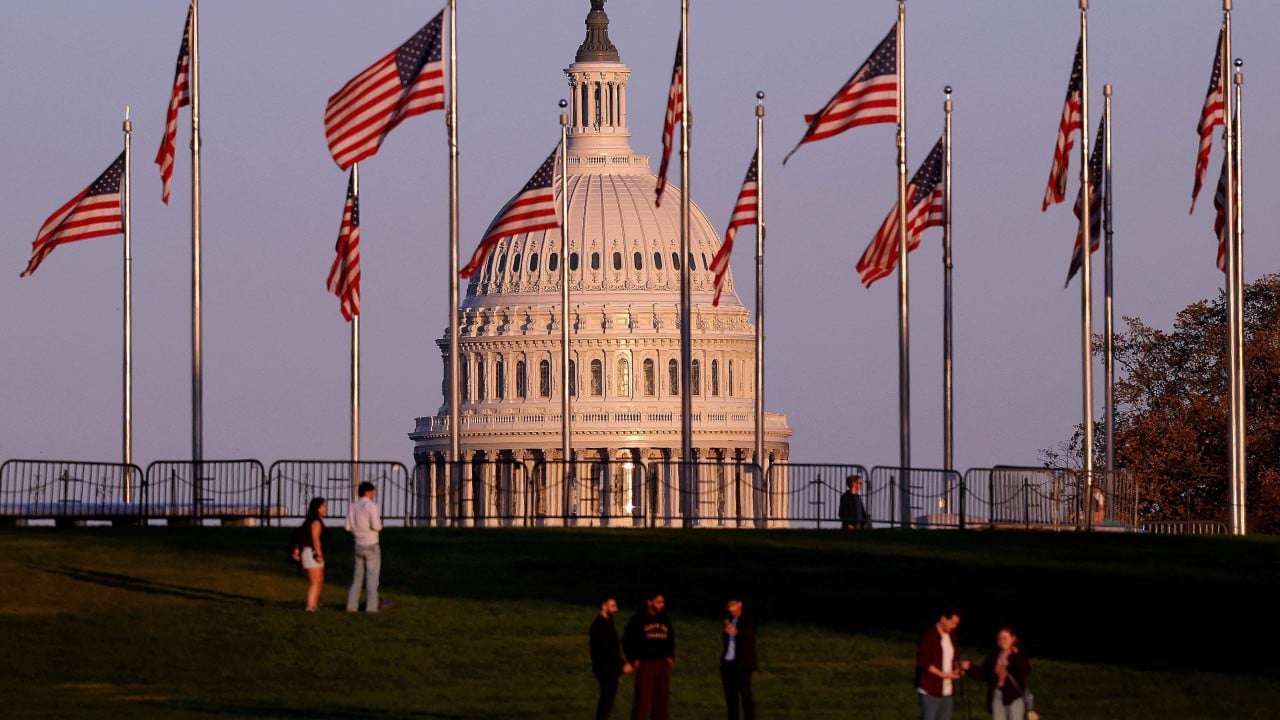
Everyone loves a simple post-mortem. Right after any major election, cable news panels immediately scramble to pin the result on a single villain or one catastrophic campaign blunder. When looking at why Trump lost the midterm elections, the lazy consensus usually boils down to candidate quality or a bad messaging week. That's completely backwards.
Elections aren't lost in the final ten days of October. They're lost over twenty-four months of structural friction, voter fatigue, and demographic shifts that campaign managers pretend they can outspend. If you actually look at the precinct-level data and exit polling from the midterm cycles tied to Donald Trump's political brand—both the 2018 blue wave during his presidency and the underwhelming 2022 GOP performance where he served as the party's de facto kingmaker—a much clearer picture emerges. The losses weren't flukes. They were predictable collisions between a populist movement and the cold math of midterm electorates.
Here's what actually sank the ship, stripped of the usual partisan spin.
The Structural Trap of the Midterm Electorate
Midterm elections are weird. Unlike presidential years, when massive turnout brings millions of low-propensity, casual voters to the polls, midterms belong to the hyper-engaged.
That's a massive problem for a political movement built around a singular, charismatic figure who isn't actually on the ballot. In 2016 and 2020, Trump demonstrated an uncanny ability to pull disengaged working-class voters off the sidelines. When his name wasn't at the top of the ticket in 2018, a huge chunk of that coalition simply stayed home. Meanwhile, the opposition showed up with historically high motivation. According to data from the Pew Research Center, voter turnout in 2018 hit 50% of the voting-eligible population—the highest rate for a midterm election in over a century.
You can't beat a surge like that when your own base treats off-year elections as optional. Even in 2022, when historical trends suggested an easy Republican blowout due to high inflation and an unpopular Democratic president, the turnout dynamics remained stubbornly unfavorable in key battlegrounds. The core Trump voter cares deeply about Trump. Getting them to care equally about a state-level Senate candidate or a local congressional race is a completely different beast, and the party's ground game never solved that equation.
The Suburban Collapse That Nobody Fixed
If you want to understand modern American politics, stop looking at rural counties and start staring at the suburbs outside Atlanta, Philadelphia, Phoenix, and Detroit.
For decades, educated, high-income suburbanites were the reliable backbone of the Republican Party. They liked lower taxes, predictable governance, and institutional stability. Trump's combative political style—constant Twitter feuds, chaotic White House staff turnover, and relentless attacks on democratic norms—alienated these voters at an alarming speed.
Look at Orange County, California, or Chester County, Pennsylvania, in 2018. These weren't progressive strongholds. They were traditionally conservative districts that flipped blue because college-educated voters decided the chaos wasn't worth the tax cuts. By the time 2022 rolled around, the GOP still hadn't figured out how to talk to these voters without sounding either overly radical or completely out of touch. You cannot lose the suburbs by double digits and expect to hold a congressional majority. The math just doesn't work.
Why Women Voters Broke Away
Within that suburban exodus, the gender gap turned into a canyon. In 2018, exit polls conducted by Edison Research showed women nationwide backing Democratic House candidates over Republicans by a staggering 19-point margin (59% to 40%).
Healthcare drove much of that anger in 2018, specifically the GOP's repeated attempts to repeal the Affordable Care Act without a coherent replacement plan. Four years later, the Supreme Court's Dobbs decision overturning Roe v. Wade—a direct result of Trump's judicial appointments—injected a fresh wave of urgency into female turnout. Trump openly took credit for ending Roe, which thrilled his evangelical base, yet it handed Democrats a potent mobilization weapon in swing states like Michigan and Pennsylvania. Independent women who might have voted Republican over gas prices or grocery bills suddenly prioritized reproductive rights at the ballot box.
Primary Endorsements and the General Election Hangover
In 2022, Trump wasn't in the White House, so he couldn't be blamed for gas prices or border crossings. Instead, he made himself the central story of the midterms through an aggressive endorsement strategy during the GOP primaries.
This is where short-term loyalty clashed violently with general election viability. Time after time, Trump backed candidates whose primary qualification was absolute loyalty to him and willingness to question the legitimacy of the 2020 presidential election. It worked brilliantly in deep-red districts. It was an absolute disaster in purple states.
Consider the Senate races in Pennsylvania, Arizona, Georgia, and New Hampshire:
- In Pennsylvania, Trump endorsed Mehmet Oz over Dave McCormick, a candidate widely viewed by party strategists as better suited for a general election against John Fetterman. Oz lost by nearly five points.
- In Arizona, Blake Masters won the primary with Trump's backing, running on hardline rhetoric that alienated moderate McCain-style Republicans in Maricopa County. He lost to Mark Kelly.
- In Georgia, Herschel Walker's personal scandals and shaky debate performances dragged him down in a state where Republican Governor Brian Kemp—whom Trump had actively tried to primary—won reelection easily by over seven points.
That last data point tells you everything you need to know. Brian Kemp proved that a conservative Republican could win comfortably in Georgia in 2022. Voters didn't reject conservative policies; they rejected candidates who felt more like extensions of Trump's personal grievances than serious lawmakers focused on the future.
Relitigating the Past Instead of Selling the Future
Every successful midterm campaign is a referendum on the party in power. When your opponents hold the White House and inflation hits a 40-year high, your job is remarkably straightforward. You hammer the economy, point at the rising cost of living, and promise competence.
Trump simply couldn't stay on message. Throughout the 2022 cycle, he repeatedly steered rallies, media interviews, and social media posts back toward his grievances over the 2020 election. Swing voters don't wake up worrying about ballot drop boxes from two years ago. They worry about mortgage rates, crime in their neighborhoods, and whether their paycheck stretches as far as it did last month.
By forcing GOP candidates to answer endless questions about 2020, Trump stepped directly on his own party's economic messaging. Every news cycle spent debating past election integrity was a news cycle where voters weren't hearing about inflation or energy costs. Political strategists call this "stepping on your own rake," and it happened almost weekly during the fall of 2022.
The Fundraising Bottleneck and Cash Disadvantage
Money doesn't guarantee victory in politics, yet getting outspent two-to-one in the final stretch of a Senate race makes winning nearly impossible.
During the 2022 cycle, a weird financial dynamic emerged on the right. Small-dollar grassroots donors—the lifeblood of modern Republican fundraising—poured tens of millions of dollars directly into Trump's leadership PAC, Save America. Meanwhile, traditional party committees and actual Senate candidates struggled to match the massive grassroots fundraising hauls generated by Democrats through ActBlue.
Trump sat on a mountain of cash, exceeding $100 million at various points in the cycle, while spending only a fraction of it on actual general election advertisements for his endorsed candidates. Senate Minority Leader Mitch McConnell's aligned super PAC, the Senate Leadership Fund, had to burn through tens of millions of dollars just to rescue struggling Trump-backed nominees in states like Ohio and Arizona, draining resources away from offensive pickup opportunities in states like Nevada and New Hampshire. When your biggest fundraiser hoards the cash instead of deploying it to win swing seats, your down-ballot candidates end up fighting with one hand tied behind their backs.
Independent Voters Chose Stability Over Disruption
At the end of the day, American elections are decided by the roughly 10% to 15% of the electorate that doesn't strongly identify with either party. These independent voters are famously fickle, pragmatic, and allergic to extremism.
In 2016, many independents took a gamble on Trump because they wanted someone to shake up a broken Washington establishment. By the 2018 midterms, a majority of them had buyer's remorse. According to CNN exit polls, independent voters backed Democrats by 12 points in 2018. In 2022, despite widespread dissatisfaction with Joe Biden's job approval rating—which hovered in the low 40s—independents still broke for Democratic House candidates by a narrow margin (49% to 47%), and they broke heavily for Democrats in key Senate battlegrounds like Pennsylvania and Arizona.
Why did unhappy independents refuse to hand the keys back to the GOP? Because when forced to choose between an administration they felt was underperforming and a movement they viewed as chaotic and focused on reversing democratic norms, they chose the devil they knew. Independents wanted a check on Democratic spending, not a constitutional crisis.
How Political Strategists and Observers Should Read Future Cycles
If you're analyzing upcoming elections, forecasting political risk, or simply trying to separate real electoral signals from cable news noise, stop watching national generic ballot polls in isolation. They hide the structural realities that actually decide races.
Start tracking candidate-level ticket splitting in swing counties. Compare how a party's gubernatorial or state-level candidates perform relative to its federal Senate or House nominees in the exact same precincts—just like comparing Brian Kemp's vote share to Herschel Walker's in suburban Atlanta. That gap measures the exact penalty voters impose for perceived extremism or chaos. Pay close attention to off-year special election margins and suburban voter registration shifts, which consistently telegraph enthusiasm gaps months before November. Finally, follow the actual ad-buy disclosures via Federal Election Commission filings rather than headline fundraising totals; cash sitting in a leadership PAC does nothing to persuade an undecided voter in suburban Phoenix.