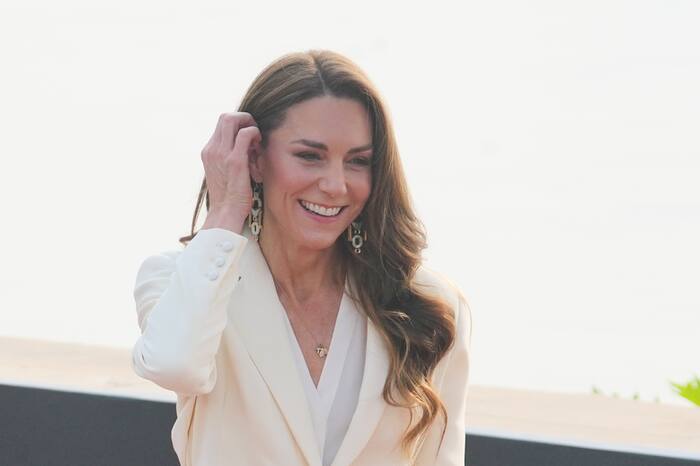
When Britain's Princess Catherine stepped in front of the cameras for a new documentary reflecting on life after her cancer diagnosis, the broadcast did far more than satisfy public curiosity about a senior member of the House of Windsor. It marked the permanent retirement of the old royal communications rulebook. By bypassing traditional press pools, controlling the visual framing, and speaking candidly about the slow, uneven nature of post-chemotherapy recovery, Kensington Palace demonstrated how a modern monarchy survives a major health crisis in the era of relentless digital scrutiny.
The documentary arrives after an extraordinary period in British public life. Following abdominal surgery in January 2024 and a subsequent announcement in March that preventative chemotherapy was underway, the Princess of Wales retreated from public duties for months. Her September 2024 video announcing the completion of chemotherapy signaled a shift toward direct-to-public storytelling, and this extended documentary builds directly on that foundation. Rather than offering a triumphant return to ribbon-cutting ceremonies, the project documents the quiet, unglamorous reality of rebuilding physical stamina and recalibrating institutional expectations. For a closer look into similar topics, we recommend: this related article.
The End of the Royal Rota Monopoly
For decades, the relationship between the British royal family and the press operated on an unspoken, rigid contract. The Royal Rota—a system granting accredited British print and broadcast journalists exclusive pool access to official engagements—guaranteed coverage in exchange for predictable messaging. When a monarch or heir fell ill, the Palace released terse, clinical bulletins drafted by royal physicians and posted on palace gates or distributed via wire services.
That system collapsed during the first quarter of 2024. Vacuum-sealed silence no longer breeds deference; it breeds algorithmic conspiracy theories. When Catherine stepped away from public life to recover from surgery, social media platforms filled the information void within days, culminating in the Mother's Day photograph controversy that forced an unprecedented public apology over image editing. For additional details on this development, in-depth reporting can be read at TIME.
The new documentary is the institutional correction to that crisis. By producing a self-contained, broadcast-ready film in collaboration with a trusted production team, Kensington Palace eliminated the middleman. There were no unscripted doorstep interviews, no speculative body-language breakdowns from tabloid commentators standing behind metal barricades, and no editorial dilution.
Consider how starkly this contrasts with historical precedent. When King George VI underwent a lung resection for cancer in 1951, Buckingham Palace never uttered the word cancer publicly; the British public only learned the true nature of his illness after his death. Even in the late twentieth century, royal health remained fiercely guarded state secrets. By placing Catherine's voice and perspective at the center of a structured documentary, the Palace acknowledged a harsh modern truth: in an attention economy, if an institution does not tell its own story with emotional credibility, strangers on the internet will write a worse one.
The Medical Reality Behind Preventative Chemotherapy
One of the documentary's most substantive contributions is its plainspoken treatment of adjuvant chemotherapy, often referred to in public statements as preventative chemotherapy. Many viewers mistakenly assume that finishing a course of chemotherapy means an immediate return to baseline health. Oncologists know the opposite is frequently true.
Adjuvant therapy is administered after primary surgery to eliminate microscopic cancer cells that scans cannot detect. While the treatment significantly reduces the risk of recurrence, the cumulative toxicity leaves lasting physiological footprints. Patients routinely experience cancer-related fatigue, peripheral neuropathy, cognitive fog, and suppressed immune resilience for six to eighteen months after their final infusion.
In the film, Catherine addresses this gap between clinical completion and genuine recovery. She speaks about learning to listen to a body that no longer responds to sheer willpower, noting that good days and bad days do not follow a neat upward trajectory. For millions of viewers navigating their own oncology journeys, hearing a future queen admit that she cannot simply power through exhaustion validates an experience that workplaces and families routinely misunderstand.
Why Public Vulnerability Carries Clinical Weight
Healthcare analysts have long tracked the "Katie Couric effect" or the "Jade Goody effect"—measurable spikes in cancer screenings and early diagnostic consultations immediately following a high-profile figure's disclosure. When King Charles III revealed his enlarged prostate diagnosis in early 2024, searches on the National Health Service website surged over 1,000 percent within forty-eight hours.
Catherine's documentary extends that public health impact beyond initial screening into the neglected territory of survivorship care. Medical systems across the United Kingdom and North America pour immense resources into acute oncology intervention, yet patients frequently report feeling abandoned once active treatment ends. By framing post-cancer life as an ongoing, multi-year adjustment rather than a tidy movie ending, the broadcast normalizes long-term pacing and psychological recovery.
Reengineering the Monarchy Around Sustainability
Beneath the human story lies a hard-nosed institutional calculation. The British monarchy is a multi-generational enterprise whose survival depends on continuity, visibility, and perceived duty. Queen Elizabeth II famously embodied the maxim that she had to be seen to be believed, maintaining a grueling schedule of hundreds of engagements annually well into her nineties.
That high-volume model is dead. Between King Charles III's ongoing cancer treatment and Catherine's phased return to public life, the working core of the royal family shrank dramatically over the past two years. Kensington Palace had to solve an operational dilemma: how do you maintain constitutional relevance when your most popular figure can only commit to a fraction of her former calendar?
The answer visible in the documentary is high-impact, low-frequency engagement. Instead of dozens of brief, forgettable walkabouts in rainy town squares, Catherine's post-diagnosis strategy prioritizes fewer appearances with significantly higher narrative weight. Each outing, video release, or documentary project is engineered to generate weeks of sustained media coverage and reinforce a specific philanthropic pillar, particularly her work on early childhood development and mental wellbeing.
To understand the mechanics of this shift, look at how corporate brand architecture works in a hypothetical scenario. Imagine a legacy heritage company whose flagship spokesperson suffers a prolonged medical setback. If the company forces the spokesperson back onto a relentless touring schedule, the resulting burnout risks permanent brand damage and a second, far worse crisis. Instead, smart strategists pivot to curated, high-production storytelling that preserves the spokesperson's health while deepening audience loyalty. Kensington Palace executed that exact playbook, transforming physical limitation into editorial scarcity.
The Visual Grammar of Authenticity
Watch the documentary with the sound muted, and the strategic messaging becomes even clearer. Gone are the rigid postures, formal state tiaras, and carefully distanced telephoto lenses of traditional royal coverage. The cinematography relies heavily on natural outdoor light, handheld framing in Norfolk woodlands, and intimate, unhurried conversations with medical staff, fellow patients, and family members.
This aesthetic choice serves a dual purpose. First, it aligns with the well-documented therapeutic benefits of green spaces for recovering oncology patients, reinforcing Catherine's longstanding advocacy for nature-based mental health initiatives. Second, it creates an atmosphere of unfiltered intimacy that disarms skepticism.
Yet veteran media observers recognize the careful curation beneath that warmth. Every frame in an authorized royal documentary passes through rigorous editorial clearance. While the emotion is genuine, the access remains strictly controlled. Critics within the British press corps have quietly pointed out the tension inherent in this new era: when the royal family becomes its own broadcaster, independent journalistic scrutiny shrinks.
The Accountability Gray Area
This represents the central trade-off of the Palace's media evolution. A self-produced or heavily co-produced documentary delivers empathy, accuracy regarding medical boundaries, and protection from invasive tabloid speculation. At the same time, it sidelines uncomfortable questions about royal finances, public accountability, and how the institution manages transparency when health crises intersect with constitutional duties.
There is no perfect middle ground here. The British public overwhelmingly rejects the predatory paparazzi culture of the 1990s, yet democratic norms still require an independent press capable of reporting on the head of state's household without serving as a public relations megaphone. For now, public sympathy following a life-threatening diagnosis gives Kensington Palace enormous latitude to set the terms of engagement.
What Comes Next for Royal Communications
The precedent established by Catherine's documentary will outlast her recovery. Prince William and his advisory team have watched the traditional British tabloid ecosystem lose its gatekeeping power to global streaming platforms, direct-to-consumer video, and tightly managed social channels. Future royal milestones—whether state visits, charitable launches, or personal health updates—will increasingly follow this hybrid model of cinematic self-documentation paired with selective broadcast partnerships.
For the monarchy, the gamble has paid off. By trading the brittle armor of royal stoicism for measured, articulate honesty about life after cancer, Princess Catherine has secured something far more durable than a spike in approval ratings. She has rewritten the terms of public expectation, proving that even an institution built on a thousand years of rigid protocol can adapt when survival demands it.