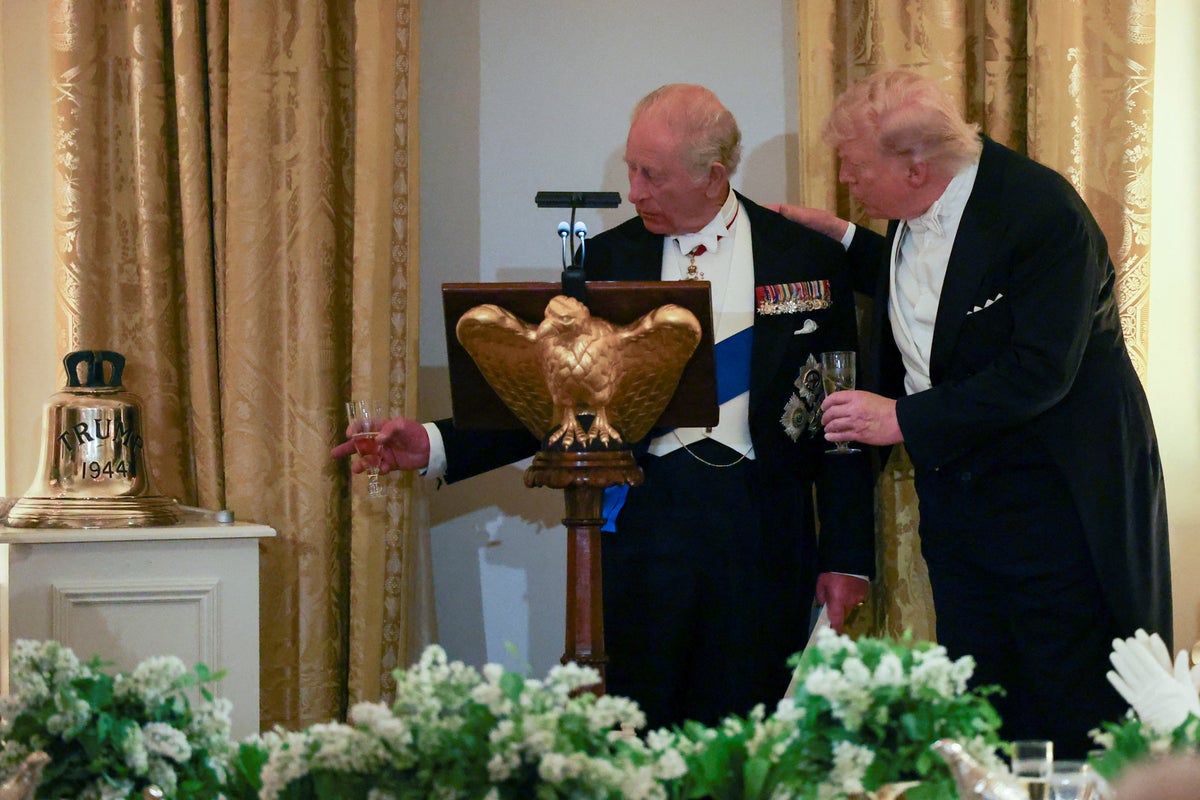
The polished mahogany tables of the White House State Dining Room recently played host to a display of soft power that hasn't been seen in decades. While cameras focused on the flash of a silver-encased gift from King Charles III to President Donald Trump, the real story wasn't the craftsmanship of the object, but the calculated desperation of the diplomacy. This meeting serves as the definitive signal that the "special relationship" has shifted from a historical sentiment into a hard-currency transaction. Britain, still navigating the choppy waters of its post-EU identity, is no longer just an ally; it is a suitor.
To understand the weight of this exchange, one must look past the dinner jackets and the polite laughter. The gift—a historically significant, bespoke piece of British craftsmanship—was not merely a token of friendship. It was a diplomatic anchor. In the world of high-stakes geopolitics, these objects function as physical manifestations of intent. By presenting a gift that honors shared history, the Monarchy is attempting to bind a transactional American administration to a traditionalist British agenda. You might also find this similar coverage useful: Diplomatic Signaling and the Metrics of Sovereign Parity.
The Strategy of the Gilded Handshake
Diplomacy at this level is rarely about the individuals in the room. It is about the machinery of state behind them. For King Charles, the visit represents the first major test of his "Diplomat King" persona. Unlike his mother, who maintained a shroud of legendary neutrality, Charles is operating in an era where the United Kingdom needs to secure bilateral trade wins to offset European losses.
The choice of gift was a masterful stroke of psychological branding. It tapped into the American President’s well-known affinity for legacy and gold-leaf prestige. By elevating the President to the status of a "historic partner" through the medium of royal ceremony, the British delegation is betting that ego will drive policy. They are trading in the currency of status because they currently lack the leverage of a massive domestic market or a unified continental bloc. As extensively documented in detailed coverage by The Washington Post, the results are significant.
Security Ties and the Intelligence Trade
While the toasts focused on shared values, the quiet conversations in the corridors of the West Wing were likely centered on the Five Eyes intelligence-sharing agreement. This is the bedrock of the UK-US bond. It is the one area where Britain remains an indispensable partner to Washington. The UK’s GCHQ and the US National Security Agency (NSA) are so deeply entwined that untangling them would be a nightmare for global stability.
However, even this pillar is under pressure. The current administration has frequently questioned the value of traditional alliances. To counter this, the King’s visit was designed to remind the American executive branch that the UK is the only partner willing to follow the US into virtually any theater of conflict or technological standoff. The "shiny gift" was the bait; the hook is a promise of total alignment on defense and intelligence, even when that alignment isolates London from its neighbors in Paris and Berlin.
Economic Realities and the Trade Deal Ghost
The elephant in the room remains the elusive Free Trade Agreement. British officials have been chasing this prize since the 2016 referendum, yet it remains just out of reach. The White House dinner provided the optics of a deal, but none of the substance.
American negotiators are notoriously shark-like. They want access to the UK’s National Health Service (NHS) for American pharmaceutical companies and a lowering of British agricultural standards to allow for US food imports. These are political landmines for any British government. The King cannot negotiate trade—that is the job of the Prime Minister—but he can create the "mood music" that makes a Prime Minister’s job easier.
By charming the President, the King is effectively acting as a high-level lobbyist for the British state. It is a strange role for a monarch, yet in the current global climate, it is perhaps the most useful one he can play. The risk is that if the charm fails to yield a signed document, the Monarchy appears diminished, having spent its social capital for no tangible return.
The Cultural Bridge and the Populist Wave
There is a fascinating irony in a hereditary monarch bonding with a leader who rose to power on a populist, anti-elite platform. Yet, both figures represent a rejection of the late-20th-century globalist consensus. King Charles’s long-standing focus on traditional architecture, local farming, and national identity mirrors the "America First" rhetoric, albeit with a more refined vocabulary.
This shared skepticism of "faceless" international institutions provides a bridge. When they joke about their "special relationship," they are signaling a move toward a world governed by personal rapport between strong leaders rather than by the rigid rules of multilateral treaties. This is a dangerous game. Alliances built on the personal chemistry of two men are inherently fragile; they can evaporate with a single tweet or a change in polling data.
The Cost of the Gift
We must ask what the British public is paying for this rapprochement. Aligning too closely with Washington often means distancing the UK from European security initiatives. It also means potentially being dragged into trade wars with China that London might prefer to avoid.
The gift presented at the White House was expensive, but the true cost lies in the concessions that follow. If the UK is forced to choose between the American market and European stability, the "special relationship" becomes a gilded cage.
Observers noted the President’s visible satisfaction with the royal attention. It was a validation of his standing on the world stage. For the King, the satisfaction was likely more pragmatic. He has seen presidents come and go, but the survival of the British interest requires a constant, often humbling, pursuit of the world’s largest economy.
Breaking the Protocol
The dinner also marked a departure from the stiff, formal interactions of the past. The "sharing of jokes" reported by those in the room suggests a deliberate attempt to humanize the Monarchy for an American audience. This isn't just about the two men at the table; it’s about the millions of American voters who still view the British Crown with a mixture of fascination and skepticism.
If the UK can maintain its status as America’s "cool, older brother" in the eyes of the US public, it retains a level of soft power that no other mid-sized nation can claim. This soft power is what allows a country with a shrinking military and a struggling economy to still sit at the top table of global affairs.
The Intelligence Imperative
Beyond the trade and the optics, the most significant "gift" Britain offers is its geographical and technological position. The UK serves as a massive listening post for the North Atlantic. Its investments in undersea cable security and satellite tracking are vital to American interests in the Arctic and Eastern Europe.
When the King shares a laugh with the President, he is also representing the thousands of intelligence officers and military personnel who work in the shadows to keep the Atlantic alliance functional. The "shiny gift" is a distraction for the public; the real exchange is the continuation of a secret, silent partnership that governs the flow of data across the globe.
The Fragility of the Bond
Nothing is guaranteed in the new era of transactional diplomacy. The "special relationship" is a phrase that British politicians love more than their American counterparts. For Washington, the UK is a useful tool, but rarely a priority. The King’s visit was an attempt to change that hierarchy, to move the UK from a "tool" to a "partner."
Success will not be measured by the beauty of the silver gift or the warmth of the toasts. It will be measured in the fine print of upcoming defense contracts and the removal of steel tariffs. If those don't follow, the White House dinner will be remembered as nothing more than an expensive costume party.
The British Monarchy has survived for a millennium by being remarkably adaptable. It survived the loss of empire by reinventing itself as the head of the Commonwealth. Now, it is reinventing itself again as the ultimate diplomatic concierge for a post-Brexit Britain.
The strategy is clear: use the ancient prestige of the throne to buy relevance in a world that is increasingly indifferent to history. It is a high-stakes gamble that requires the King to be both a symbol of the past and a salesman for the future. As the dinner ended and the guests departed, the silver gift remained on display—a reminder that in the world of the powerful, even the most beautiful objects are just tools for a deeper, more demanding game of survival.
The Atlantic remains wide, and the bridge between London and Washington is currently built more on hope and heritage than on modern economic parity. The King has done his part, playing the role of the gracious visitor to perfection. Now, the heavy lifting falls to the bureaucrats and the ministers who must turn that royal goodwill into something the British people can actually use. Without a hard-won trade deal or a concrete security guarantee, the "shiny gift" is just another relic in a museum of missed opportunities.
The real work happens when the cameras are turned off and the jokes end.



