The Grocery Bill That Tells the Story
Maria checks the receipt twice. She stands under the harsh, humming fluorescent lights of her neighborhood market, the paper thin and trembling slightly in her fingers. Twelve dollars for a carton of eggs. Four dollars more for milk than she budgeted just a month ago. Nothing in her cart has changed. The brand of bread is the same. The modest cut of chicken is the same. Yet the total climbs, an invisible tax creeping onto every household table, silently rewriting the monthly arithmetic of working families.
We talk about inflation as a weather pattern. Economists on television speak of stubborn metrics and sticky indices, projecting clean, sterile charts across our screens as if numbers exist in a vacuum. But inflation is not a line on a graph. It is the sudden tightening in a parent's chest at the checkout counter. It is the calculus of deciding which utility bill can be delayed so the prescription medicine can be paid for in full.
Right now, that financial pressure is being forged in two distinct fires: a tense, volatile standoff in the Middle East involving Iran, and the grinding, persistent machinery of United States trade disputes. These are distant headlines to many, flashing across monitors in airport terminals or murmuring from kitchen radios. But the shockwaves are immediate, physical, and relentless.
Consider what happens when geopolitical friction disrupts the flow of crude oil through vital maritime shipping lanes. Every cargo ship carrying goods across the globe burns fuel. Every transport truck idling on a congested interstate highway burns fuel. When the price of oil spikes because tankers detour or face peril near the Strait of Hormuz, the cost of motion itself skyrockets. Shipping a container of steel, electronics, or fresh produce from a port in Asia to a dock in Los Angeles suddenly demands a heavier ransom.
Prices do not wait for treaties to be signed. They react instantly to the shadow of conflict.
At the same time, ongoing trade tariffs between the United States and major economic partners act as a tollbooth on the highway of commerce. When a government slaps a heavy duty on imported raw materials like aluminum or microchips, manufacturers face a stark choice. They can absorb the penalty and watch their profit margins evaporate, or they can pass the cost down the line. They always pass it down the line. By the time that imported steel is shaped into a refrigerator component, or that imported circuit board is wired into a dishwasher, its price has doubled in ideological friction.
The Anatomy of a Stubborn Metric
To understand why a key inflation gauge remains elevated, we have to look past the macroeconomics and examine the human chain of reaction.
Imagine a fictional baker named Arthur, operating a small bakery in Ohio. Arthur does not read financial policy papers over his morning coffee. He reads invoices. Last year, the flour milled from imported wheat cost a predictable amount. The commercial ovens, built with specialized overseas parts, ran efficiently. Today, those replacement parts are choked by trade restrictions, carrying a surcharge that takes weeks to clear customs. The flour itself costs more because the tractor that harvested it ran on diesel priced at multi-year highs, pushed upward by energy fears tied to the Iranian conflict.
Arthur faces a breaking point. He can raise the price of his sourdough loaf from six dollars to eight, or he can close his doors. When he raises the price, he contributes to the very consumer price index that economists track with furrowed brows. He is not greedy. He is simply surviving. Multiply Arthur by millions of small business owners, logistics managers, and freight operators across the country, and you begin to see the massive, compounding engine of modern inflation.
Central banks respond with a blunt instrument: interest rates. They raise the cost of borrowing money, hoping to cool the economy down, to stomp on the accelerator until the engine sputters and stops burning hot. But higher interest rates cannot negotiate a trade treaty. They cannot clear a blocked shipping lane or calm the nerves of energy traders watching missile tests in the Persian Gulf.
Instead, high interest rates hit people like Maria and Arthur. They make buying a modest starter home impossible. They make expanding a small local business a reckless gamble. They inflict pain on Main Street while the underlying causes—trade wars and geopolitical flashpoints—rage on, immune to domestic monetary policy.
Living in the Crossfire
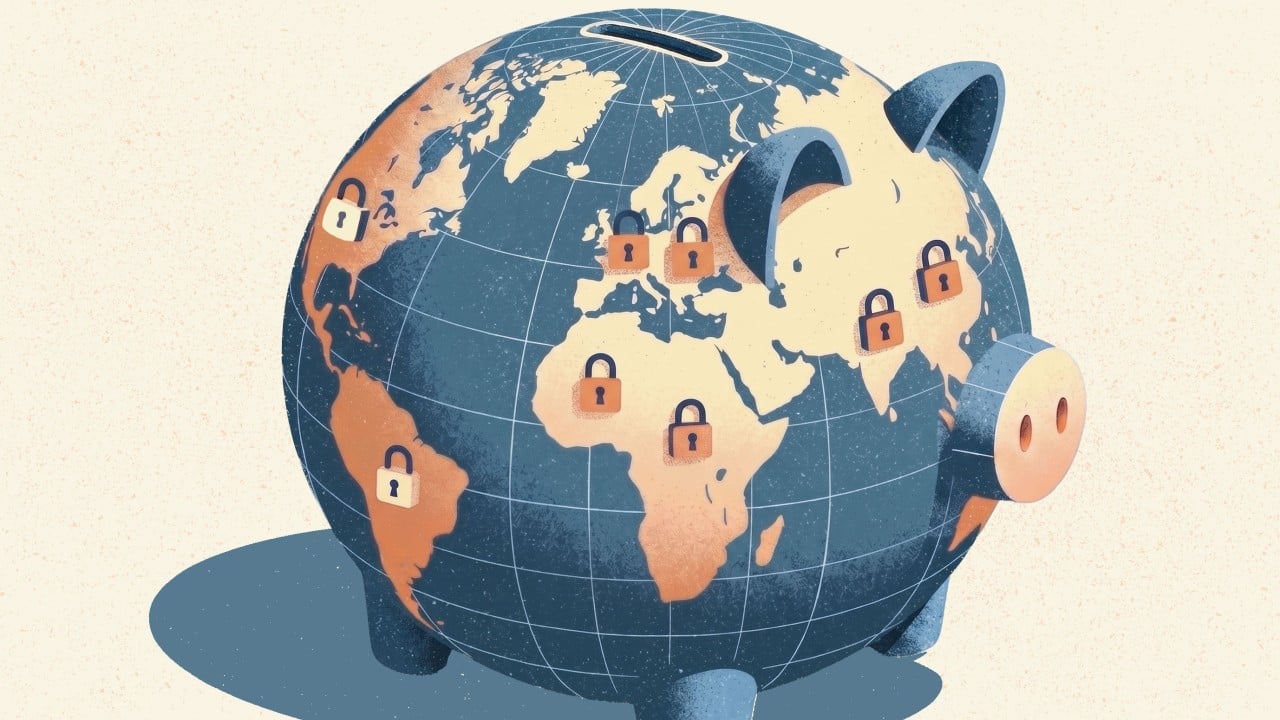
There is a strange vulnerability that comes with living through an era of economic friction. We are hyper-connected yet profoundly fragile. A disturbance thousands of miles away, measured in military posturing or retaliatory tariffs, translates directly into the price of a gallon of gasoline and a bag of coffee beans.
We are told that global trade makes us rich. And it does, historically lowering the cost of living and lifting millions out of poverty by connecting supply with demand across oceans. But the reverse is also true. When those connections fray, when political leaders use trade policy as a weapon and regional conflicts threaten the arteries of global shipping, the decoupling is violent and expensive.
We feel the cost in our bones. It is the quiet anxiety of opening a monthly credit card statement. It is the postponement of a long-awaited family vacation. It is the creeping realization that the baseline of security we thought we built is resting on a very shaky foundation of international cooperation.
The numbers in the latest economic reports will eventually shift. Bureaucrats will adjust their models, central bankers will debate percentage points, and analysts will publish post-mortems on why inflation proved so difficult to shake. But the real story is not written in government press releases. It is written in the quiet choices made in grocery aisles every single day, where ordinary people shoulder the invisible weight of distant wars and trade disputes, paying the bill for a world at odds with itself.