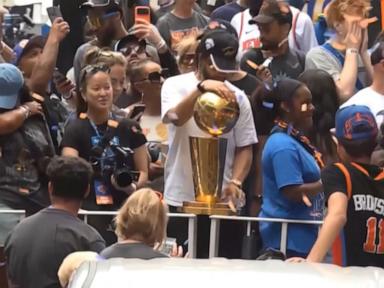
A standard highlight reel cannot capture the heavy, suffocating scent of stale beer, wet asphalt, and five decades of accumulated desperation. When the confetti guns finally blasted millions of white and orange paper fragments into the grey sky above Broadway, it did not feel like a simple sporting celebration. It felt like an exorcism. The media spent the morning cataloging superficial milestones, pointing lenses at a grinning Jalen Brunson holding the Larry O'Brien Trophy aloft or capturing footage of Spike Lee weeping on a flatbed float. Those are the easy images. They are the digestible pieces of content designed for rapid online consumption, scrubbed clean of the broader, messier truth of what it took to bring an NBA championship back to Manhattan for the first time since 1973.
To understand the sea of humanity that gridlocked Lower Manhattan from Battery Park up to City Hall, one has to look past the superficial joy of a ticker-tape parade. This franchise spent the better part of the twenty-first century operating as the premier laughingstock of professional sports. A toxic mixture of executive incompetence, impatient ownership, and short-sighted roster building turned Madison Square Garden into a multi-billion-dollar monument to mediocrity. The parade on June 18 was not just a celebration of a five-game series victory over the San Antonio Spurs. It was the culmination of a brutal, calculating, and often unpopular institutional overhaul that completely redefined how this city views its most beloved team.
The Quiet Architecture of an Empire
For years, the conventional wisdom in the NBA dictated that New York could only win by hunting superstars. The prevailing strategy involved clearing salary cap space, praying for a savior in free agency, and watching those plans blow up when top-tier talent chose to sign anywhere else. James Dolan's front office chased short-term headlines while burning through draft assets like kindling. The turning point did not happen on a basketball court. It occurred in the quiet backrooms of Creative Artists Agency when Leon Rose walked away from his lucrative career as a power agent to assume control of the Knicks basketball operations.
Rose did not hold introductory press conferences to promise championships. He did something far more radical for this specific franchise by remaining completely silent. He insulated the front office from the traditional media circus, built a staff composed of sharp talent evaluators, and began executing a blueprint rooted in incremental progression rather than immediate gratification. The trade for Karl-Anthony Towns or the signing of Brunson were not desperate gambles. They were calculated strikes enabled by years of meticulous asset accumulation.
The roster that eventually brought down Victor Wembanyama and the Spurs was built on the back of contracts that initially drew widespread skepticism from national analysts. Critics labeled Brunson's original four-year deal as an overpay for a secondary guard. They questioned whether a coach like Tom Thibodeau, notorious for his demanding style and heavy player minutes, could sustain a locker room without causing a physical collapse before the postseason. The reality proved to be precisely the opposite. Thibodeau's uncompromising culture became the foundational floor of the organization, weeding out players who preferred the lifestyle of New York over the labor required to win here.
The Financial Fallout of Long-Awaited Success
While fans danced on top of city buses and transit workers cleared tons of paper from the streets, the economic reality of this championship began to settle over the fan base. Winning in New York is the most expensive proposition in modern sports. Ticket prices at Madison Square Garden during the Finals reached astronomical levels that effectively priced out the working-class fans who carried the team's spirit through its darkest eras. A seat in the upper nosebleeds routinely commanded thousands of dollars on secondary markets, transforming the arena into an exclusive playground for Wall Street executives and international celebrities.
This commercial stratification is the unspoken tax of a New York title. The corporate sponsors who flooded the parade route with branded floats are already calculating the increased premium of being associated with a winner. Roster maintenance under the current collective bargaining agreement means the Knicks will face severe luxury tax penalties to keep this core together. The front office managed the salary cap expertly to navigate the first and second tax aprons, but the financial bill is coming due.
Fan loyalty is a commodity that the Madison Square Garden Company has successfully monetized for fifty-three years without providing a championship return. Now that they have delivered the ultimate prize, the cost of entry will rise even higher. Season ticket holders are already facing steep price hikes for the upcoming season, a harsh reminder that the emotional redemption celebrated in the Canyon of Heroes carries a steep material cost. The romantic narrative of the gritty, lunch-pail Knicks conflicts sharply with the reality of an empire that generates historic revenues by catering to the ultra-wealthy.
The Post-Drought Roster Dilemma
The celebration has a shelf life. Inside the front office, the euphoria of the parade was likely muted by the cold reality of the NBA calendar, which waits for no one. The draft and free agency are rapidly approaching, and the luxury of standing still does not exist in the modern Eastern Conference. Competitors like Boston, Philadelphia, and Milwaukee are already retooling their rosters to exploit whatever weaknesses they uncovered during New York's postseason run.
The primary challenge facing the front office is balancing the emotional desire to retain every piece of this championship roster against the analytical necessity of continuous improvement. Role players who elevated their value during the playoffs will demand significant raises that the team may not be able to afford under the strict salary constraints of the current league rules. Hard choices must be made regarding players who became folk heroes over the last two months.
Professional sports leagues are designed to enforce parity, punishing champions by making it increasingly difficult to sustain a winning culture over multiple seasons. The Knicks won this title by exploiting a specific window of health, chemistry, and depth. Maintaining that advantage requires an ongoing ruthlessness that runs counter to the sentimental atmosphere surrounding City Hall during the trophy presentation.
The Transformation of an Identity
For decades, the Knicks identity was defined by what they were not. They were not the 1990s Bulls who stood in their way, they were not the star-studded super-teams of Miami, and they were not a competent organization. That permanent underdog status, even while playing in the world's most famous arena, created a unique bond between the city and the team. It was a shared trauma that united generations of fans who could recount every draft bust, every blown lead, and every broken promise from Isiah Thomas to Phil Jackson.
That identity died the moment the final buzzer sounded in Game 5. The Knicks are no longer the tragic heroes of the league or the lovable losers whose failures provide endless content for talk radio. They are the standard. This shift in perception changes the entire dynamic between the franchise and its environment. Expectations will no longer be satisfied by a hard-fought second-round exit or a competitive series against a superior opponent. From this point forward, any season that does not end with confetti in Lower Manhattan will be viewed through the lens of disappointment.
The players who rode through the streets on Thursday are now permanent icons, their places in New York sports history secured alongside Walt Frazier and Willis Reed. Yet, the very city that elevated them will turn on them with equal ferocity if they show any signs of complacency in October. It is a volatile, demanding ecosystem that swallows teams whole if they lack the internal fortitude to handle the pressure of success. This specific roster proved it possessed that fortitude over eighty-two regular-season games and a grueling playoff run, but history shows that defending a title is a far more psychologically taxing endeavor than chasing one.
The parade route has been cleared, the traffic has returned to its normal, chaotic patterns, and the orange and blue banners fluttering from Manhattan storefronts will eventually fade under the summer sun. What remains is a franchise that finally aligned its massive structural advantages with an intelligent, disciplined operational strategy. The long winter of New York basketball is officially over, but the machinery that built this championship must keep running without a pause, because the city never stops watching, and it never forgets the cost of falling short.