The ink on the check was never dry. It only ever smelled of old iron, cold coffee, and the specific brand of exhaustion that settles over parliamentary buildings at four in the morning.
Ask anyone in Kyiv what American aid sounds like, and they will not tell you about the dry thunder of artillery or the dry rustle of cargo manifests. They will tell you about the hum of a generator in a basement kitchen, where a woman named Olena heats soup over a camping stove while her phone screen glows with the latest update from the border. To her, the billions tallied in Washington are not numbers on a spreadsheet or political leverage points in an upcoming electoral cycle. They are the steel reinforcement in a concrete lintel. They are the patched roof over the school where her grandson still tries to learn fractions between air raid sirens.
Now, a new ledger is being opened.
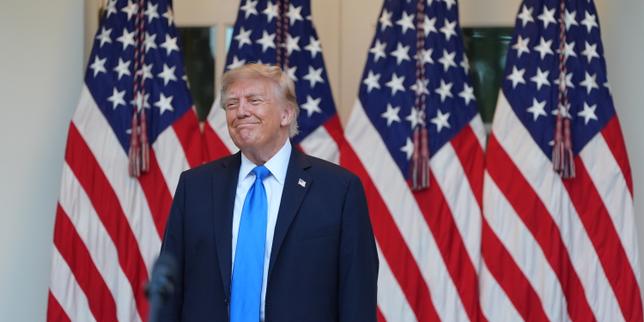
Donald Trump has made his demand clear, shifting the grammar of the alliance from an investment in shared security to a transaction requiring a receipt. The core proposition is stark: the billions spent defending Ukraine should not be viewed as a grant, but as a loan. A debt to be repaid.
Consider what happens next in a crowded apartment in Lviv or a cramped office on Bankova Street.
When the news flickers across the television screen, the immediate reaction is not outrage. It is a hollow, familiar silence. Ukrainians are intimately familiar with debts. They know the price of heating their homes, the cost of rebuilding shattered sub-stations, and the heavy toll paid in blood every single day. But the idea that survival itself could be retroactively billed creates a chilling new category of geometry in international relations.
History is littered with the bones of alliances fractured by the accounting department.
Think back to the Lend-Lease agreements of the Second World War. When Franklin Roosevelt pushed the machinery of American manufacturing into gear to supply Great Britain and the Soviet Union, the political rhetoric was framed around the defense of democracy. Yet, the material reality came with hidden clauses and post-war burdens that took generations to settle. Britain finished its final war loan repayments to the United States and Canada in December 2006. For decades, generations of British taxpayers funded the ghosts of battles fought before they were born.
Trump wants to apply that same historical template to a modern conflict, reframing American support through the lens of a disappointed investor demanding a return on capital. It is a populist appeal that resonates with voters weary of endless foreign entanglements. Why should the American taxpayer, struggling with inflation at home, foot the bill for a European war without an expiration date? It is a question that sounds pragmatic on a debate stage in Iowa.
On the ground in Europe, however, the math looks entirely different.
European capitals absorbed the shockwaves of the announcement with a mixture of diplomatic alarm and quiet panic. For months, European leaders have tried to accelerate their own defense production, scrambling to bridge the gap left by political gridlock in Washington. To suddenly face the prospect of assuming not only future defense costs, but also retroactively backstopping billions in past American military assistance, threatens to break the economic spine of the European Union.
Imagine a hypothetical finance minister in Berlin staring at a spreadsheet late at night. The columns do not balance. The defense spending targets required by NATO already strain national budgets, forcing difficult compromises between healthcare, pension systems, and green transitions. Adding a multi-billion-dollar repayment clause for past American munitions would mean dismantling domestic social safety nets to pay for a war fought on the doorstep of the European continent.
This is where the narrative of transactional foreign policy collides with messy reality.
Geopolitics is not a real estate deal where a defaulting tenant can be evicted or slapped with a lien. When a nation fighting for its sovereign existence is told that its lifeline is actually a credit card with escalating interest rates, the psychological shift is profound. It breeds resentment where solidarity once stood. It signals to Moscow that the Western wall is not made of granite, but of shifting sand, vulnerable to the political winds of quadrennial elections.
We must confront the uncomfortable truth behind this pivot. The United States has never truly acted out of pure, unblemished altruism. Every superpower in history ties its foreign aid to its domestic industrial base, its geopolitical positioning, and its long-term strategic dominance. The weapons sent to Kyiv were largely manufactured in American factories, creating American jobs and modernizing American stockpiles. To demand reimbursement for assets that served as a direct deterrent against an aggressive nuclear power is to rewrite the fundamental bargain of the post-war global order.
Yet, dismissing the demand as mere campaign rhetoric misses the deeper shift in the American psyche.
The era of uncritical internationalism is over. The American public is tired. The endless wars in the Middle East left a deep scar on the national consciousness, creating an allergic reaction to any foreign commitment that lacks a clear exit strategy and a neat profit-and-loss statement. Politicians ignore that exhaustion at their peril. Trump has tapped directly into this vein of populist frustration, transforming foreign policy into a domestic grievance narrative.
What happens if the ledger is actually enforced?
Ukraine’s economy has been decimated. Its GDP plummeted, its infrastructure sustained hundreds of billions of dollars in direct damage, and millions of its citizens were displaced across the globe. Expecting a nation emerging from total war to service a multi-billion-dollar sovereign debt to Washington is akin to demanding payment from a survivor pulled from a burning house for the cost of the water used to put out the flames.
The absurdity of the demand highlights the deepening crisis of the Western alliance. It exposes the fragility of multilateral commitments when domestic political imperatives take precedence over long-term strategic survival. If the West treats its own defense as a transactional ledger, the ultimate beneficiary will not be the American taxpayer or the European voter, but those who sit in Moscow and Beijing, watching the alliance fracture from within.
Olena does not care about the geopolitical theories or the electoral calculus in Washington. She only knows that the winter is coming again, the wind is whistling through the broken glass of her apartment building, and the ledger of survival is already heavier than any human being should have to bear.

:max_bytes(150000):strip_icc()/moscow-kremlin-and-st-basil-cathedral-at-dusk-158200423-5a64f4594e46ba00377331fb.jpg)

