The ink on a multi-million-dollar cancellation smells faintly of cold salt water and old money.
Money changes hands in quiet rooms. Not rooms with flickering fluorescent lights and stressed interns rushing through cold coffee, but spaces where heavy oak absorbs the sound of shifting fortunes. Outside, the tide rises against concrete bulwarks. Inside, calculations are made that balance megawatts against neighborhood property values, pitting distant green ambitions against very local, very exclusive oceanfront views.
To understand what happened when nine hundred million dollars vanished into the administrative ether to halt an offshore wind farm, you have to look past the spreadsheets. You have to look at the geography of influence.
Power has an address. Sometimes, that address is a sprawling estate in South Florida, where palm trees sway against an Atlantic backdrop and the daily conversation drifts between golf handicaps and market futures. When a massive renewable energy project threatens to alter the horizon visible from such a terrace, the friction between grand national policy and hyper-localized comfort becomes an irresistible force meeting a remarkably immovable object.
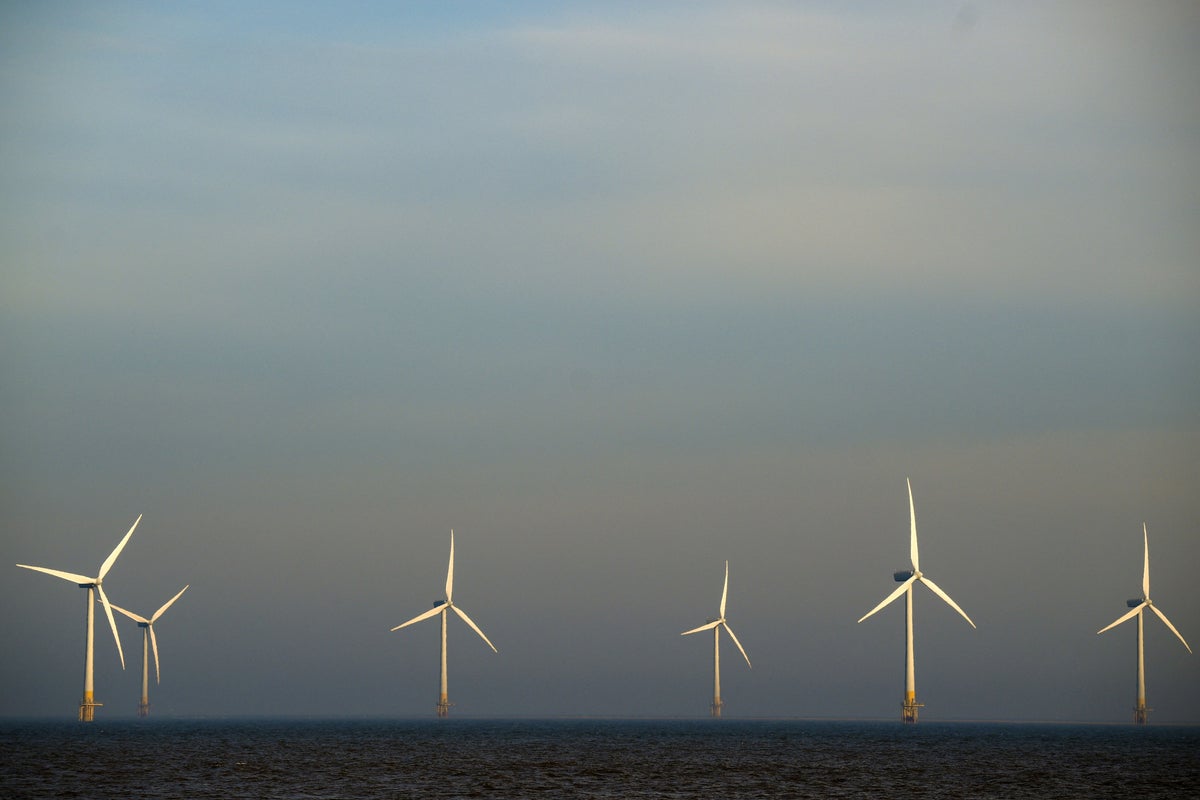
The project promised clean energy, steel towers spinning against the gray winter sky, and a small step toward a different kind of grid. It also promised industrialization just miles away from the gilded gates of Mar-a-Lago.
Plans collided. Permits stalled. Then, the political winds shifted, carrying with them a change in federal posture. Contracts that took years to negotiate began to fray at the edges. Cancellation fees, framed in bureaucratic prose as termination settlements, turned into monumental payouts. Nine hundred million dollars. Let that number settle in the chest for a moment. It is enough money to fund school districts, rebuild crumbling bridges, or launch dozens of smaller community solar grids. Instead, it became a golden parachute for a dead enterprise.
And where did a substantial portion of that capital ultimately drift?
Reports surfaced, tracing the wire transfers and corporate filings like detectives following a trail of breadcrumbs in a snowstorm. The destination wasn't a nameless conglomerate. It was a firm tied directly to a familiar face from the Florida coastline, a neighbor who shared the same sun-drenched zip code and club memberships.
Coincidence is a comfortable word. It lets us sleep at night. It suggests that random forces simply bounced off one another in the dark, producing an outcome that just happened to favor the people sitting at the right tables. But history rarely operates on pure coincidence. Power recognizes power. Wealth gravitates toward wealth like iron filings to a magnet.
Consider how a project of this magnitude dies. It does not vanish in a sudden explosion. It starves slowly. Permits linger in bureaucratic limbo. Environmental impact studies are challenged by well-funded legal teams. Public hearings turn into shouting matches where facts are treated as optional accessories. By the time the final termination agreement is signed, the public is exhausted, the investors are ready to cut their losses, and the architects of the cancellation are already drafting the press releases that frame a massive payout as a victory for fiscal responsibility.
Responsibility. What a flexible word.
When a green energy project is scrapped, we are told it is about protecting the ocean floor, saving local fishing industries, or sparing ratepayers from inflated utility bills. Every single one of those arguments carries a grain of truth. That is what makes them dangerous. They take legitimate local concerns and wrap them around a core of self-interest, producing a shield that is nearly impossible to pierce.
Imagine standing on the shoreline, watching the horizon remain unbroken. To the casual observer, nothing changed. The waves roll in. The seagulls cry. The sun dips below the water in a blaze of orange and purple. But beneath the surface, a quiet transfer of wealth has occurred, shifting massive public and private reserves into private hands as compensation for work that will never see the light of day.
We are told to look at the bottom line. We are given terms like termination liability, asset recovery, and structural realignment. These are linguistic smoke bombs designed to obscure the simple, visceral reality of the transaction. Money that was allocated to build the future was instead used to pay people not to build it, enriching well-connected insiders along the way.
The irony is thick enough to cut with a dull knife. The same political movement that champions deregulation and free-market capitalism deployed administrative muscle to dismantle a private energy venture, substituting market forces with political retribution. And in the process, a neighbor of the most famous estate in America found himself uniquely positioned to benefit from the wreckage.
This is how modern governance works. It is a theater where the stage directions are written by the highest bidders and the audience pays for the tickets through higher utility bills and missed opportunities for ecological transition.
We look for heroes in these stories, but we find only operators. We look for villains, but we find only systems functioning exactly as they were designed to function for those who own them. The rules are written by the architects of the maze, and they always know where the exit is.
The towers will not rise. The sea will remain unblemished by spinning blades. And somewhere down in Florida, under the shade of manicured palms, a glass clinks against another in a silent toast to the enduring art of the deal.