The rain in Newcastle does not fall so much as it settles, a gray, permanent humidity that coats the stone bridges and seeps through the wool of coats worn two years too long. Standing on the quayside, watching the iron-grey current of the Tyne roll toward the North Sea, you can feel the distance between the grand speeches of Westminster and the wet pavement under your boots. That distance is measured in miles, but more accurately, it is measured in pounds.
Right now, across the North East of England, the people elected to steer local futures are locked in a quiet, bitter standoff over something as mundane yet explosive as tax revenue. Income tax. Two words that sound like dry accounting until you translate them into what they actually buy: a functioning bus route for a nurse working a night shift, a patched roof on a community center, a social worker answering a desperate phone call at midnight. Meanwhile, you can read similar developments here: Why Trade Friction Rarely Cancels a Superpower Summit.
Mayors are arguing. Accountants are sweating. And ordinary people are caught in the middle, wondering why regional devolution always sounds like a rescue boat until you realize it has no engine.
To understand this fight, you have to strip away the jargon of fiscal autonomy and look at how a city actually breathes. To understand the full picture, check out the excellent report by The Washington Post.
Imagine Sarah. She is thirty-four, a senior care coordinator managing a patch of South Tyneside that the economic forecasts usually forget to mention. Every morning, she wakes up before dawn, checks her phone for cancellations among her team of home-help nurses, and calculates whether her aging car will survive another trip up the bank. Sarah does not care about tax assignment models. She cares that her elderly residents are waiting three hours for an ambulance because the regional transit grid is choking on underfunding.
When the central government hands power downward—the much-vaunted devolution deals designed to give local leaders a voice—they often hand down a skeleton without the meat. They offer the theater of control without the financial levers required to make it real.
And that is where the fracture lines appear.
In a boardroom overlooking a rain-swept square, regional leaders are staring at ledgers that simply do not balance. Some argue for aggressive local taxation powers to fund urgent infrastructure and social care directly. Others warn that squeezing local taxpayers in a region already battered by historical inequality is a recipe for economic suicide. Both sides are entirely, painfully right.
This is the central paradox of modern regional governance. You cannot heal a wounded economy with plasters bought from the very pockets of the people bleeding.
Decentralization was supposed to fix this. For decades, the complaint from Newcastle, Sunderland, and Durham was simple: Whitehall knows nothing about the Tyne. Decisions made in London boardrooms treated northern industrial towns as footnotes, failing to grasp the specific textures of post-industrial decline and reinvention. The solution proposed was devolution. Let the North East govern the North East. Let local leaders decide where the money goes because they know where the hurt lives.
Yet, giving a region the keys to the house means very little if the pantry is empty.
Income tax revenue is the lifeblood of public service delivery. When regional mayors debate how—or even if—they should control or influence these revenues, they are wrestling with a terrifying math problem. Raise local taxes to pay for desperately needed social programs, and you risk driving away the very businesses and working families you are trying to attract. Keep taxes low to stimulate growth, and you watch local libraries close their doors, youth clubs turn kids away into the rain, and social care systems collapse under the weight of an aging population.
There is no clean answer. There is only trade-off piled upon trade-off.
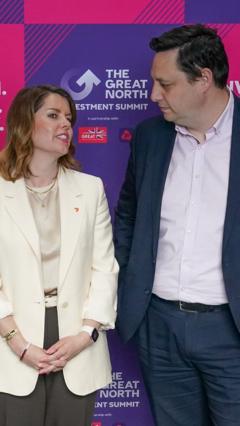
Consider what happens when politicians try to compromise. A watered-down agreement is reached. A fraction of revenue control is devolved, accompanied by strict conditions from the treasury that tie local hands behind their backs. The mayors hold a joint press conference, smiling tightly for the local news cameras, standing shoulder-to-shoulder against a painted backdrop of regional unity.
Then the cameras turn off. The mayors fly back to their respective councils, where the real calculations begin. One leader looks at a deficit in public transport funding and demands bolder fiscal independence. Another looks at families struggling with the cost-of-living crisis and digs in their heels against any talk of increased tax burdens.
The disagreement is not petty politics. It is a fundamental philosophical collision about who carries the burden of recovery.
History hangs heavy over these debates. Walk through the old shipyards or the abandoned mining villages tucked away in the Durham dales, and you are walking through ghosts. The scars of the nineteen-eighties did not vanish when the factories closed; they mutated. They settled into generational health disparities, lower life expectancies, and an infrastructure deficit that swallows modern investment whole.
When a mayor hesitates to support a new regional tax initiative, they are often remembering the grandfathers who lost their livelihoods when industries collapsed overnight. They know the margin for error in the North East is razor-thin. A single misstep in fiscal policy can push a struggling high street past the point of no return.
And yet, doing nothing is its own form of slow decay.
The current disagreement exposes the fundamental flaw in how regional power is engineered in the United Kingdom. True autonomy cannot exist without financial sovereignty. As long as regional leaders are forced to cap-in-hand to central government for emergency bailouts while arguing among themselves over scraps, true economic democracy remains a mirage.
We talk about mayors disagreeing over tax revenue as if it were a local news footnote, a procedural spat over percentages and policy papers. It is not. It is a desperate struggle over dignity. It is the sound of leaders trying to divide a shrinking pie while the people they represent wait in the dark, watching the rain run down the windowpane, hoping that tomorrow someone figures out how to keep the lights on.
The storm over the Tyne does not clear easily. The arguments in the council chambers will continue, sharp and unresolved, long after this week's headlines fade.
Out on the quayside, the tide turns. The heavy grey water pushes back against the stone, relentless, indifferent to the blueprints drawn in offices miles away, waiting for someone to finally build something that lasts.