The iron cylinder sits in the corner of the kitchen like a silent, red sentinel. For most, it is an afterthought—a heavy piece of utility that ensures the morning tea is hot and the evening dal is simmered. But when that cylinder runs dry and the replacement doesn’t arrive, the silence in the kitchen becomes deafening. It is a quiet crisis that starts with a clicked igniter and ends, sometimes, with blood on the pavement.
In a small district where the dust never quite settles, a journalist named Ashish (a name changed to protect a man now healing from more than just bruises) noticed the silence. It wasn't just one house. It was a neighborhood. Then a block. The blue flame, the symbol of modern Indian domesticity, was flickering out. People were waiting weeks for refills that should have taken days. The official ledgers said the supply was flowing. The empty stoves said otherwise.
Ashish didn't sit behind a desk to "analyze the data." He went to the godowns. He followed the trucks. He asked the questions that make comfortable men squirm. Why were the back doors of the supply depots swinging open at midnight? Where were the cylinders going if not to the registered kitchens of the poor?
The Anatomy of a Shortage
A shortage is rarely just a lack of resources. It is almost always a redirection of them. When Liquid Petroleum Gas (LPG) becomes scarce, it creates a shadow market. Black marketing isn't just a buzzword; it’s a predatory ecosystem. A cylinder meant for a subsidized household is diverted to a commercial hotel or a private factory for double the price. The profit is immediate. The cost, however, is deferred to the woman standing over a cold stove, wondering if she has to go back to the lung-blackening smoke of a wood fire.
Ashish found the leak. He found the point where the public good was being siphoned into private pockets. He did what a journalist is supposed to do: he pointed his camera at the truth.
But the truth has a habit of biting back.
The Street as a Courtroom
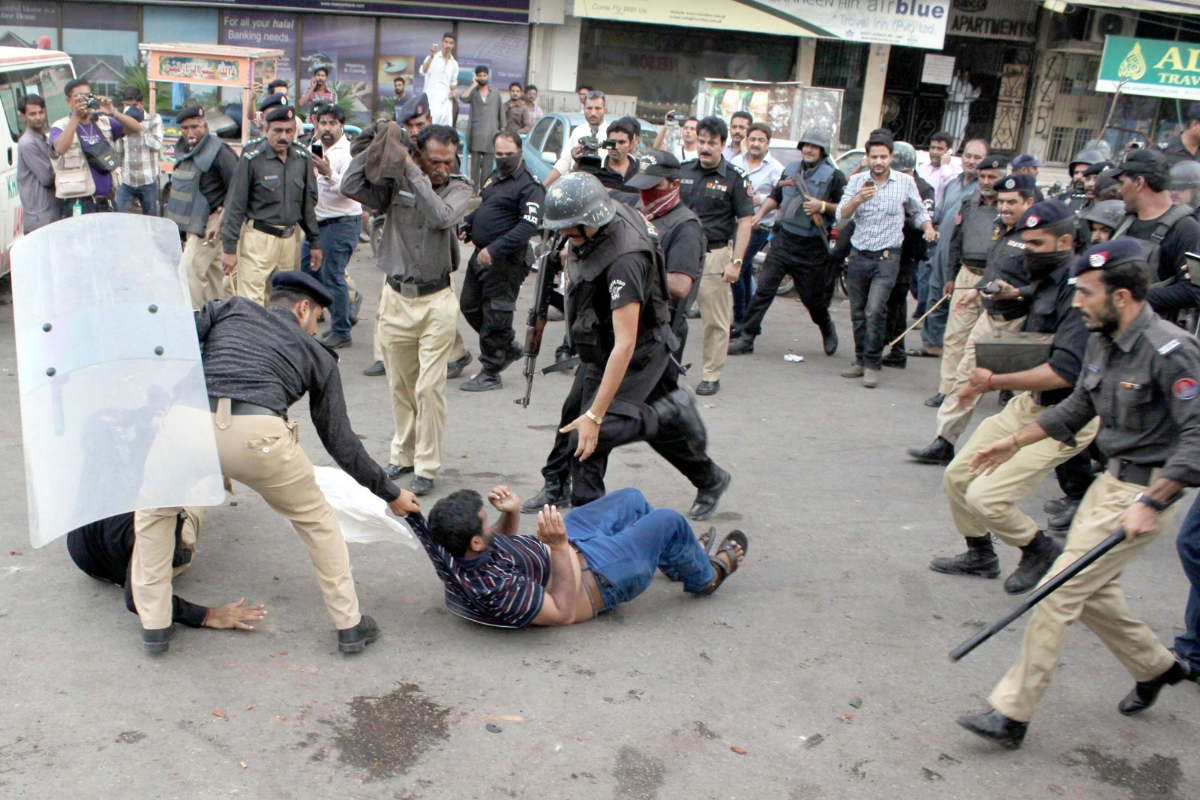
The confrontation didn't happen in a courtroom or a polished office. It happened on the hot asphalt of a public road. When the authorities arrived, they weren't there to take his statement or investigate the hoarding he had uncovered. They were there to silence the messenger.
The footage, shaky and visceral, tells a story that facts alone cannot convey. It shows a man—a citizen with a press ID and a sense of duty—being pursued. Not just pursued, but hunted. The uniforms, symbols of order and protection, became the instruments of a frantic, public assault. They ran him down. They used boots and batons to argue against his footage.
Pain is a powerful deterrent. A broken rib or a swollen eye is meant to be a reminder: Mind your own business. Let the cylinders disappear in peace.
Consider the psychological weight of that moment. When the people who are paid to uphold the law use that same power to protect a black-market racket, the social contract doesn't just bend. It snaps.
Why the Gas Matters
You might wonder why a story about cooking gas deserves such a violent climax. To understand that, you have to understand the stakes of the Indian kitchen.
For a family living on the edge of the middle class, the LPG cylinder is the thin line between dignity and desperation. Reverting to coal or wood isn't just an inconvenience. It is a health hazard. It is a regression. When a middleman steals a cylinder to sell it to a restaurant, he isn't just stealing fuel. He is stealing time from a mother who now has to scrub soot off the walls. He is stealing the health of children breathing in carbon monoxide.
The "LPG shortage" is a cold, clinical phrase. The reality is a hungry child and a father who has spent three days’ wages to buy a "black" cylinder because the official channel is "out of stock."
The Invisible Ledger
There is a logical deduction we must make here. If a journalist is beaten for reporting on a shortage, the shortage is not an accident. It is a business model.
In any supply chain, there are "leakage points." Usually, these are errors in logistics. But when those points are guarded by violence, they are no longer errors. They are intentional. The violence meted out to Ashish serves as a grim confirmation of his thesis: the scarcity was manufactured.
- Scarcity drives up the price.
- High prices create "emergency" demand.
- Emergency demand allows for the bypassing of standard regulations.
It is a cycle that feeds itself, greased by the silence of those who are too afraid to speak up. Ashish broke that silence. The response was an attempt to break him.
The Weight of the Camera
Being a journalist in the heartland isn't about glamorous press conferences. It is about the weight of the camera in your hand and the knowledge that it is both your shield and your target. Ashish knew the risks, yet he stood his ground.
Why? Because the story of a missing gas cylinder is actually the story of a missing democracy. If a citizen cannot ask why their basic necessities are being sold under the table, then the "freedom" we celebrate is merely a decorative garment.
The police who chased him down the street weren't just attacking a man. They were attacking the idea that a regular person has the right to look behind the curtain. They were protecting a system where the "quota" is a suggestion and the "black market" is the law.
The Echo in the Kitchen
The bruises will eventually fade. The video of the beating will be shared, liked, and eventually buried under a new cycle of news. But the fundamental question remains hanging in the air, as persistent as the smell of a gas leak.
Who owns the resources of the people?
When you turn your knob tomorrow morning and the blue flame leaps to life, remember that for someone else, that flame is a luxury they had to fight for. Remember that somewhere, a journalist is looking at a godown door, wondering if the truth is worth the weight of a baton.
The red cylinder in the corner is heavy. But the truth is heavier. It is a weight that Ashish chose to carry, even when it brought him to his knees on a dusty road. We often talk about the "price of gas," calculating it in rupees and liters. We rarely calculate it in the cost of a human rib, or the price of a man's courage to stand in the path of a charging uniform.
The kitchen is quiet again in Ashish’s town. But it is the quiet of a bated breath. The flame is still low, and the shadows in the godown are still moving. The struggle for the blue flame isn't over; it has just moved into the dark, waiting for the next person brave enough to strike a match.
Would you like me to look into the specific legal protections available to independent journalists reporting on corruption in these regions?