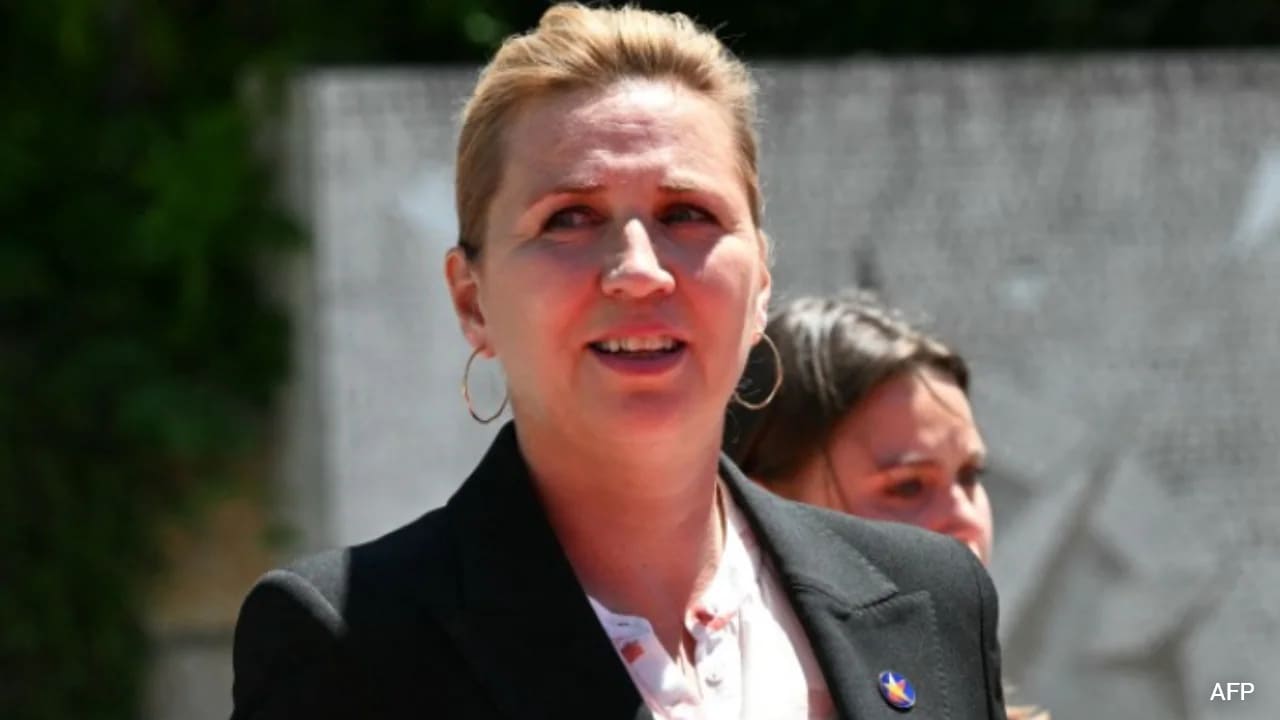
Glass reflects everything. It captures the tired sag beneath an eye after a sixteen-hour cabinet meeting, the faint lines etched around a mouth that has spent years defending state budgets and negotiating fragile international truces, and the stubborn asymmetry of a nose that has breathed the cold air of northern Europe since birth.
Most people never have to defend that reflection. If you enjoyed this post, you should read: this related article.
Imagine walking down a Copenhagen street on a crisp Tuesday morning. The air is sharp. The bicycle bells chime a familiar, chaotic rhythm. You are the Prime Minister of Denmark, Mette Frederiksen. Your mind is occupied by inflation metrics, green transition targets, and the quiet, crushing weight of leadership. Then, someone thrusts a plastic surgeon’s unprompted public critique into your hands.
Your nose is too prominent. For another look on this development, see the recent update from BBC.
It sounds absurd. It sounds like a relic from a grotesque historical parlor game where women’s bodies are public property, open for debate, scoring, and correction. Yet, it happened in broad daylight. A plastic surgeon took to a public platform to diagnose the sitting leader of a nation, offering unsolicited professional advice on how she might alter her facial geometry to better suit aesthetic norms.
We have normalized this. We grade bodies like cattle at a county fair.
Mette Frederiksen did not issue a memo on diplomatic tact. She did not hide behind a sanitized press secretary statement. She looked at the noise, looked at the mirror, and offered a sentence so radical in its simplicity that it felt like a splash of cold water across the European political landscape:
"I'm happy with my body."
The Architecture of Public Scrutiny
We live downstream from a culture that treats the human form as a beta version awaiting its next software patch. Every surface tells us we are unfinished.
Look closely at how public figures, particularly women in positions of extreme authority, are dissected. A male politician’s graying hair is worn as a badge of seasoned wisdom, a roadmap of battles fought and won. A female politician’s wrinkles are treated as a failure of maintenance, a national embarrassment, or an invitation for corrective intervention. When a surgeon publicly evaluates a leader's nose, the message sent to every teenager scrolling on a cracked smartphone in an Odense bedroom is deafening: No matter what you achieve, no matter how many nations you negotiate with, your primary currency is your compliance with visual standards.
It is exhausting.
I remember standing in front of a bathroom mirror during a particularly grueling season of life, picking apart my own reflection with the clinical coldness of an auditor. A crooked tooth. A scar that wouldn't fade. The way gravity begins to gently claim what was once taut and unyielding. We spend billions of dollars globally to wage war against our own biology, convinced that happiness sits just on the other side of a scalpel, a filler syringe, or a rigorous starvation diet.
Frederiksen’s response cuts through this industrial complex of insecurity. It is a masterclass in boundary setting.
Notice the cadence of her refusal. It was flat. Unapologetic. Devoid of the defensive over-explaining that society demands from anyone who rejects its beauty mandates. She didn't launch into a lengthy feminist treatise. She didn't cry. She simply stated an interior truth that belonged entirely to her: she was happy.
The Invisible Ledger
Why does a surgeon's opinion on a politician's nose make global headlines? Because it taps into an ancient, dark currency.
We trade in compliance. From the moment we are old enough to hold a magazine or tap a screen, we learn the exchange rate. Conformity buys safety, approval, and a quiet passage through public life. Non-conformity invites friction. When a woman with absolute executive power refuses to participate in this market—when she looks at a man offering to fix her face and essentially tells him that her face is not broken—the entire economic model wobbles.
Consider what happens next: the collective gasp of a culture addicted to self-improvement.
We are told that self-care is a revolutionary act. But true self-care is rarely luxurious. It doesn't look like jade rollers or expensive serums marketed by influencers under ring lights. Sometimes, true self-care looks like stubborn, unyielding neutrality toward your own physical vessel. It looks like deciding that your body is an instrument for walking through the world, hugging the people you love, and standing up to deliver hard truths—not a decorative centerpiece meant for public consumption.
Mette Frederiksen’s nose has carried her through campaign trails, tense diplomatic summits, and quiet moments of private grief. It is shaped by her ancestry, her genetics, and her lived history. To suggest it needs alteration is to suggest her history needs editing.
The Quiet Power of Enough
There is a profound, terrifying freedom in the word enough.
Most of our modern economy is built on convincing you that you are deficient. If you are deficient, you buy. If you buy, the wheel turns. The surgeon’s commentary was part of that great, churning wheel—an attempt to manufacture a deficiency where none existed, to turn a living, breathing human leader into an editable draft.
When Frederiksen reclaimed her physical narrative, she exposed the underlying absurdity of the critique. She reminded us that power is not derived from how closely your profile matches a renaissance painting or an Instagram filter. Power is found in the willingness to take up space exactly as you are built.
The mirror does not lie, but neither does it define your worth.
Somewhere in Copenhagen, the rain taps against office windows. Decisions are being weighed, treaties drafted, lives shaped by policy and pragmatism. And somewhere nearby, a mirror reflects a face that has chosen peace over perfection. No scalpel touched. No apology issued. Just a quiet, unyielding insistence on being real in a world desperate for plastic.