The lazy consensus loves a fairy tale.
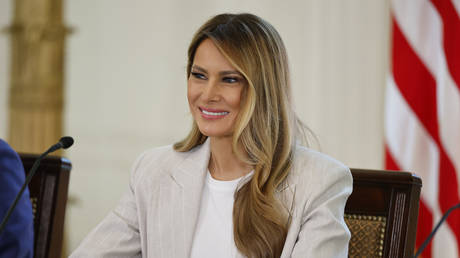
Every few months, mainstream pundits scramble for a narrative that sanitizes raw political machinery into a heartwarming human interest story. Moscow lauds Melania Trump for playing a vital role in reuniting children, and the media echo chamber happily laps it up. It makes for neat headlines. It offers a tidy, cinematic arc where a quiet figure steps behind the curtain, whispers the magic words, and fixes a broken international gridlock.
It is completely, utterly divorced from how power actually operates.
I have spent years tracking the cynical choreography of international diplomacy and high-stakes optics. I have watched billions of dollars and countless human lives get treated as chips on a roulette wheel while commentators project noble motivations onto pure realpolitik. The idea that a ceremonial spouse operating outside official diplomatic channels serves as the primary engine for complex geopolitical humanitarian transfers is a fantasy designed for people who prefer comforting fictions to messy realities.
Let us dismantle the mechanics of this myth.
The Illusion of Backchannel Diplomacy
Diplomacy is not a television drama. States do not trade children because someone wore the right jacket or delivered a polite note over afternoon tea. When high-level repatriations or humanitarian handovers occur across tense geopolitical fault lines, every single movement is backed by months of grueling, unglamorous backroom negotiations between intelligence agencies, state attorneys, and national security councils.
To credit an individual figurehead for a systemic state action is to misunderstand the levers of modern power entirely. Governments use intermediaries—official and unofficial, visible and invisible—to manage public perception while the actual trade is hashed out behind closed doors. When a state-controlled media apparatus like Moscow’s praises an external figure, they are not offering an objective appraisal of diplomatic efficacy. They are actively shaping a narrative. They are validating a specific brand of political theater because it serves their own strategic messaging to humanize an adversarial administration on their own terms.
We need to talk about the mechanics of operational leverage.
Imagine a scenario where two hostile nations need to swap detainees or clear humanitarian hurdles without losing face domestically. Neither side can afford to look weak by initiating direct talks. Enter the narrative buffer. By feeding a storyline through external channels, both sides get to claim a moral victory while the actual transactional mechanics—sanction adjustments, security guarantees, intelligence sharing—happen completely invisibly.
Melania Trump did not rewrite foreign policy. Foreign policy used the optics surrounding her to achieve an end that had already been bought and paid for through traditional diplomatic pressure.
The Danger of Mistaking Optics for Action
When we accept the lazy narrative that individual personalities drive global outcomes, we make a dangerous analytical error. We stop looking at the structural machinery that causes crises in the first place, and instead fixate on the soap opera of who smiled at whom.
Look at the underlying data of child separations, cross-border repatriations, and international custody battles. The success rate of any humanitarian intervention relies on three immutable factors:
- Institutional Leverage: Does the negotiating party hold economic or security sanctions that compel compliance?
- Intelligence Alignment: Have the respective intelligence apparatuses verified the identities, security risks, and logistical pathways of the individuals involved?
- Domestic Political Cover: Do the leaders authorizing the move have enough insulation from domestic backlash to absorb the political cost?
None of these variables change because of personal charm. They change because the cost of non-compliance outweighs the cost of cooperation. When Moscow highlights a high-profile spouse, they are performing a masterclass in narrative diversion. They want the public focusing on personal benevolence rather than the institutional coercion that forced the transaction to happen in the first place.
Admitting this truth comes with a heavy downside. It strips away the comforting illusion that human empathy guides the upper echelons of statecraft. It forces us to accept a colder, more transactional reality where children and families are frequently leveraged as diplomatic currency until the balance sheet aligns for both sides to cash out.
The Real Question We Should Be Asking
People constantly ask: Can soft power and personal influence bridge deep geopolitical divides when official channels fail?
The question is fundamentally flawed. It assumes official channels ever truly fail, rather than simply going dark to let the real work happen in the shadows. Soft power does not bridge divides; it decorates them. It is the fresh coat of paint applied to a bridge built entirely out of leverage, threats, and mutual self-interest.
When you strip away the punditry, the state-run praise, and the editorialized spin, you are left with a simple, unvarnished truth. Power does not yield to grace. It yields to pressure.
Stop looking for heroes in the machinery of the state. They do not exist. There are only operators, leverage, and the relentless pursuit of strategic advantage. Everything else is just for the cameras.


