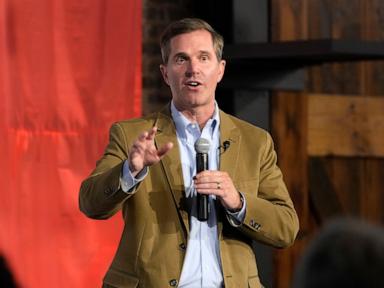
Kentucky Governor Andy Beshear recently pushed a hard political line against Senate Minority Leader Mitch McConnell, demanding that the longtime senator either verbally address constituents directly or step aside. This friction lays bare a much deeper institutional crisis surrounding political longevity, transparency, and the changing mechanics of representation in modern America. When a governor publicly challenges a federal veteran of McConnell's stature over communication methods, the conflict transcends a simple local dispute. It signals a fundamental shift in how the public expects power to be exercised and accounted for.
The Anatomy of Political Absence
For decades, political capital in Washington operated on a currency of physical presence, floor speeches, and backroom negotiations. Today, the currency has shifted toward constant digital output, unfiltered media access, and direct voter engagement. Mitch McConnell has historically mastered the traditional mechanics of power, prioritizing committee placement, judicial confirmations, and institutional procedure over performative town halls or spontaneous press conferences.
This divergence creates a vacuum. When a leader relies on institutional architecture rather than open public communication to justify their tenure, constituents feel a distinct sense of alienation. Governor Beshear seized on this vulnerability. By framing the issue around the basic expectation of speaking directly to the electorate, the state executive tapped into a bipartisan frustration concerning aging leadership and insulated authority.
- Traditional power structures reward behind-the-scenes maneuvering.
- Modern media ecosystems demand immediate, visible accountability.
- The gap between these two models generates deep public distrust.
The Institutional Cost of Longevity
Longevity in office brings immense legislative influence, yet it carries a heavy operational tax. McConnell holds the record for the longest-serving Senate party leader in history, anchoring conservative policy in Kentucky and Washington for generations. That long tenure built deep institutional knowledge, directing federal dollars and judicial appointments back to the commonwealth.
However, immense tenure also insulates politicians from ground-level realities. Health episodes in recent years have amplified public scrutiny over whether aging leaders can effectively maintain the rigorous demands of federal office.
Power without communication ceases to feel like representation and begins to resemble aristocracy.
When an elected official avoids direct, unscripted engagement with local media and ordinary citizens, they invite speculation. Critics fill the silence with narratives regarding fitness and responsiveness. Defenders argue that seniority yields unmatched legislative results that matter more than television appearances. Both arguments hold weight, which makes the impasse difficult to resolve through standard political maneuvering.
The Federal-State Power Dynamic
Governor Beshear occupies a unique national position. As a popular Democratic executive in a heavily Republican state, he walks a careful line to maintain credibility with a diverse electorate. Launching a public critique against Kentucky's most powerful federal figure is a calculated risk. It rallies a segment of the electorate that craves fresh leadership while potentially alienating conservative voters who remain fiercely loyal to McConnell's legacy.
Yet, executive friction between statehouses and federal delegations happens more frequently when communication breaks down. Governors deal with immediate state crises, economic developments, and infrastructure demands that require federal coordination. If the state's senior senator remains detached from local discourse, the administrative friction intensifies.
- State executives face direct accountability during local emergencies.
- Federal senators operate within a insulated national legislative bubble.
- Communication breakdowns expose the friction between these two tiers of governance.
The Changing Mechanics of Voter Expectation
Voters no longer accept representation as a black box where laws emerge without explanation. The rise of instantaneous information networks means constituents expect immediate responses and visible accessibility from anyone drawing a public salary.
McConnell represents an older school of political strategy that views public relations through a tightly controlled, highly strategic lens. Every public utterance is measured for legislative impact. Beshear represents a newer, more fluid style of public communication where accessibility and regular public touchpoints serve as the primary proof of effective representation.
This clash of philosophies will define political succession battles for the coming decade. As older generations of leaders face increasing questions about their ability to adapt to modern media demands, pressure will mount on party machines to establish clearer mechanisms for transition.
Kentucky remains a fascinating testing ground for these competing pressures. The demand for transparency is not going away, nor is the institutional weight of seniority. Until a new equilibrium is found, the friction between state capitals and federal offices will only escalate, leaving voters caught between the desire for seasoned power and the urgent need for a voice that speaks directly to them.


