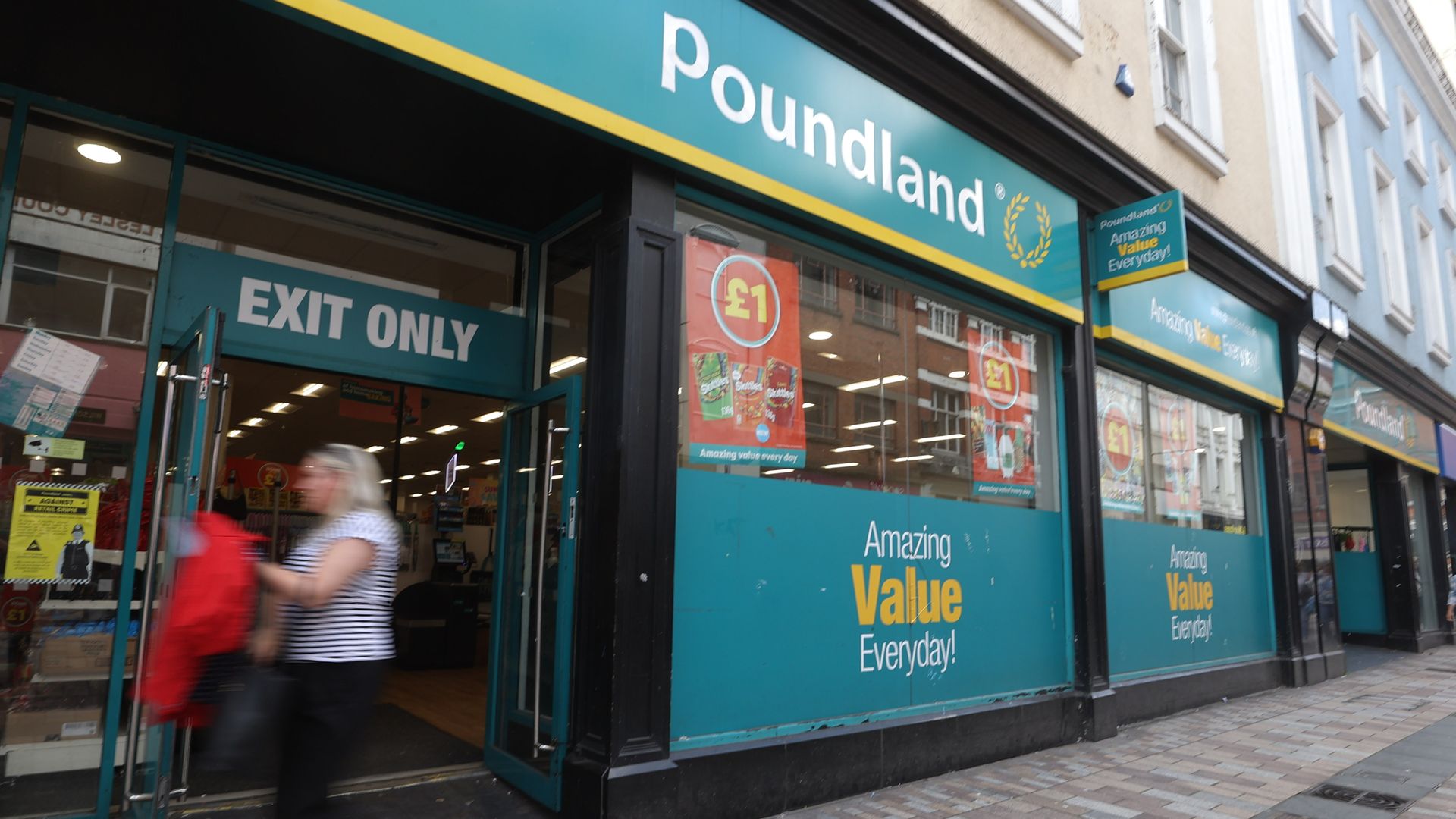
When a retail giant hires the same political fixers representing the bondholders of Britain's most indebted water utility, you know the balance sheet is bleeding. Pepco Group, the Warsaw-listed parent company of Poundland, has retained the public affairs machinery currently shielding Thames Water creditors from regulatory and political fallout. The move signals an urgent defensive pivot as mounting UK employment taxes, stagnating footfall, and an aggressive restructuring push collide with a hostile Westminster environment. Discount retail is supposed to thrive during a cost-of-living crisis, yet Pepco is scrambling to manage political heat before operational distress turns into an existential threat.
The mechanics of this hire tell a familiar story to anyone who has watched British corporate crises unfold over the past two decades. You do not bring in heavy-hitting crisis lobbyists when you simply want to ask the Treasury for a modest business rates cut. You hire them when you are preparing to make deeply unpopular decisions that will trigger select committee summons, union fury, and front-page headlines. Meanwhile, you can explore similar developments here: The Real Reason Billions in Capital Are Failing to Make Housing Affordable in Ghana.
The Anatomy of a Westminster Shield
To understand what Pepco Group is preparing for, look at the playbook currently deployed on behalf of Thames Water's creditor groups. When a company faces severe financial restructuring, debt-for-equity swaps, or aggressive cost-cutting that impacts millions of British consumers, Westminster becomes an active combat zone. Politicians smell easy populist points. Select committees sharpen their knives.
Lobbyists specializing in distressed corporate mandates perform a very specific function. They do not magically change legislation overnight. Instead, they control the narrative framing before the crisis hits the public domain. By engaging Thames Water creditors' lobbying firm, Pepco is buying direct access to senior Treasury officials, Department for Business and Trade advisers, and opposition shadow ministers. To see the bigger picture, we recommend the recent article by Harvard Business Review.
The objective is straightforward. Pepco needs to convince policymakers that any impending store closures, supplier squeezes, or workforce reductions at Poundland are the direct result of government fiscal policy rather than corporate mismanagement. It is a classic blame-shifting architecture. If a major high street employer announces job cuts, the government wants to blame corporate greed. The lobbyists' job is to ensure the headlines read that the Treasury's tax hikes forced the company's hand.
Why Discount Retail is Suddenly Vulnerable
For years, the conventional wisdom on the British high street was unshakeable. When inflation spikes and real wages fall, shoppers trade down. Supermarkets lose market share to Aldi and Lidl, and general merchandisers lose out to Poundland.
That thesis broke down.
The reality of operating a low-margin, high-volume discount chain in the United Kingdom has changed fundamentally. Poundland operates on razor-thin operating margins, relying entirely on massive unit volume and tight supply chain velocity to turn a profit. When fixed costs surge simultaneously, the business model has nowhere to hide. A luxury retailer can raise the price of a handbag by fifteen percent and watch margins expand. A discount retailer built on the psychological anchor of a one-pound price point faces immediate consumer revolt when prices creep up to two, three, or five pounds.
Consider the triple shock hitting Pepco Group's UK operations right now.
First, there is the direct hit from UK fiscal policy. Increases to employer National Insurance contributions and consecutive hikes to the National Living Wage act as a regressive tax on labor-intensive businesses. Poundland employs tens of thousands of staff across more than eight hundred stores. Unlike tech firms or financial institutions, a brick-and-mortar discounter cannot easily automate away shelf-stacking and till operations overnight. Every percentage point increase in payroll tax flows straight through to the bottom line as a permanent cost expansion.
Second, business rates remain an anchor around the neck of physical retail. While online competitors operate out of vast, automated distribution sheds in the Midlands with comparatively low rateable values, high street chains pay punishing property taxes based on outdated valuations. Even temporary reliefs fail to offset the structural disadvantage of maintaining hundreds of town-center leases.
Third, Pepco's own strategic missteps have compounded the macro pain. Over the past few years, Pepco aggressively rolled out new store formats, absorbed hundreds of former Wilko sites at breakneck speed, and attempted to transition Poundland toward Pepco-sourced clothing and general merchandise. Integrating those stores while overhauling supply chains created severe inventory friction. Like-for-like sales at Poundland have stumbled, forcing Pepco's leadership to confront the reality that rapid store count expansion masked underlying operational weakness.
The Distressed Playbook in Action
When you connect Pepco's operational headaches with the specific reputation of the lobbyists managing the Thames Water creditor fallout, a clearer picture emerges. The parallel is not accidental. Both situations involve complex corporate structures, foreign ownership, and intense friction between financial survival and public interest.
Thames Water's creditors are fighting a trench war in Westminster to avoid taking massive haircuts while preventing special administration. They have to convince ministers that punishing private capital will destroy investor confidence in the UK. Pepco faces a variation of the same challenge. Listed in Warsaw, majority-owned by the remnants of the Steinhoff corporate saga (Ibex Group), Pepco has an international investor base that has little patience for prolonged UK losses.
If Pepco decides it must shutter underperforming Poundland locations, renegotiate leases via a Company Voluntary Arrangement (CVA), or divest parts of its UK footprint, the political blowback will be immediate. Town centers across the Midlands, the North of England, and Wales rely on Poundland as an anchor tenant that drives footfall to surrounding independent shops. Closing a hundred stores does not just cost jobs; it hollows out already fragile local economies.
A standard corporate communications team is wholly unequipped to manage a restructuring of that scale. They write press releases about seasonal product launches and community charity drives. Distressed public affairs specialists, by contrast, operate like crisis lawyers. They map out which Members of Parliament represent constituencies with the highest concentration of at-risk stores. They brief sympathetic backbenchers before announcements go live. They prepare executives for hostile questioning in front of the Business and Trade Committee.
The Overlooked Factor of Supplier and Landlord Power
Most media coverage of retail lobbying focuses exclusively on taxes and minimum wages. That misses half the board. Hiring top-tier political advisers is also a signal aimed directly at commercial landlords and trade credit insurers.
In the UK retail sector, perception dictates survival long before cash runs out. When rumors circulate that a major chain is struggling, trade credit insurers—firms like Allianz Trade or Atradius—quietly pull cover from suppliers. Once credit insurance is withdrawn, factories in Asia and wholesalers in Europe demand cash upfront before shipping goods. For a high-volume discounter that relies on extended payment terms to fund working capital, a credit insurance freeze is fatal. It empties the shelves within weeks.
By visibly demonstrating that it is proactively managing Westminster and shaping policy discussions, Pepco projects institutional control. It tells landlords that the company has the political backing to push back against aggressive rent demands. It reassures credit insurers that management is ahead of the curve rather than passively waiting for cash burn to accelerate.
The Limits of Political Spin
For all the money spent on Westminster insiders, lobbying has hard limits. You cannot spin your way out of negative unit economics.
There is a massive gray area in corporate public affairs that consultancies rarely advertise to prospective clients. Access does not equal immunity. While hiring the advisers behind the Thames Water creditors buys Pepco a seat at the table in Whitehall, it also paints a giant target on the company's back. Investigative journalists, trade unions like Usdaw, and activist MPs track lobbying disclosures closely. The moment a struggling retailer retains crisis specialists, the market assumes bad news is imminent.
Furthermore, the current political climate in Westminster leaves little room for corporate bailouts or targeted tax carve-outs. The Treasury is hemmed in by tight fiscal rules and sluggish national growth. Ministers cannot easily grant business rates relief to one struggling discount chain without triggering an immediate stampede from supermarkets, pub operators, and hospitality groups demanding the exact same treatment.
As a hypothetical example of how this trap works, imagine a retailer spending two million pounds on a six-month lobbying campaign to secure a temporary delay in payroll tax hikes. Even if the campaign succeeds in securing a three-month consultation period, the underlying cost structure remains broken. When the consultation ends, the tax still hits, the leases still expire, and the consumer still lacks disposable income. The lobbying buys time, not solvency.
What Happens When the Heat Peaks
Pepco Group is currently executing a broad strategic reset, shifting capital allocation away from aggressive UK expansion toward higher-margin territories in Central and Eastern Europe, where the Pepco brand commands stronger customer loyalty and better returns on invested capital. Within that corporate hierarchy, Poundland has transformed from a reliable cash cow into a capital-draining headache.
The hiring of Westminster crisis lobbyists is the clearest indicator yet that the defensive perimeter is being drawn around the UK business. Over the coming quarters, watch for specific operational markers rather than public statements. Watch for quiet lease expirations where Poundland chooses not to renew tenancies on secondary high streets. Watch for subtle shifts in working capital management, such as extended supplier payment terms or inventory clearances designed to generate immediate cash. Watch for further restructuring charges buried in Pepco's quarterly trading updates.
Political advisers can soften the landing when a retail giant downsizes, and they can ensure Treasury ministers hear the industry's warnings before the next fiscal event. They cannot make a two-pound item sell like a one-pound item, and they cannot force British shoppers to spend money they do not have. Pepco has hired the best political bodyguards in London, which means the real fight over Poundland's future on the British high street is only just beginning.