The Crucible
The studio lights bleed heat. Under the harsh glow, Donald Trump does not merely defend an ally; he claims ownership of the fire.
When Vivek Ramaswamy launched a scorched-earth attack ad targeting Dr. Amy Acton—the former director of the Ohio Department of Health—the political establishment braced for the usual retreat. The ad was aggressive, personal, and deliberately divisive. Standard campaign doctrine suggests a presidential frontrunner might distance himself from such scorched-earth tactics, allowing surrogates to draw the fire while preserving a veneer of statesmanship.
Instead, Trump doubled down.
To understand why a former president would put his full weight behind a localized, brutal attack ad against a public health official, you have to look past the cable news chaptalization and examine the raw engine of modern populist warfare. This was not a tactical misstep. It was a demonstration of a core political doctrine: never cede an inch of hostility when you can turn it into an emblem of loyalty.
The Architect and the Official
Picture two figures standing on opposite sides of a widening cultural abyss.
On one side sits Dr. Amy Acton. In early 2020, her face was a daily fixture in Ohio households. Calm, measured, speaking in the careful, precise cadences of an epidemiology background, she became the public face of Ohio's aggressive early response to the pandemic. To her supporters, she was a shield against chaos—a scientist guiding a state through uncharted dark waters. To her detractors, she became the embodiment of state overreach, the bureaucratic face that closed business doors and ordered citizens inside.
On the other side stands Vivek Ramaswamy. Ambitious, relentless, and possessing an uncanny instinct for media dynamics, Ramaswamy built his political brand by attacking the managerial class. To him, officials like Acton are not neutral civil servants; they are un-elected custodians of power who must be brought to heel.
When Ramaswamy crafted the attack ad targeting Acton, he wasn't just attempting to sink a potential political rival's momentum in Ohio. He was testing a fundamental premise: Can the deep-seated grievances of the pandemic era still be converted into potent political fuel years after the lockdowns ended?
The answer came swift and loud.
The Arena of No Retreat
Politics used to have boundaries carved out by shame or caution. A candidate ran a hit piece, faced backfire, and quietly pulled the broadcast from the airwaves. The ad agency took the blame, and spokespeople issued vague statements about "differing creative visions."
That world is dead.
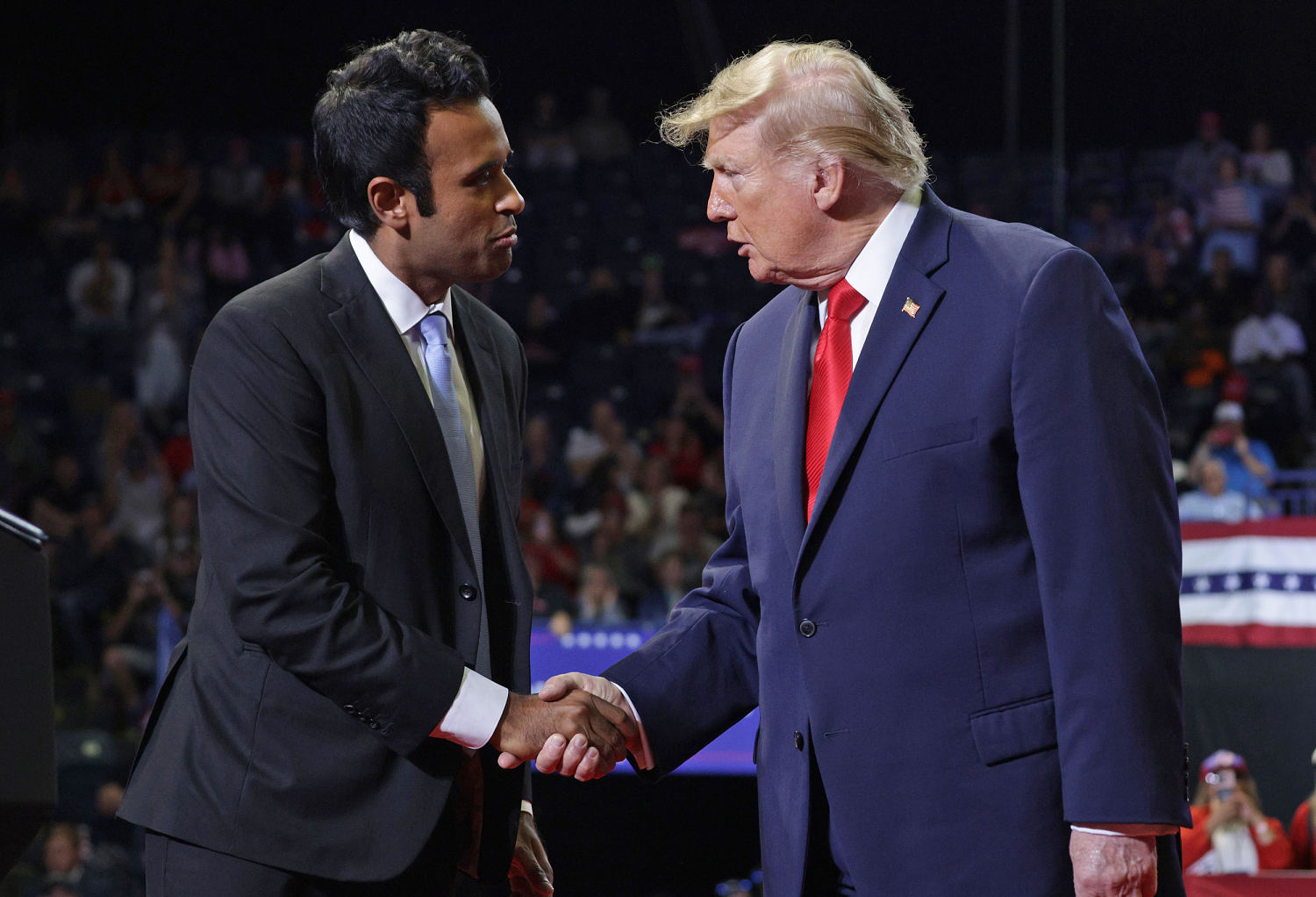
When reporters pressed Trump on Ramaswamy’s rhetoric, asking whether the attack crossed a line into unfair personal prosecution of a former public servant, the response was vintage Trumpian calculus. He didn't soften the edges. He sharpened them. He praised the attack, amplified its central grievances, and framed Ramaswamy's aggression as essential combat against an entrenched establishment.
Consider the mechanics at play. By standing shoulder-to-shoulder with Ramaswamy on this specific strike, Trump accomplished three distinct objectives at once:
- He signaled absolute protection to his ideological vanguard. If you fight in his style, he will cover your flank.
- He reignited a battleground topic. By refocusing attention on health mandates, he dragged the public debate back to ground where his base feels most aggrieved and most motivated.
- He neutralized the middle. In modern political narrative, moderate critiques are treated as weakness. By doubling down, Trump forced observers to choose a side immediately—either you are with the fight, or you are part of the target.
The Invisible Cost on the Ground
Away from the camera flashes and political rallies, the human weight of this strategy settles quietly in unexpected places.
Think of the career public servant—the county health officer, the local zoning board member, the school superintendent. They do not sign up for national political combat. They take positions in modest offices with fluorescent lighting, reading balance sheets and technical guidelines.
When a national spotlight swings toward a former official like Acton and transforms her into a permanent symbol in political hit ads, the message reverberates far down the chain. It whispers to every quiet administrator across the country: Your work can be weaponized at any moment. Your decisions can become a campaign commercial three years later.
This creates a subtle, dangerous chill. When civil service becomes a high-contact sport where national figures double down on personal attacks, the talent pool changes. The cautious leave. The quiet professionals retreat to the private sector. The only people left willing to take public health roles are either true martyrs or ideologues ready for a fight.
The Fuel that Keeps the Engine Turning
Why does this strategy work so effectively? Because it taps into an endless renewable resource: human resentment.
The anger from the pandemic years did not evaporate when the mask mandates were lifted. It merely changed form. It settled into the bedrock of American politics like toxic runoff, waiting for someone with a bucket and a shovel to dig it up.
Ramaswamy understood that tapping into that reservoir generates instant visibility. Trump understood that validating Ramaswamy's dig transforms a local flare-up into a national movement statement.
It is a feedback loop. The ad creates the outrage. The media asks the question. The leader doubles down. The audience cheers. The outrage grows. The cycle repeats, tighter and hotter each time.
The Last Line on the Screen
We often view these political collisions as isolated events—a feud here, a controversial advertisement there. But they are architectural markers of how power operates today.
The defense of Ramaswamy’s attack ad isn't really about Amy Acton, nor is it strictly about Ohio. It is about setting the rules of engagement for everything that follows. It announces that the past is never buried, that public service carries lifetime political liability, and that the strongest weapon in modern campaigning remains the refusal to apologize.
The studio lights eventually dim. The red recording lights click off. But somewhere in an editing room, another ad is being cut, built on the knowledge that the highest authority in the room will not just permit the strike—he will cheer for it.